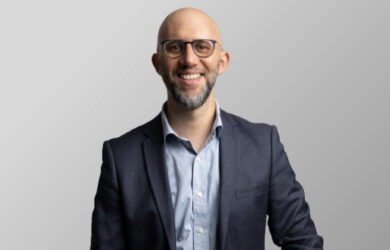


Andrea Luppi has been recognised for his work in neuroscience by a leading magazine.
Gates Cambridge Scholar Andrea Luppi has been named one of 25 rising stars in Neuroscience by The Transmitter, a leading neuroscience magazine.
The Transmitter’s Rising Stars of Neuroscience recognises early-career researchers around the world who have made outstanding scientific contributions to the field and demonstrated a commitment to mentoring and community-building.
The magazine says the 25 comprise “early-career researchers from multiple areas of the field – including computational, molecular and cognitive neuroscience – who strive to answer some of its most pressing questions. They have also founded mentorship groups, held leadership positions at neuroscience organisations, developed initiatives to translate basic science for wider audiences and more”.
The candidates were nominated by a peer or mentor who submitted the nominee’s CV and a short narrative describing their research, mentoring history and advocacy activities. Postdoctoral researchers and early-career principal investigators who opened their labs within the past five years were eligible for the award. The 25 were selected by the magazine’s senior editorial staff from more than 100 nominations from scientists around the world.
The Transmitter launched in November 2023, developed by the same team that produces the award-winning Spectrum magazine. Spectrum began in 2008 as the News & Opinion section of the Simons Foundation Autism Research Initiative site, SFARI.org. In 2015, Spectrum relaunched as an editorially independent online identity.
Andrea [2017] is a Wellcome Early Career Fellow at the University of Oxford, having done his PhD in Clinical Neurosciences at the University of Cambridge. His research investigates how brain function arises from the complex interplay of brain structure and dynamics and how pharmacological and pathological perturbations such as coma, anaesthesia and psychedelics reshape brain function across species and across modalities. Working at the intersection of integrative and computational neuroscience, he combines approaches from information theory, network science and whole-brain computational modelling. Andrea has had a Gates Cambridge Scholarship for both his MPhil in 2017 and his PhD.