





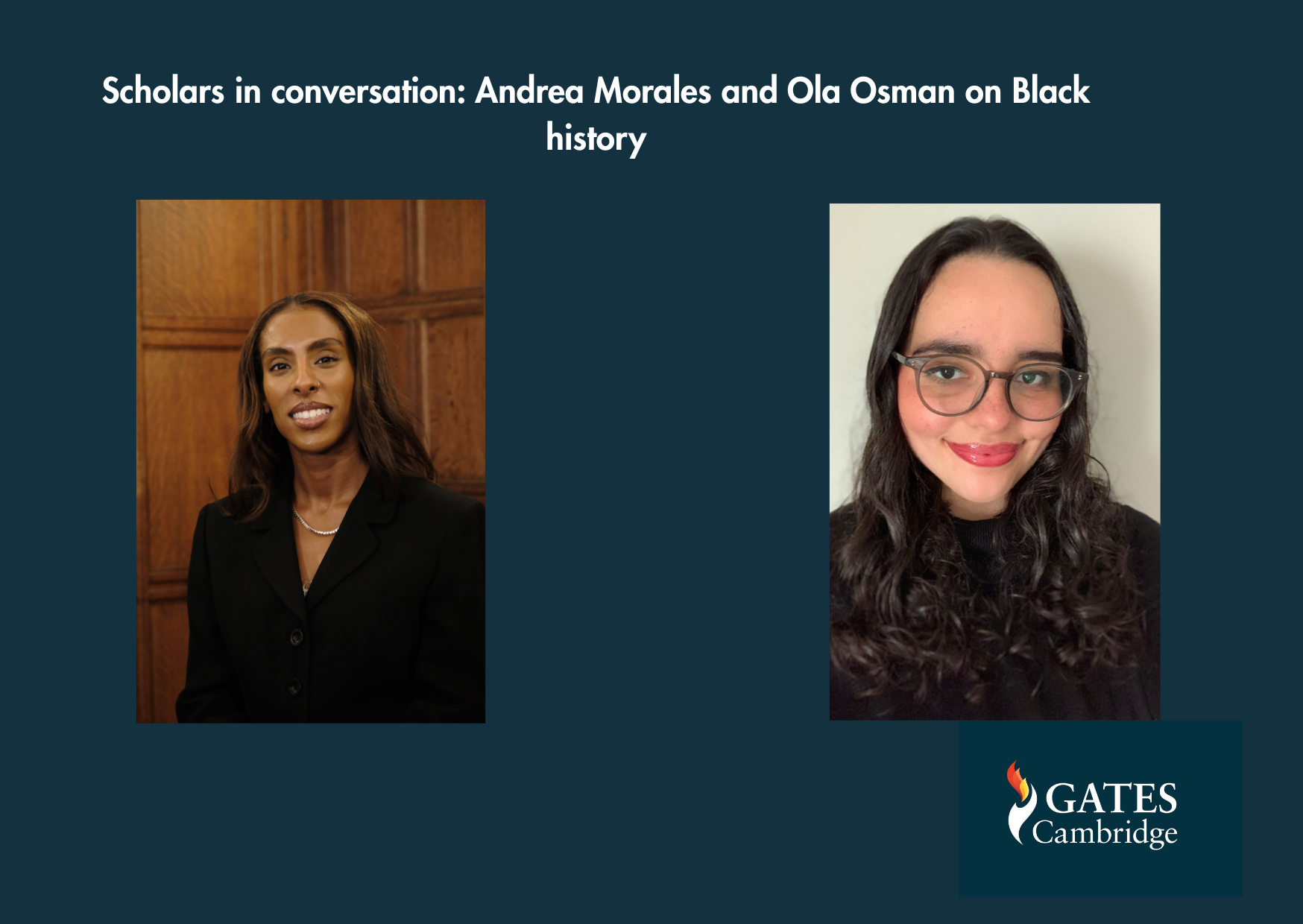
As Black History Month draws to an end in the US, Scholars Ola Osman and Andrea Loucil discuss the enduring impact of slavery in the Caribbean and Africa.
The further back we go in history the more difficult it is. Cultural production is the realm where we are most likely to recover these lives, the only realm in which Africans could express themselves.
Ola Osman
Andrea Morales Loucil [2022] and Dr Ola Osman [2019] share a focus on the enduring impact of slavery in the Caribbean and Africa and the white supremacy that underpinned it.
Andrea, who is doing a PhD in Latin American Studies, is a cultural historian and literary scholar from Puerto Rico who focuses on nation-building movements, race-making processes and revolutionary poetics of the Caribbean. She is interested in the Afro-Puerto Rican freedom fighters who collaborated to advocate for independence and how they treated issues of race, a subject she says is not properly addressed in Puerto Rican history.
Ola did her PhD in Multidisciplinary Gender Studies and was appointed Assistant Professor at the University of Cambridge’s Department of Politics and International Studies just a year after taking her viva. She takes an interdisciplinary approach to international relations and politics. Her PhD was on the continuities between racial slavery, its attendant gendered logics and the Liberian civil war. In particular, she focused on how the repatriation of enslaved people during the ‘Back to Africa’ Movement in the 19th and 20th centuries had an impact on the politicisation of ethnicity.
The two scholars came together at Bill Gates Sr. House in February to discuss how their research paths cross over and what light each sheds on Black history.
Andrea’s work critiques the racially ambiguous idea of Puerto Rican and Cuban nationhood which, she says, seems on the surface to represent everyone, but in fact serves to reinforce whiteness. She draws on historical records showing how some of the colonial governments in the early modern period expanded the category of whiteness which had the effect of ensuring collective liberation was not attained and encouraged people to assimilate and fudge their family records, she says.
Ola too talks about how this manifests itself in Africa. “So much effort was put into erasing the history of Black civilisations, especially Egypt, and to whitening that history to tell the story it wants to tell,” she says.
Francisco Gonzalo Marín
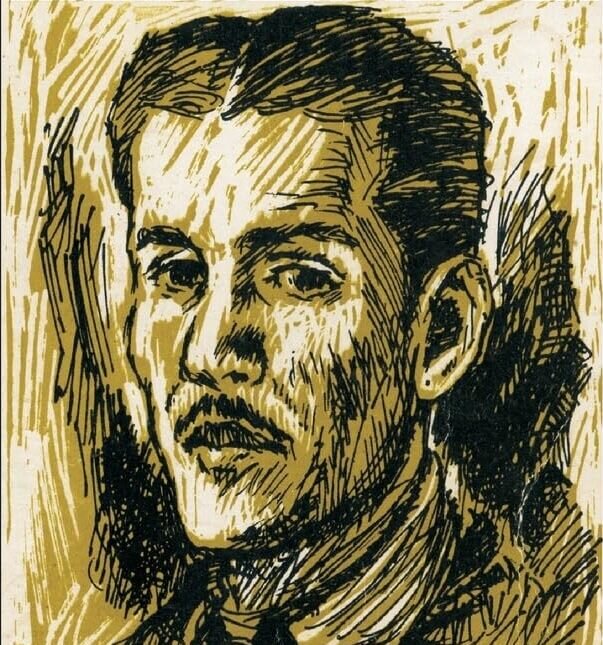 Andrea’s research focuses in particular on the work of Francisco Gonzalo Marín [1863-1897, pictured left], also known as Pachín Marín, a Puerto Rican poet and political dissident who lived for a time in exile in the Dominican Republic and Venezuela and later fought alongside Jose Martí for Cuban independence following the death of his brother in Cuba.
She describes how, as a mixed race man, both of whose grandmothers had been enslaved, he negotiated the colour line. “Even though his birth certificate said he was white, he embraced his Blackness,” she says. This was at a time of rising anti-Black sentiment in response to Black political mobilisation at the end of the 19th century.
Andrea and Ola talk about the fear in the Caribbean that the Haitian revolution early in the 19th century which saw enslaved people rise up would be contagious. Ola speaks about the importance of the Haitian revolution internationally. She says: “Haiti became the first Black free republic in the world in 1804. Liberia which I study was fully inspired by Haiti to create the first free Black African nation in the world.”
The fear that the Haitian revolution could spread to Puerto Rico brought a lot of surveillance of Black families, widespread torture and suppression of African customs and culture, particularly music, says Andrea. In 1831 the Puerto Rican governor banned playing drums in the streets and at funeral processions as music began to be seen as a tool of resistance. Andrea says that music has gradually been appropriated by white people in a way that serves to erase its important symbolic links with Afro-diasporic kinship.
Puerto Rican independence
Andrea says Pachín Marín is an important figure in Puerto Rican history, being related to Luis Muñoz Marín, the first democratically elected governor of Puerto Rico. Yet the early independence leaders in both Puerto Rico and Cuba do not talk about the role Black communities played in the movement. “Why are they not more prominent?” she asks, adding that this omission brings complex questions which ‘unpick’ the fabric of Cuban and Puerto Rican history.
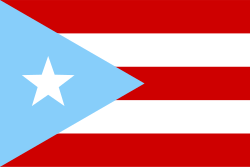 She describes how her research shows Pachín Marín had a level of social mobility and literary freedom as a mixed race man, but chose to forsake it. She speculates that this may be due to his own family experience of the legacies of enslavement or because he had more freedom than his parents and grandparents. “It was remarkable that he chose to embrace his Blackness,” she says.
His uncle Ramón Marín y Solá had also been outspoken about race, writing a play in 1872 about the child of a planter and enslaved woman which denounced racism and showed the child trying to find their place in the world. The play was shown to a mostly white audience in a town that was at the hub of sugar production. This was at a time when mixed race children were criminalised in Puerto Rico. “The literature both reflects and informs history and provides a roadmap to Puerto Rican politics at an important time in Puerto Rico’s history,” says Andrea.
Critical fabulation
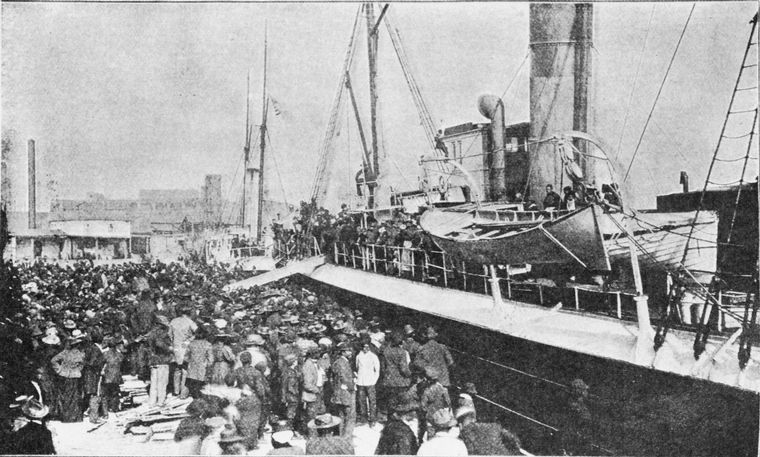 Ola speaks about the fact that so many working on Black history have to piece together what really went on from bits of letters, diaries, poems and so forth.
She works on the American Colonisation Society archives, looking at the period between the 17th and 19th centuries. She sometimes finds diaries and letters of people who moved back to Liberia in the 19th century as part of the Back to Africa Movement [pictured right, courtesy of Wikipedia]. She says she finds it difficult to paint a picture from this material because there is so much that isn’t recorded. “Critical fabulation [a methodology that combines critical theory with imaginative fabulation to challenge dominant narratives and reimagine historical events] is something I really struggle with, not because there is any problem with using this material to construct a picture of what was happening but because it is almost our only option,” she says.
She cites Nourbese Philip’s poem Zong which says “there is no telling the story; it must be told”, adding: “The further back we go in history the more difficult it is. Cultural production is the realm where we are most likely to recover these lives, the only realm in which Africans could express themselves.”
She talks about how she used to work in public health and she found that the first skeleton used to train medical students belonged to an enslaved man who was a janitor at a university who died on the job. Instead of returning his body to his family, it was given to a medical school. The only information Ola could find was his slave name and through that she could trace his slave owners. “It’s so troubling that that’s all we have, but we owe the dead the truth,” she stated.
Andrea also speaks of “a profound sense of heartbreak” doing this kind of work. “Sometimes all we have is questions,” she says.
Exclusion
She realises too that even those fragments that do exist can exclude many people. She found while doing her research that she was only writing about men. She says it is very difficult to find records of the lives of women of African descent in the Puerto Rican records.
One of Pachín Marín’s grandmothers was directly trafficked from Africa, but it is impossible to know from which country, she states. She knows one of the grandmothers had an illegitimate daughter, but other information has to be pieced together from general customs, laws and so forth, with much being lost, particularly in relation to dissent. “We can try to reconstruct her life, but there is a great sense of tragedy. Critical fabulations enable us to think about alternative pasts in which people dissented in different ways,” she states.
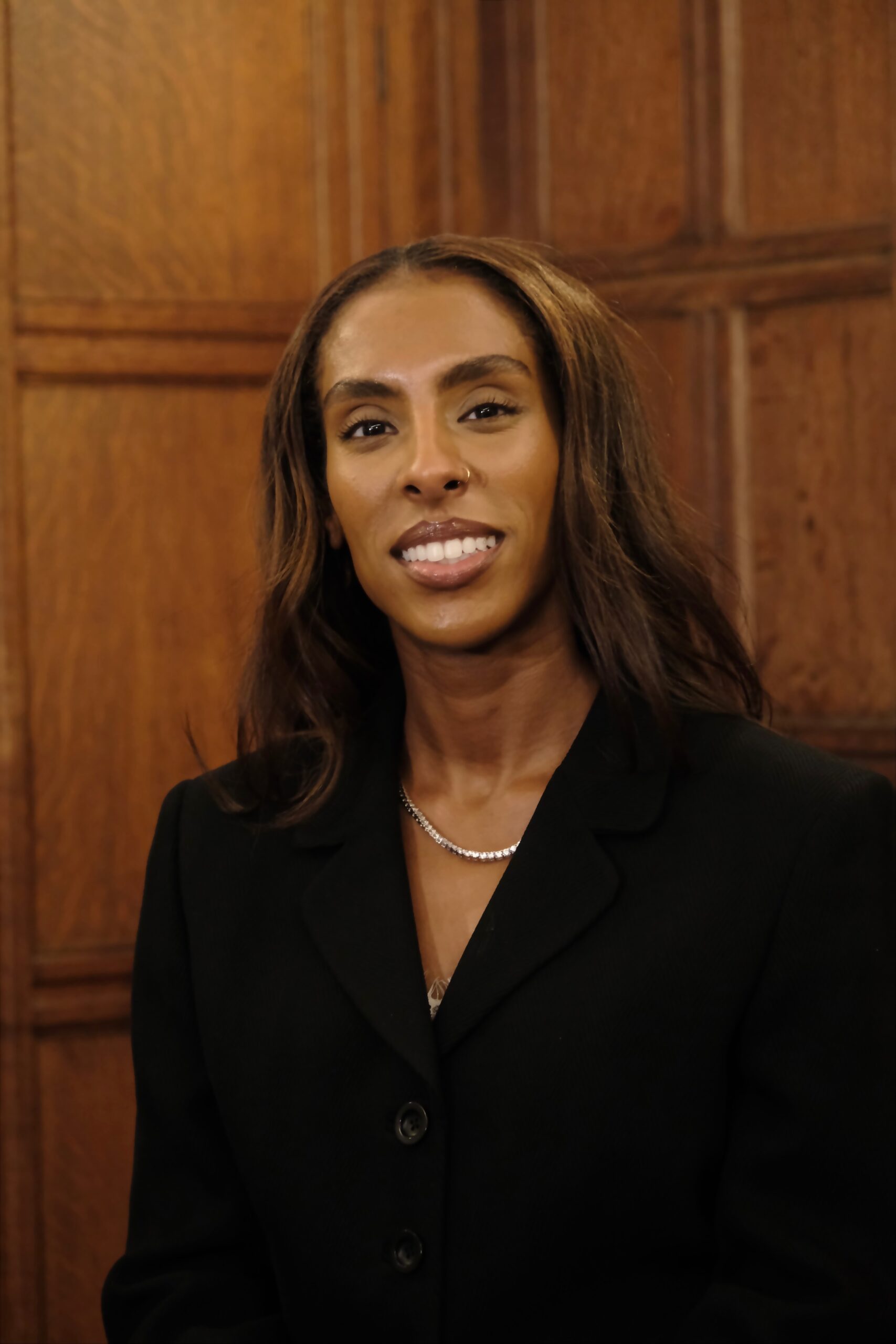 Ola [pictured left] talks too about those who avoided the violence of slavery, living outside the plantations, but says it is very hard to access their stories.
She also speaks about the long tail of slavery. After the abolition of slavery by the British, she says British Navy vessels created a new economy out of stopping slave ships while slavery continued in the US and was exported to parts of Africa – along with ideas of white superiority transported back by Afro-Americans – where it was used to power the industrial revolution.
Ola says it appeared there was no way out of the white supremacy system. “People had no choice but to reproduce settler colonial projects,” she says. “There was no outside of this system.”
 This realisation fuelled the rise of the Black radical tradition and Black intelligentsia. But Andrea says this excluded illiterate Black people like Pachín Marín’s brother as well as many ordinary people, including seamstresses and shop workers.
Ola says Black women were essential to helping Black men negotiate the white patriarchy in the US. They gave their men their wages – or had them taken away – so they could feel like patriarchs, she says.
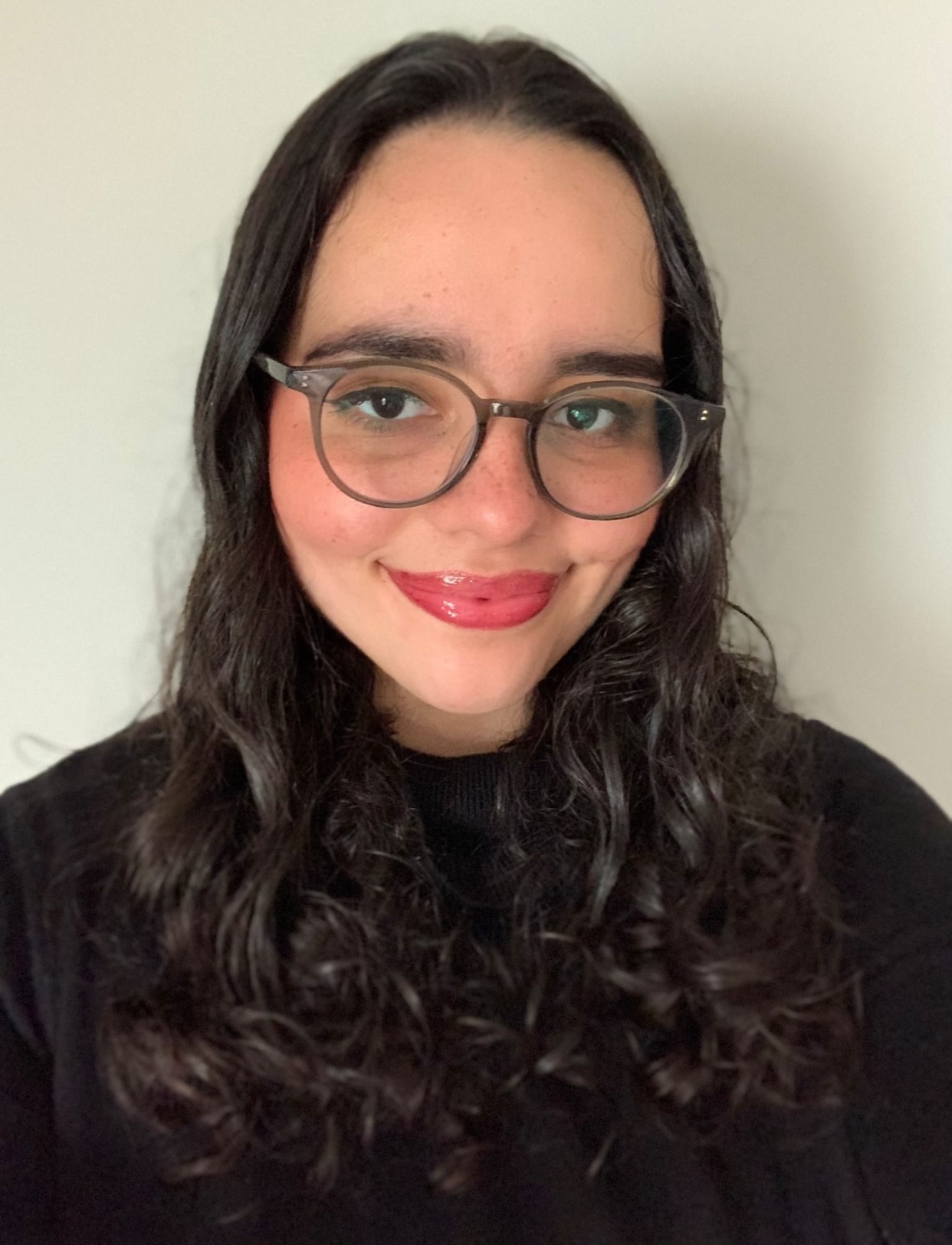
For Andrea [pictured above right], an intersectional approach is vital to recover erased pasts. “An intersectional approach is integral to any work on identity,” she says.” She speaks, for instance, about howBlack women, such as midwives and nurses, formed social clubs that played a key part in Puerto Rico’s independence movement.. “We need to recover all these stories,” she states.
*Puerto Rican flag courtesy of Wikipedia. Photo of Pachín Marín courtesy of front cover of .