

Author Tsitsi Dangarembga spoke about external, internal and meta colonisation and its impact in the Gates Cambridge Annual Lecture.
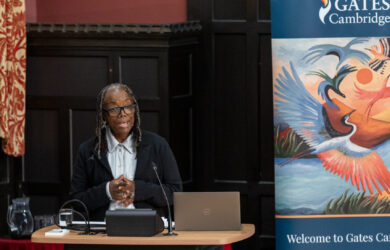
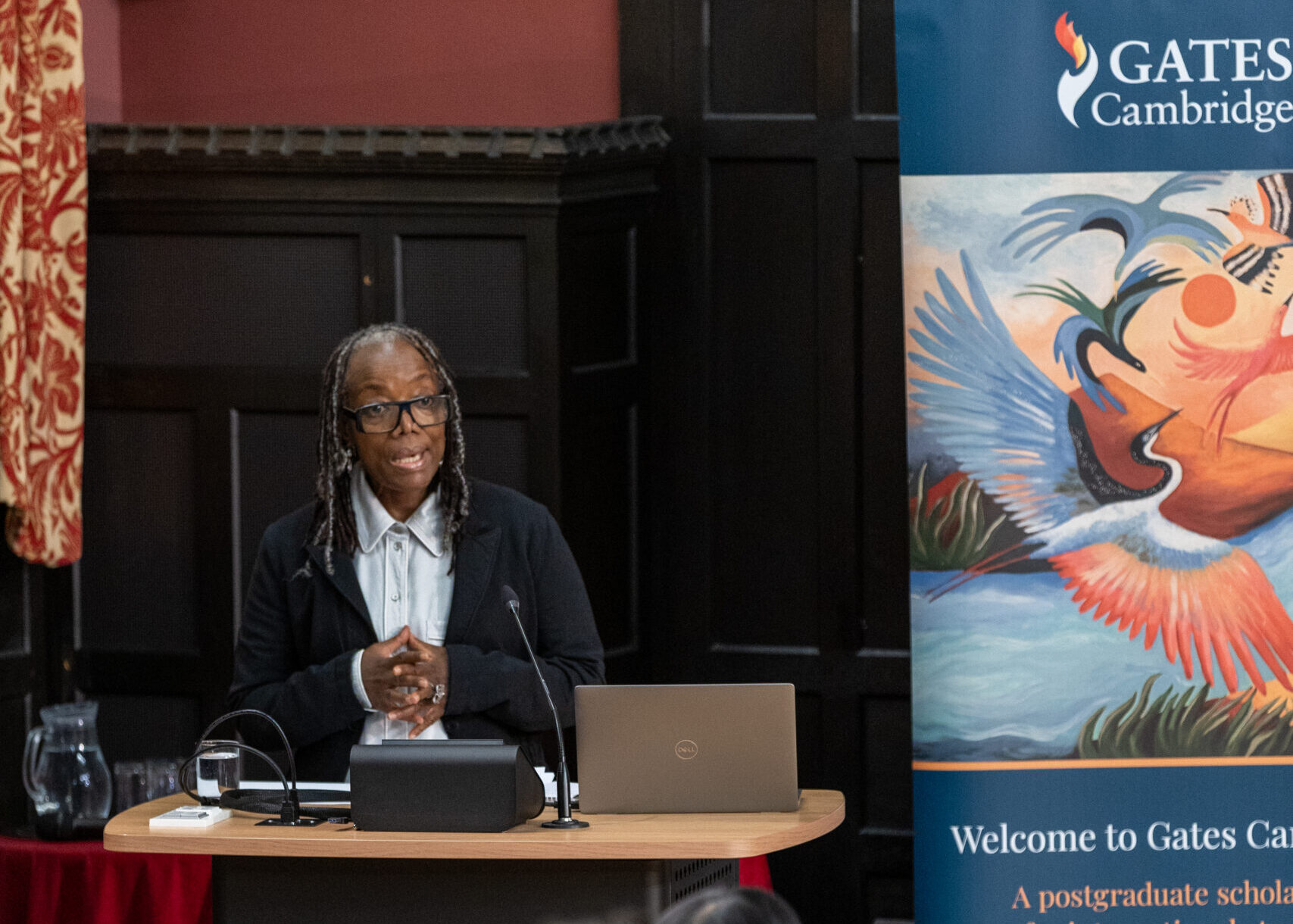
Award-winning author Tsitsi Dangarembga delivered the eighth Gates Cambridge Annual Lecture at St John’s Divinity School last night, giving the audience an exclusive insight into her latest non-fiction book.
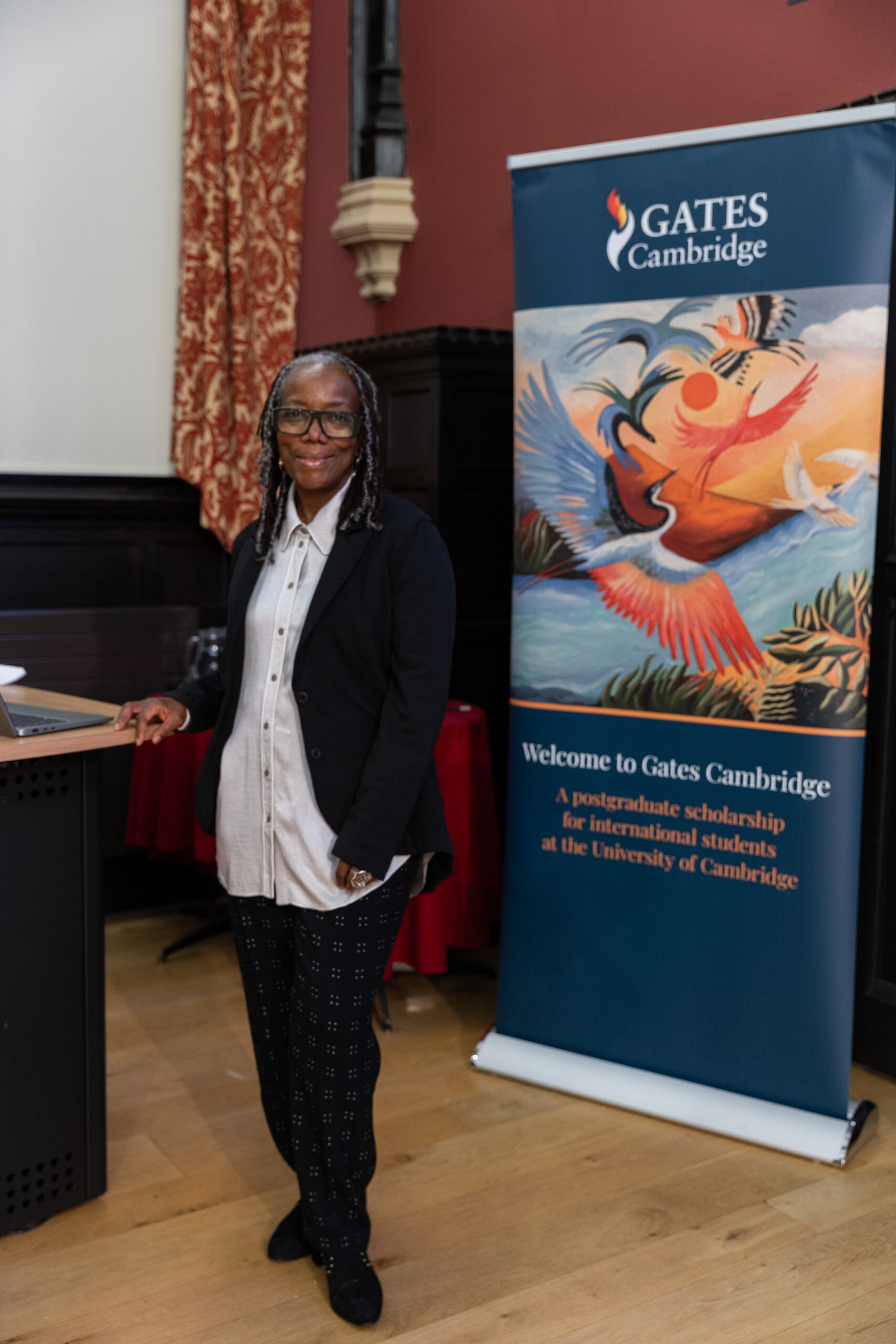
Tsitsi Dangarembga before the Annual Lecture
Her talk was entitled The Circular and the Linear: A Southern Africanist (Re)Construction of the World and covered external, internal and meta colonisation and the impact of European ideas about wealth and society on today’s world.
Tsitsi is one of the most influential voices in contemporary African literature. A Zimbabwean novelist, playwright, filmmaker and activist, she has spent decades examining colonial legacies, gender and social justice through her work.
She made her name with Nervous Conditions (1988), the first novel published in English by a Black Zimbabwean woman, which the BBC later named among the 100 books that have shaped the world. The trilogy continued with The Book of Not and This Mournable Body, which was shortlisted for the 2020 Booker Prize.
Tsitsi, who is an Honorary Fellow of Sidney Sussex College, has won the Commonwealth Writers’ Prize and the PEN Pinter Prize. The latter is awarded to a writer who casts an ‘unflinching, unswerving’ gaze upon the world and shows ‘a fierce, intellectual determination … to define the real truth of our lives and our societies’.
She was introduced by Gates Cambridge Provost Professor Eilís Ferran who said her writing shows that the work of the imagination is never separate from the work of changing the world.
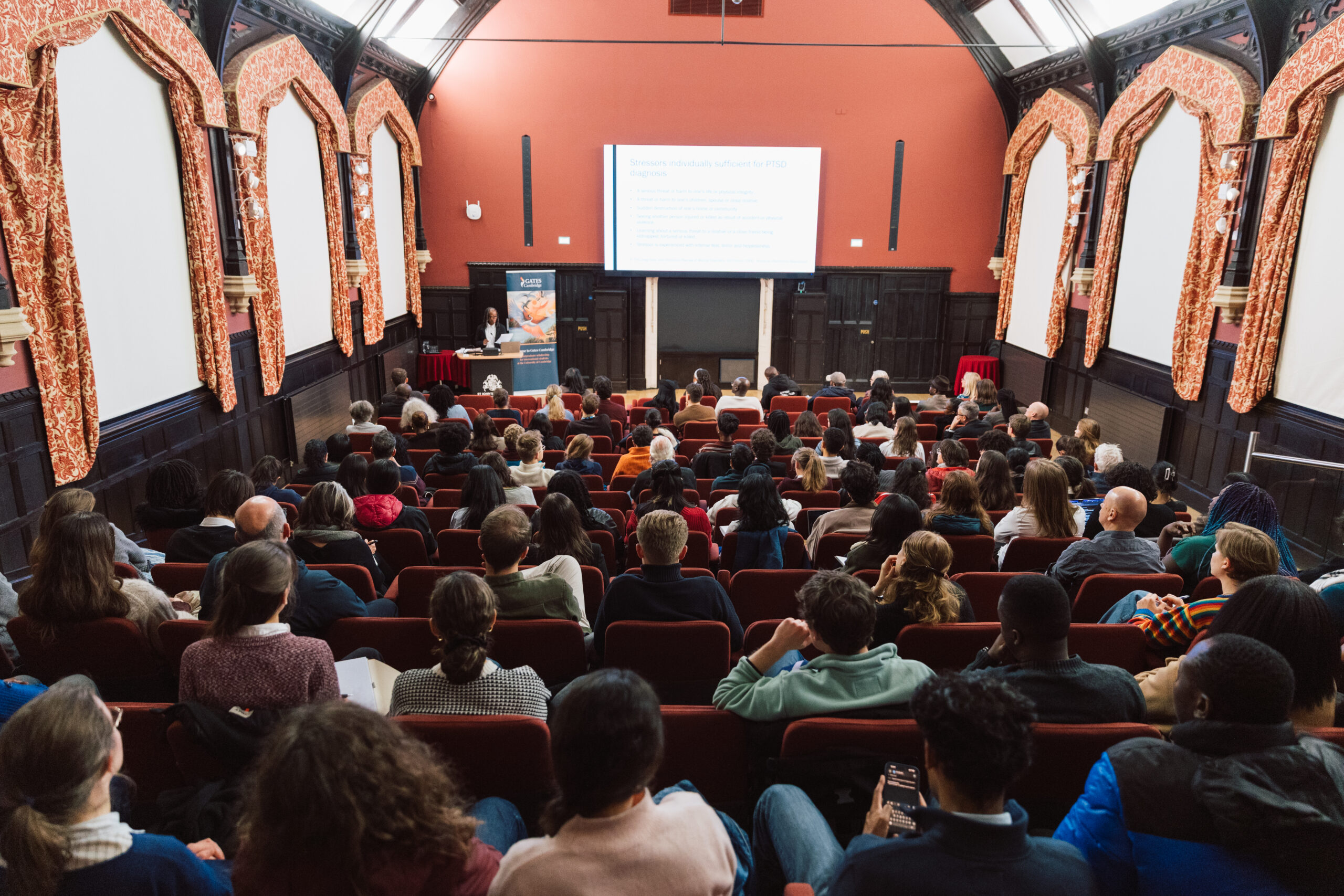 Tsitsi traced back the seeds of “contemporary dysfunction” affecting the entire planet to European attitudes to wealth accumulation. She said people nowadays talk about polycrisis, but for her it is about a single model of crisis which she called billionairism, where wealth is extracted and sequestered from others rather than circulated in a way that ensures social stability and sustainability, including environmental sustainability.
She said the zenith of the European colonisation process, which began with the capture of Ceuta in 1415, was in 1914 when European powers held sway over 84% of the world’s landmass and 90% of Africa. She interrogated the idea that colonial powers were taking over uninhabited, saying their definition was based on an idea of ownership which was dictated by a monarch or equivalent authority figure ruling over a territory.
She spoke of post-traumatic slave syndrome and showed how the symptoms correlated to PTSD and how slaves had internalised that trauma and passed it down through the generations. She said her writing was affected by post-traumatic colonisation syndrome after her experience of being a student in the UK in the 1970s.
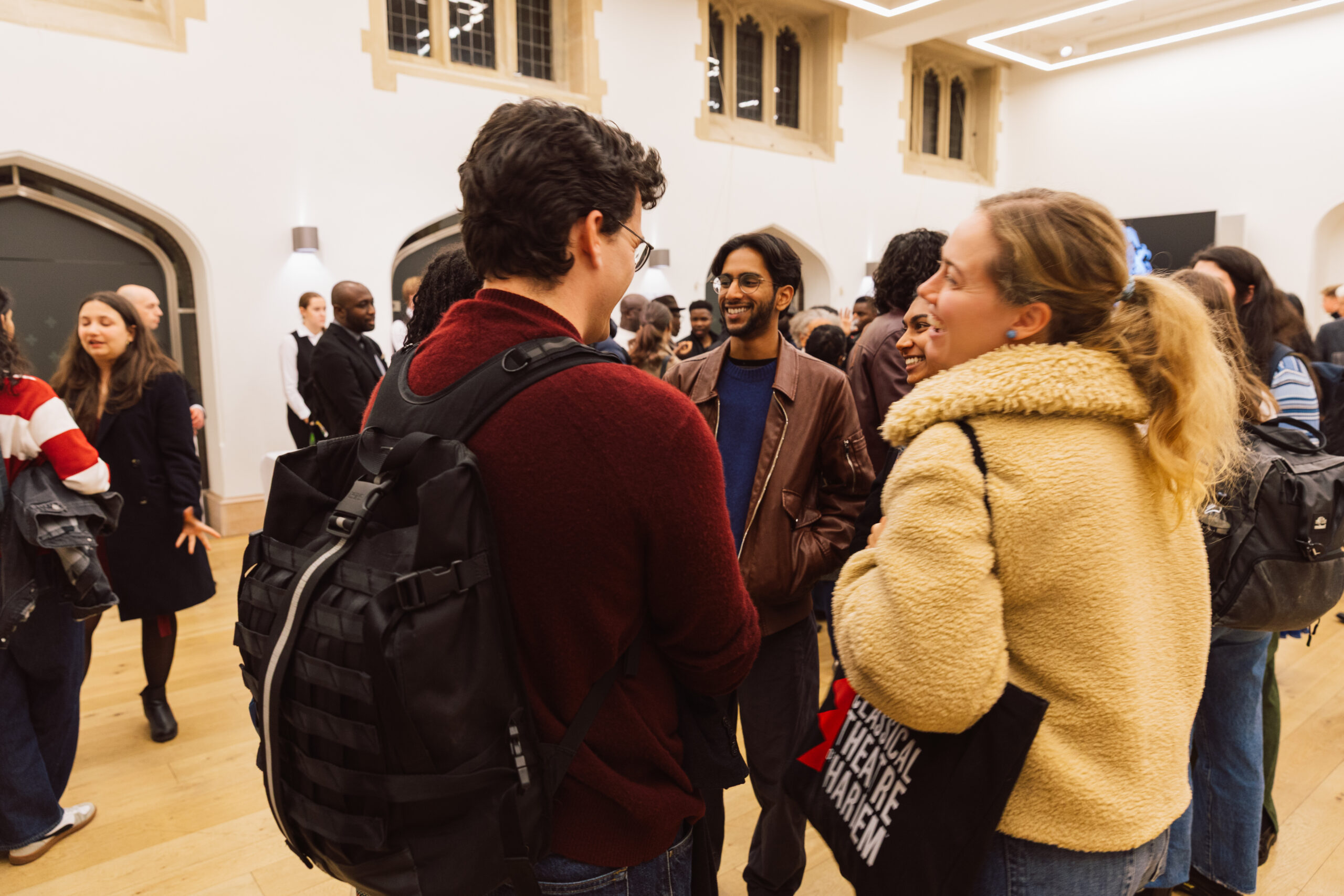
Scholars talking at the reception after the Annual Lecture
Tsitsi then traced the history of Europe’s “fetishisation” of gold dating back to ancient Varna and said the so-called quest for discovery was really a quest for gold. She described how that had spread European social stratification across the world. She went on to talk about internal colonisation, the process by which the ruling class in previously colonised countries – often educated abroad – is continuing the systems put in place by the colonisers, creating a new hegemony at the expense of the people. “The colonial structure was left intact, only the agents changed,” she stated, saying this had resulted in the dehumanisation of the majority. She said this was “meta colonisation” rather than post colonialism and stated that wealth is now dictated by the flipping of switches in today’s technological world rather than tied to geographically distributed commodities.
Tsitsi ended by talking about how the scarcity model, promoted by European colonisers and dictated by their hoarding of wealth, had become a way of life rather than ways of life based on social distributive models.