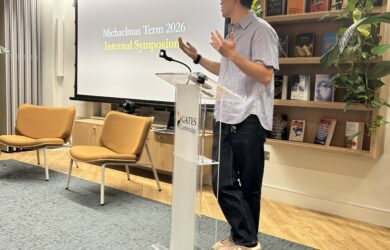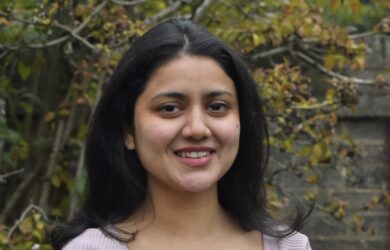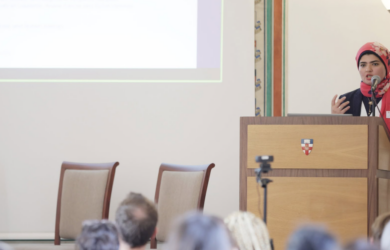


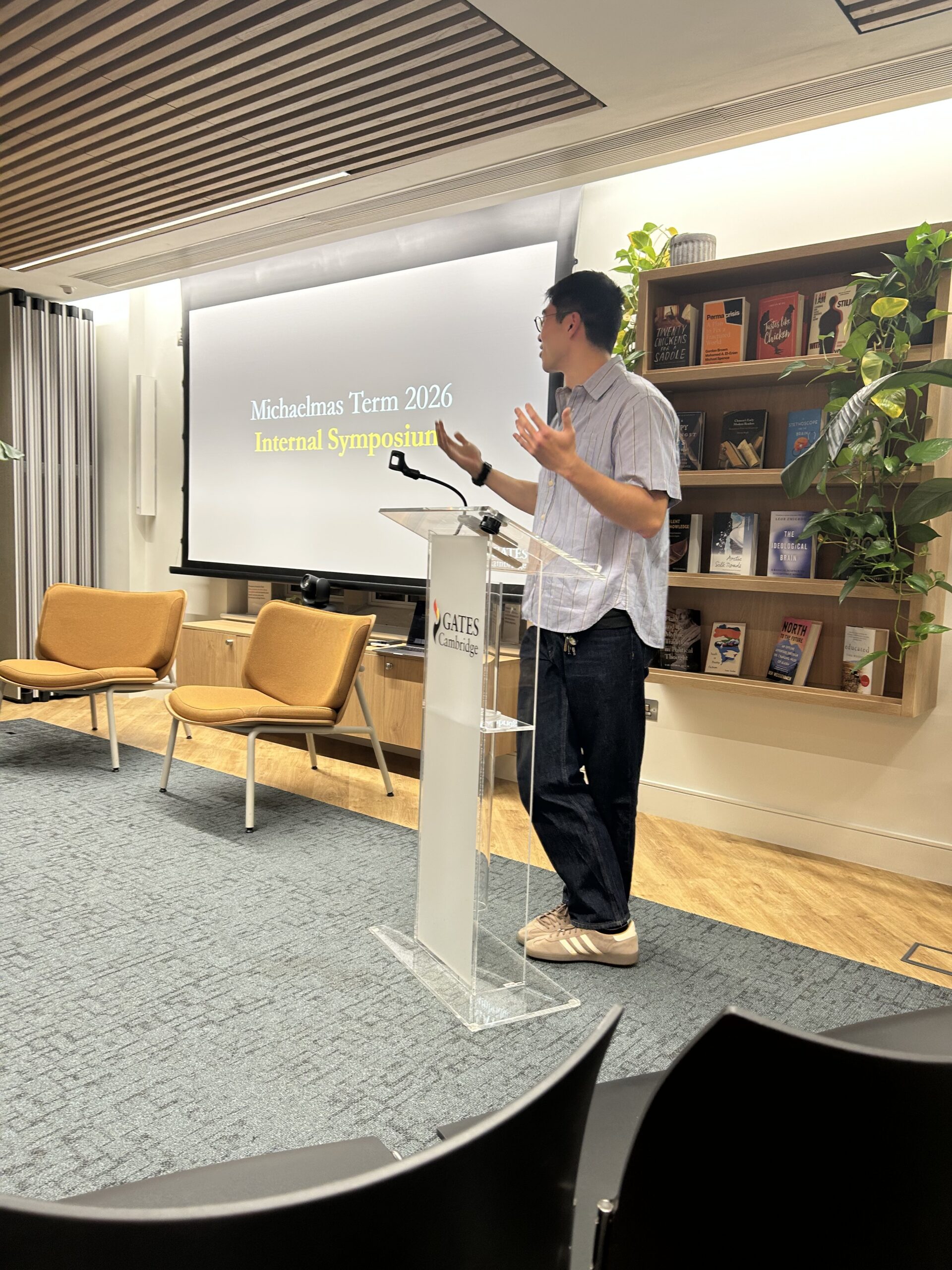
Four Gates Cambridge Scholars studying subjects ranging from refugee healthcare to the effectiveness of education policy spoke about their work at an Internal Symposium this week.
The four were introduced by Justin Wei [2023], Internal Officer of the Scholars’ Council, who organised the event which was centred around the theme of ‘Intersections’.
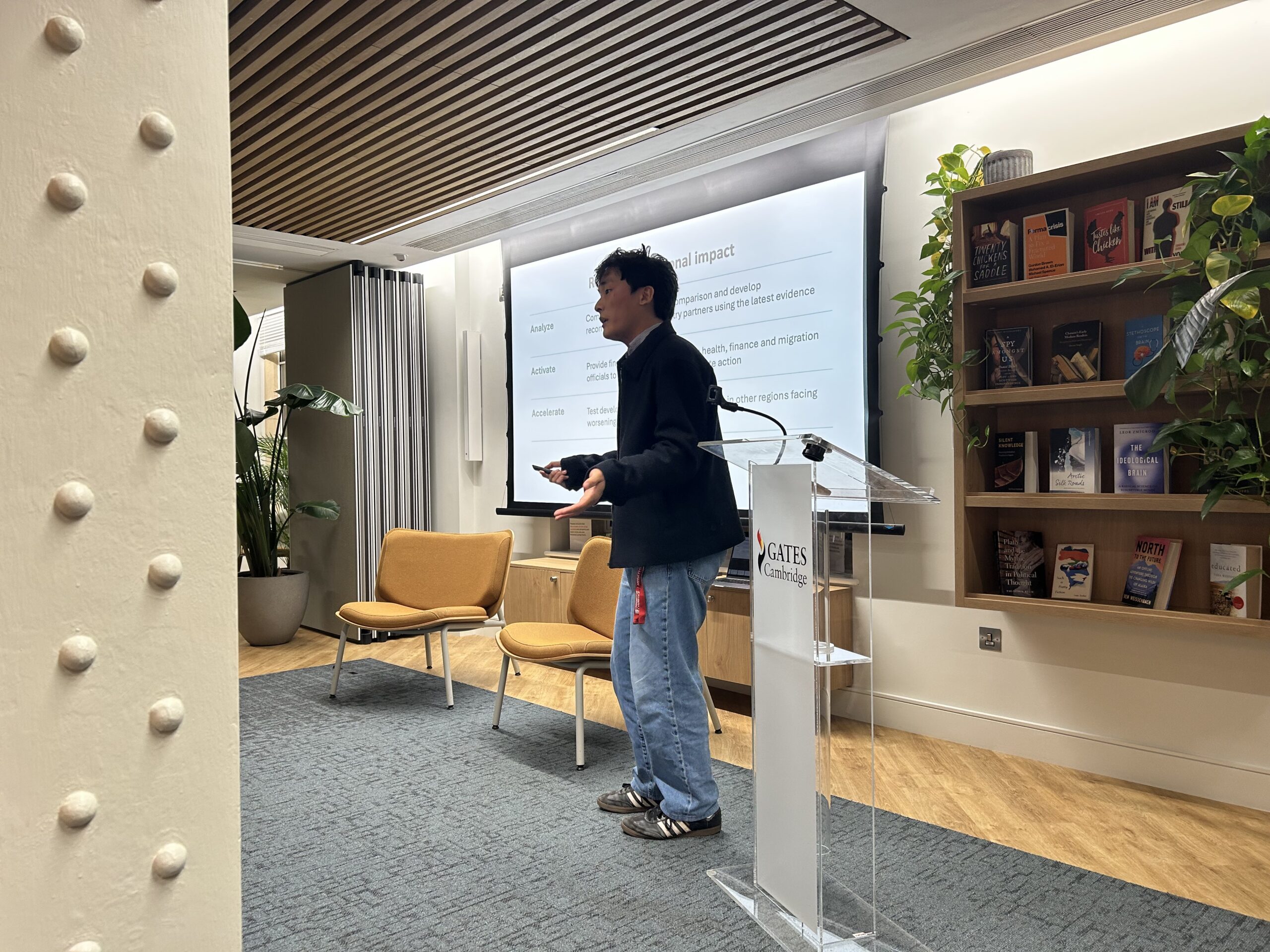
Tenzin Dhondup
Tenzin Dhondup [2026] is doing an MPhil in Population Health Studies. His talk was entitled “Displaced and Overlooked? Migrants and Refugees in South Asia’s Health Coverage, Cancer, and Chronic Disease Policies”. He spoke about his research into the health of migrants and refugees in South Asia. He is interested in how regional approaches to refugee access to healthcare can be improved, given ongoing cuts to refugee budgets mean humanitarian workers have to do less with less.
His project looks at refugee status and policies in relation to cancer and non-communicable diseases which he says is a sign of refugees’ integration in a country. That includes screening, referral to specialists and access to palliative care. So far the study has collected relevant policies and is half way through coding it. The next step is to talk to country experts to ensure the work is as policy relevant as possible. So far the findings suggest refugees are missing from national cancer plans and that there is a lot of unevenness in healthcare provision for refugees across the countries being looked at in South Asia.
Tenzin hopes the work will be relevant to other regions such as Oceania.
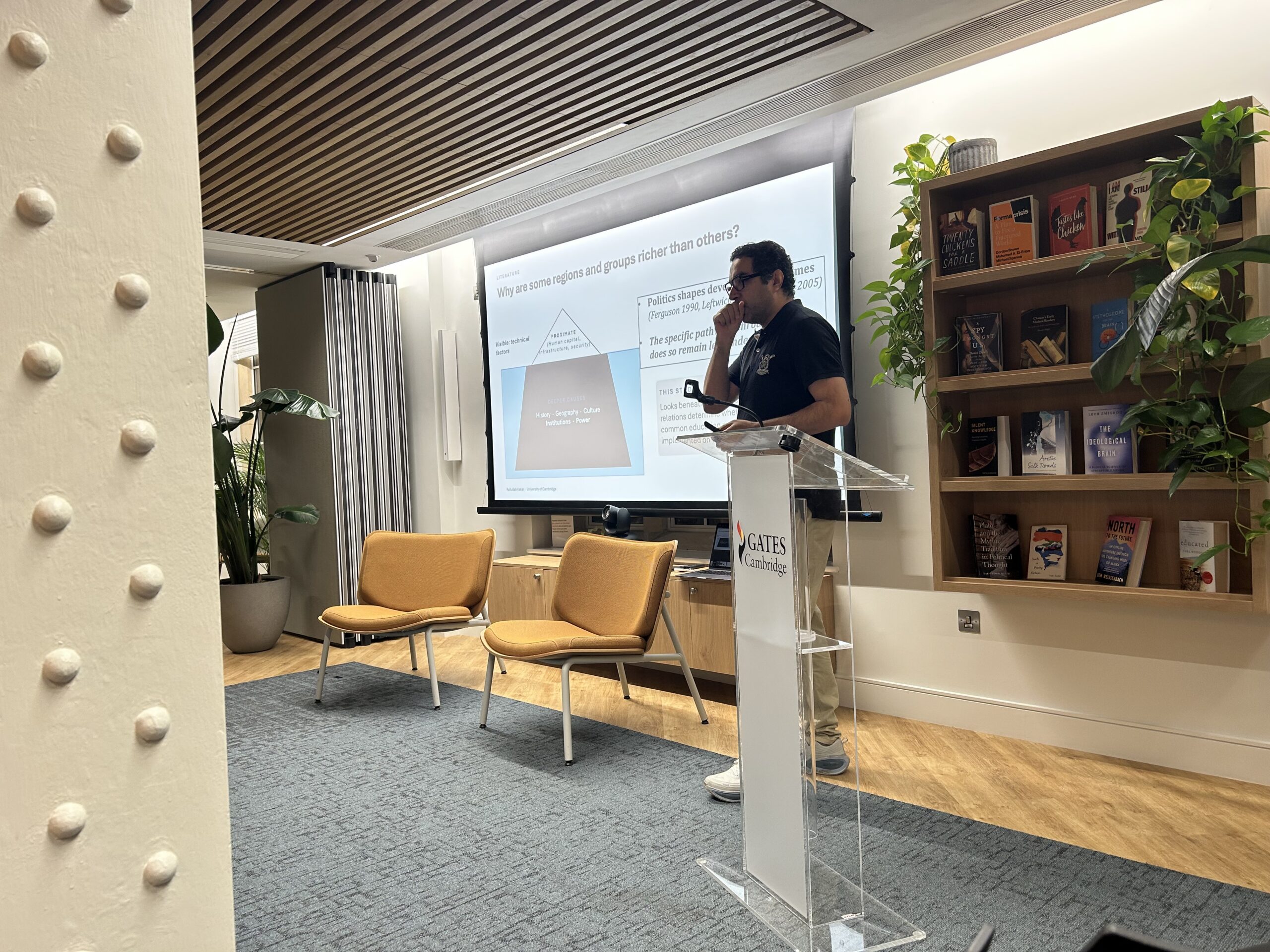
Rafi Kakar
Rafiullah Kakar [2024] is studying for a PhD in Education. His talk was titled “Uneven State Capacity: Exploring the Political Economy of Sub-National Inequalities in Education Provision”.
He focused on the ability of regional governments to translate education policies into effective outcomes.
He compared four districts in Balochistan and looked at what the deeper determinants of development are, from history and geography to institutions and power. He said there is a growing consensus that politics shapes the developmental trajectory of different regions, although there is no agreement about the pathways through which politics does this. His study foregrounds the primacy of underlying balances of power.
He noted a variety of findings, including that having more female teachers improves educational outcomes, that the performance of public schools matters more than the presence of private schools and that implementation matters, for instance, how schools hire, how they monitor outcomes and the level of community engagement. When it comes to the configuration of power, he said, elite cohesion and coordination are important as is political openness, meaning that people are able to change allegiance.
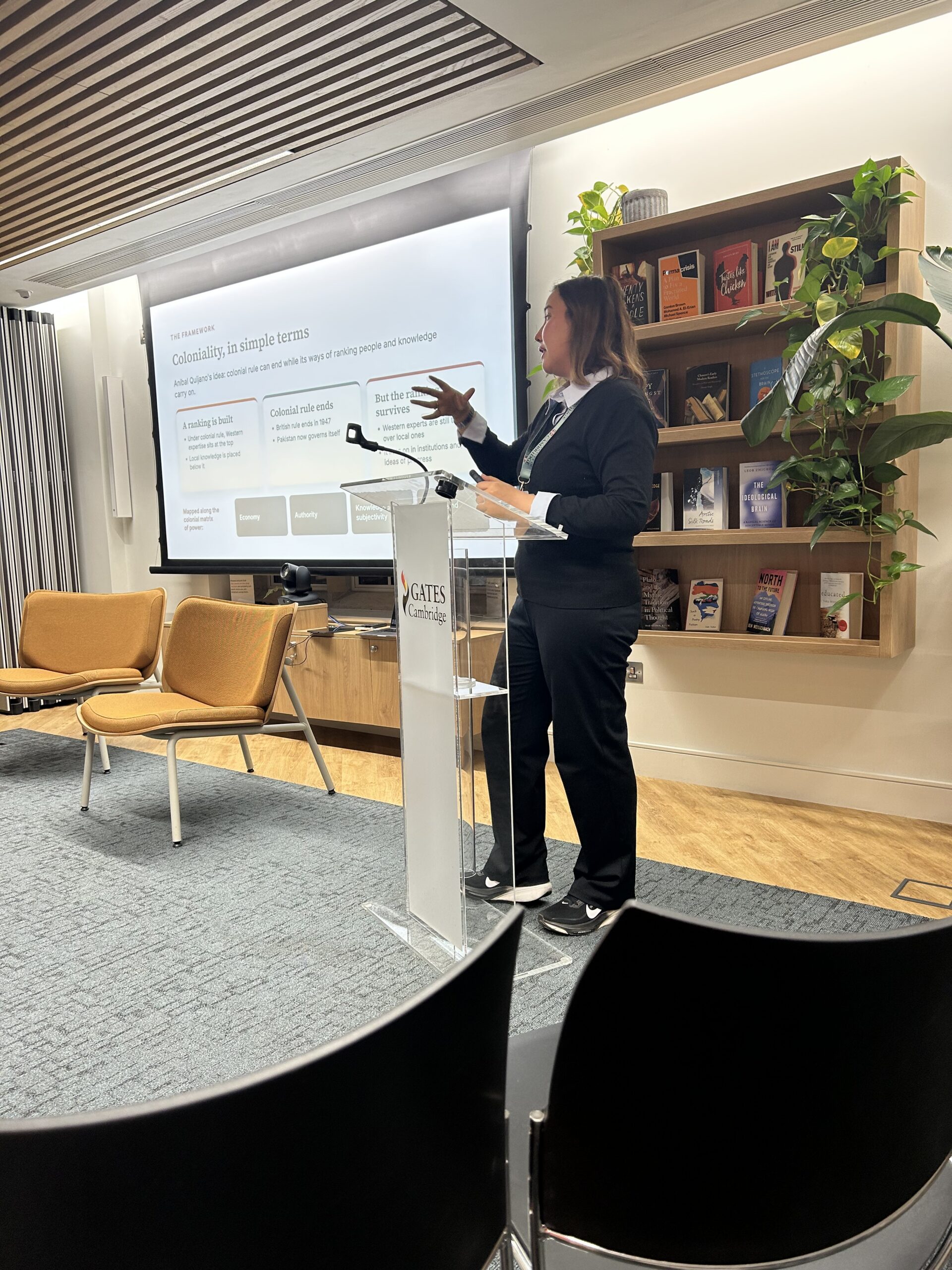
Rameen Siddiqui
Rameen Siddiqui [2026] is studying for an MPhil in Modern South Asian Studies. She spoke on the theme of “Whose Growth, Whose Expertise? Framing Pakistan’s ‘Decade of Development’”.
Rameen’s talk traced the history of development in Pakistan, in particular the so-called decade of development from 1958 which focused on economic development rather than human development and social equality, drawing on colonial hierarchies and expertise.
She is particularly interested in the differences in development between then East and West Pakistan and East Pakistan’s perception of development, how growth was presented and inequality defended.
She said the impact of outside expertise still shapes ideas of development in Pakistan today. “Understanding the past helps us to ask better questions today,” she stated.
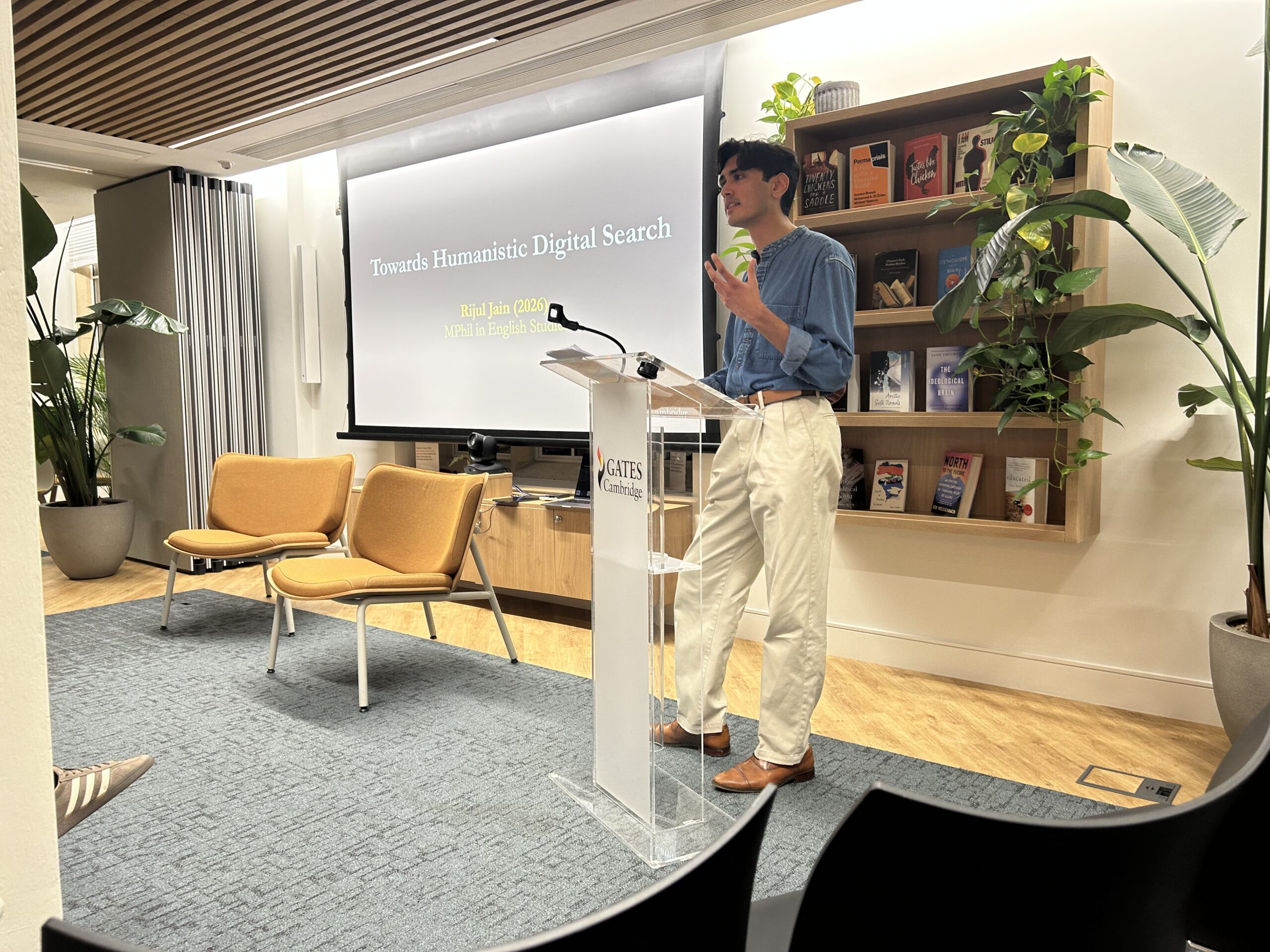
Rijul Jain
Rijul Jain [2026] is studying for an MPhil in English Studies. His talk was entitled “Towards Humanistic Digital Search”. His research is into how search tools shape humanistic scholarship. He questioned whether literary criticism can be subject to scientific methodologies given, for example, its subjective and changing nature.
His study is based on 11 semi-structured interviews with literary scholars. He asked them how digital search affects their work now, how digital tools could help shape their work in the future and how they might shape the space of possible inquiry.
He said scholars spoke of how digital search can foreclose unexpected discoveries, for instance, coming across some new material in a library that they had not specifically searched for. He said tools need to be based in part on behavioural observation and quantitative transformation and should be designed to broaden the possible scope of inquiry. “We cannot lose sight of how the humanistic and scientific condition each other,” he said, highlighting the need to preserve “the strangeness of humanity”.