

Damni Kain's PhD explores the future of work for Indian women working in the beauty industry in the gig economy
I am interested in how these women are reshaping the discourse of platformisation in India.
Damni Kain
Damni Kain’s PhD deals with the interaction between gender, work and technology through an ethnographic exploration of the platformisation of the beauty economy in India. Her aim is to create a better future of work by providing sociological evidence that can inform state policies, digital labour platforms and consumers about the reality of life in the gig economy.
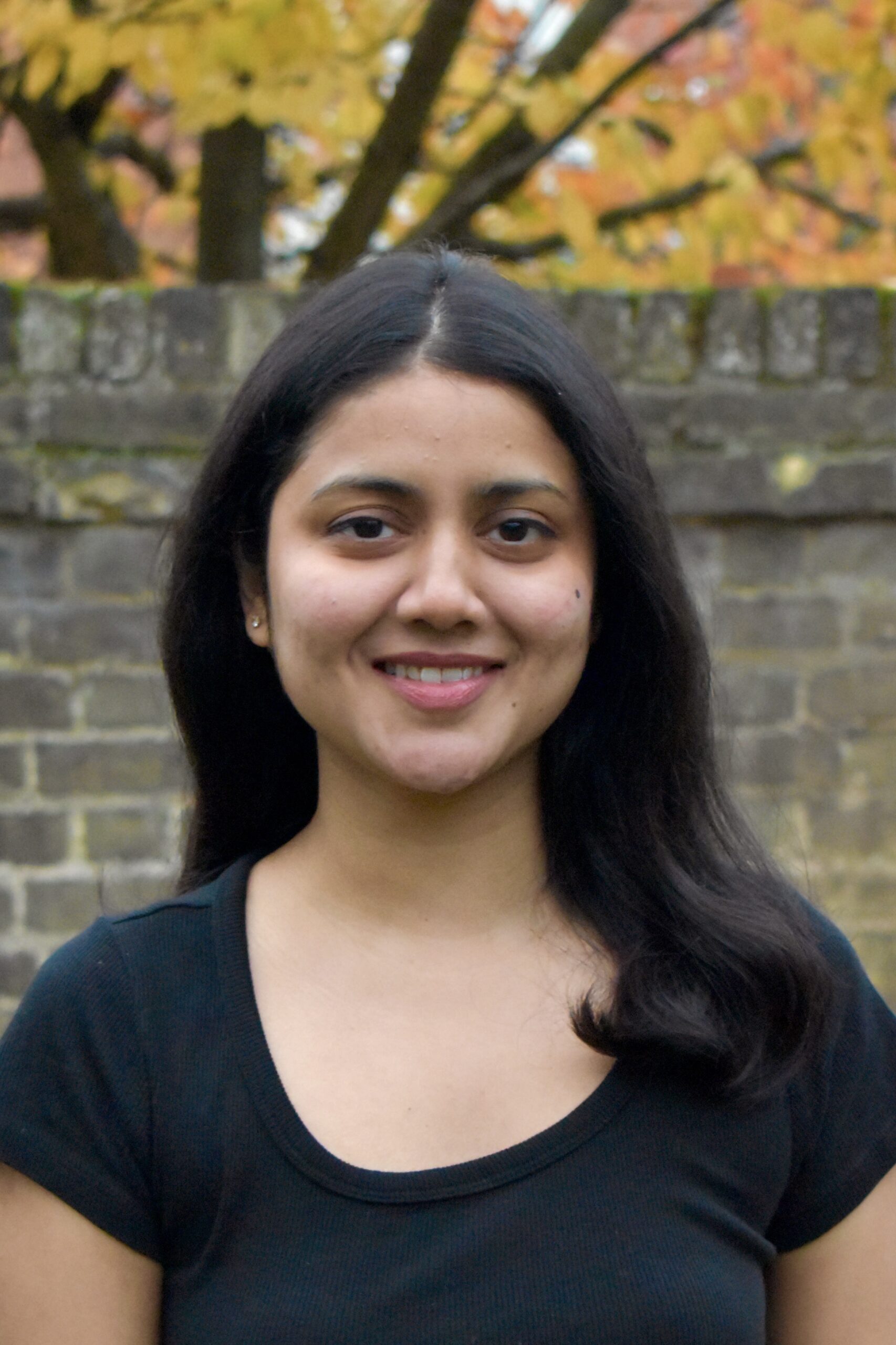 To do her research, Damni [2024] trained in beauty, makeup and massage services and worked covertly as a beauty worker in Delhi. She did six months of training at a beauty academy to be a professional make-up artist and masseuse followed by six months training with digital beauty labour platforms. “My PhD is based on five years of understanding platform and gig work and discourse on women’s labour and technology as well as my ethnographic fieldwork,” says Damni.
It builds on the sociology of body and embodiment. She adds: “Such work is very exhausting and difficult. I am looking at what it does to the body, listening to women’s stories. I want to investigate what it means to be a platformised body in the beauty economy of India.”
Now entering the third year of her PhD, she has already completed one chapter on how women platform workers in the beauty industry are trained and what makes an ‘ideal’ worker as well as what the future of work looks like for them, for instance, what skills they have learned that are transferable to other areas.“I am interested in how these women are reshaping the discourse of platformisation in India,” she states.
She adds that it is hard for workers to be organised in the beauty-platform economy, and that most attempts at setting up rights-based movements are sporadic in nature. That makes policy change challenging so work like hers, which provides evidence of what the industry is like, is all the more important when it comes to labour rights in the sector.
Damni learnt this week that her work has been recognised by the Labor Tech Research Network, which has awarded her paper, “‘(Google) Maps often gets us stuck’: Space, Time and Gig Work in Delhi”, the 2026 Graduate Student Paper Award. It praised the “empirically rich and methodologically innovative study” of how the spatial and temporal experiences of gig workers are shaped by the interaction between digital infrastructures and the socio-urban realities of Delhi, saying Damni’s work offered “a grounded account of the everyday realities of platform work”. In particular it noted the innovative use of GIS to compare workers’ actual routes with those suggested by platforms which it said revealed “discrepancies between algorithmic expectations and the lived geographies of urban mobility”.
The Network said: “By situating these experiences within Delhi’s caste-class geographies, the paper demonstrates how platform technologies intersect with existing social inequalities to shape workers’ time, movement and outcomes.”
The Labour Tech Network is a transnational community of researchers, tech workers, organisers and activists which examines labour and technology through anti-racist, feminist and social justice perspectives.
Early years
Damni was born and grew up in New Delhi in a socio-economically disadvantaged household. Her mother, who was a beautician, was the main breadwinner while her father was engaged in precarious jobs. She has a younger brother who has been a great support system for her.
Growing up, she was aware that beauty work had given her mother the freedom to get out of the house, but at the same time her mother encouraged her to keep studying so she didn’t end up following in her footsteps. Damni says her PhD fieldwork is therefore “a full circle moment” for her.
She did well at school despite suffering from chronic health issues starting from her teenage years – including gynaecological and gastrointestinal health problems and anxiety and depression. She says the context she grew up in meant her horizons were fairly narrow as a child. “I was not exposed to the immense possibilities that my future could hold,” she says. However, she was aware that education could be used as a way out of the socio-economic disadvantage she was born into.
Damni was interested in many subjects at school and got involved in debating. She also won two national level awards for painting – something she continues to do at Cambridge alongside playing the guitar, poetry, sight-seeing, cooking and a wide range of other activities. “Painting taught me a lot of patience. I would be working on a canvas for hours. I was very focused as a child,” she says.
Damni was always keen on social sciences and chose to start her political science degree at the University of Delhi, with a minor in sociology, in 2016. She ranked first at her undergraduate college by the time she finished in 2019.
Her father initially believed that she shouldn’t go to a ‘regular’ college, but should instead do open learning, which involves just a few classes a year. Although her parents both supported her education at school, Damni had to convince her father that women could benefit from further education because of the social and cultural context in which she grew up. “When he saw my efforts and how much I really wanted to study, it wasn’t so difficult to convince him,” she says. He is very proud of her now.
Undergraduate studies and activism
While she was doing her undergraduate studies, noting her academic performance, a professor recommended that Damni should consider studying abroad. Her first reaction was to question how that could even be possible. She chose instead to do her master’s in political science at the University of Delhi. She also secured All India Rank (AIR) 3 in the highly competitive, nationwide Delhi University Entrance Test (DUET) for Master’s in her subject.
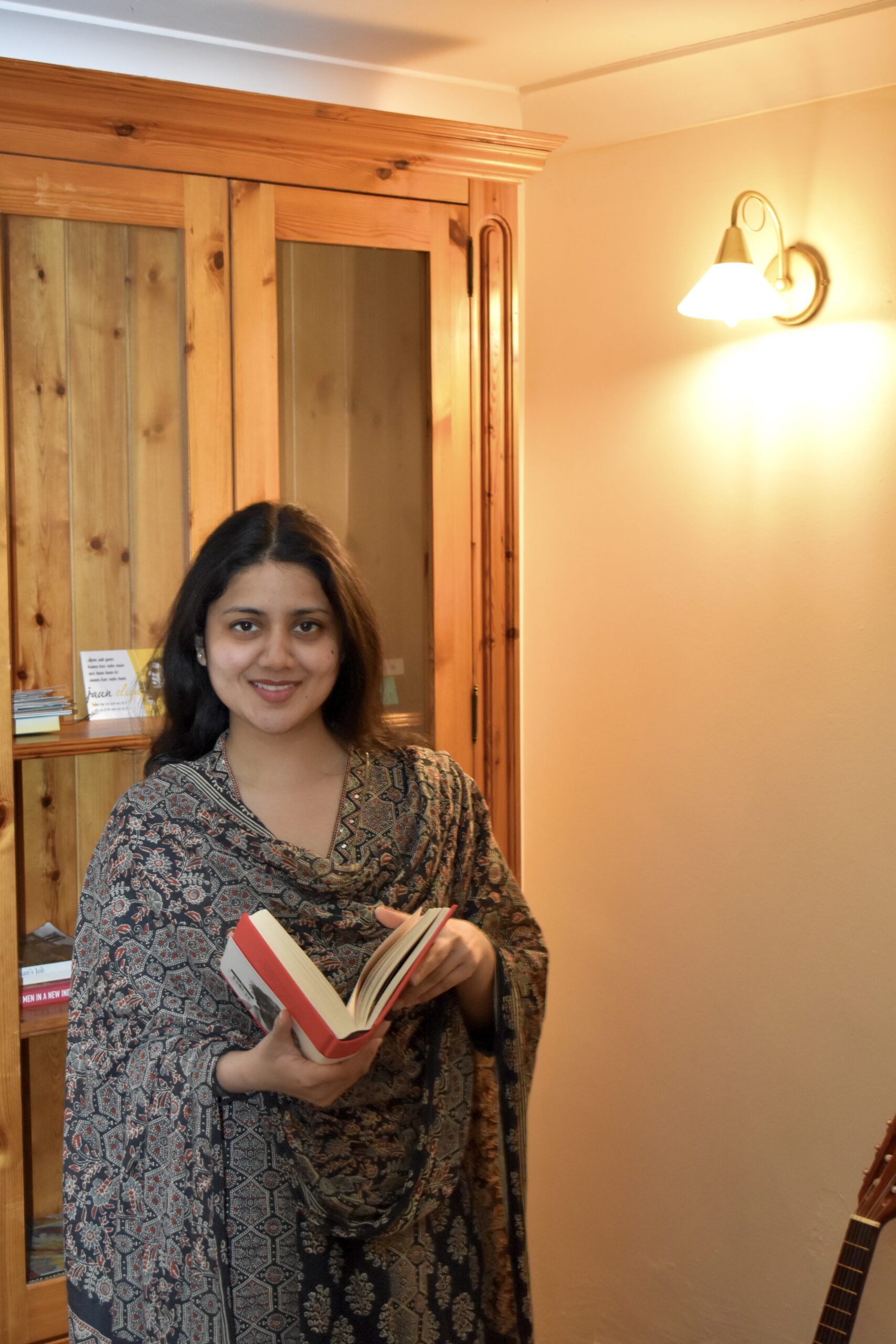 As she finished her degree, Damni was becoming more and more interested in student activism at university. At the time there were a lot of student protests in India. A professor had introduced her to student politics. She started writing on social media and digital platforms about political events seeing which one of the student union leaders said she should stand for president at the Delhi University Student Union Elections (2019). Her campaign was motivated by concerns about social justice, academic freedom and inclusion of women’s colleges in DUSU since not being a part of DUSU meant that students from women’s colleges were not allowed to vote or stand in the elections. She argued that all colleges should be part of the student union and be able to vote and contest elections.
When she threw her hat in the ring, she didn’t realise that the University elections were the largest in India and that she would have to campaign in more than 40 colleges over a two-month period in summer 2019. It was daunting and Damni admits there were times she wanted to give up, but her fellow students buoyed her up. She had to speak to the national media, given student politics can be a barometer of national politics in India.
Previously, she says, she was “a big time nerd”, but her confidence grew , even though she did not ultimately win. “Those elections really shaped me and made me what I am today,” she says, adding that she is pleased that she succeeded in bringing more attention to the issues she raised during the campaign.
Master’s and beyond
After the elections in 2019, Damni began a two-year master’s at the University of Delhi with a focus on technology, gender, caste and labour, spurred in part by her use of social media as an activist. Soon after, the Covid pandemic erupted and education was very disrupted. As things started to open up again Damni started seeking out fellowships and internships to help support her family, given her mother had been unable to open her salon during the pandemic. At that point Damni was the sole earner in her family.
She secured a position at the Centre for Internet and Society where she worked on online caste-related hate speech. She also worked on other research projects.
Damni then won a prestigious and extremely competitive fellowship – the Legislative Assistant to Members of Parliament or LAMP fellowship – working with Parliamentarians at the Indian Parliament. She worked with an MP from Tamil Nadu who represented a constituency of two million people and was on the committee which covered gender and education which meant Damni was able to actively engage with parliamentary interventions on labour rights, technology, gender and education.
“I was able to bring all I had learned and studied to policy advocacy and action-oriented research,” she says. She drafted speeches and amendments to bills, questions in Parliament and letters to ministries on issues such as disability or minority rights. She also engaged with discussions on AI, technology and social justice.
Cambridge
She saw that several of her fellow student activists had opted to study abroad and support from one of them made her think that maybe it was possible for her. She applied for a passport, but her parents were not initially in favour of her going abroad to study. So, she didn’t tell them for a year that she had applied to Cambridge to do her MPhil until she received the Cambridge Trust and Commonwealth scholarship funding. Damni began her MPhil in 2022 and says it was not easy initially . “It was a totally new environment for me and very tough, given my health issues. I had to do a lot of catch-up to match the pace of Cambridge,” she says.
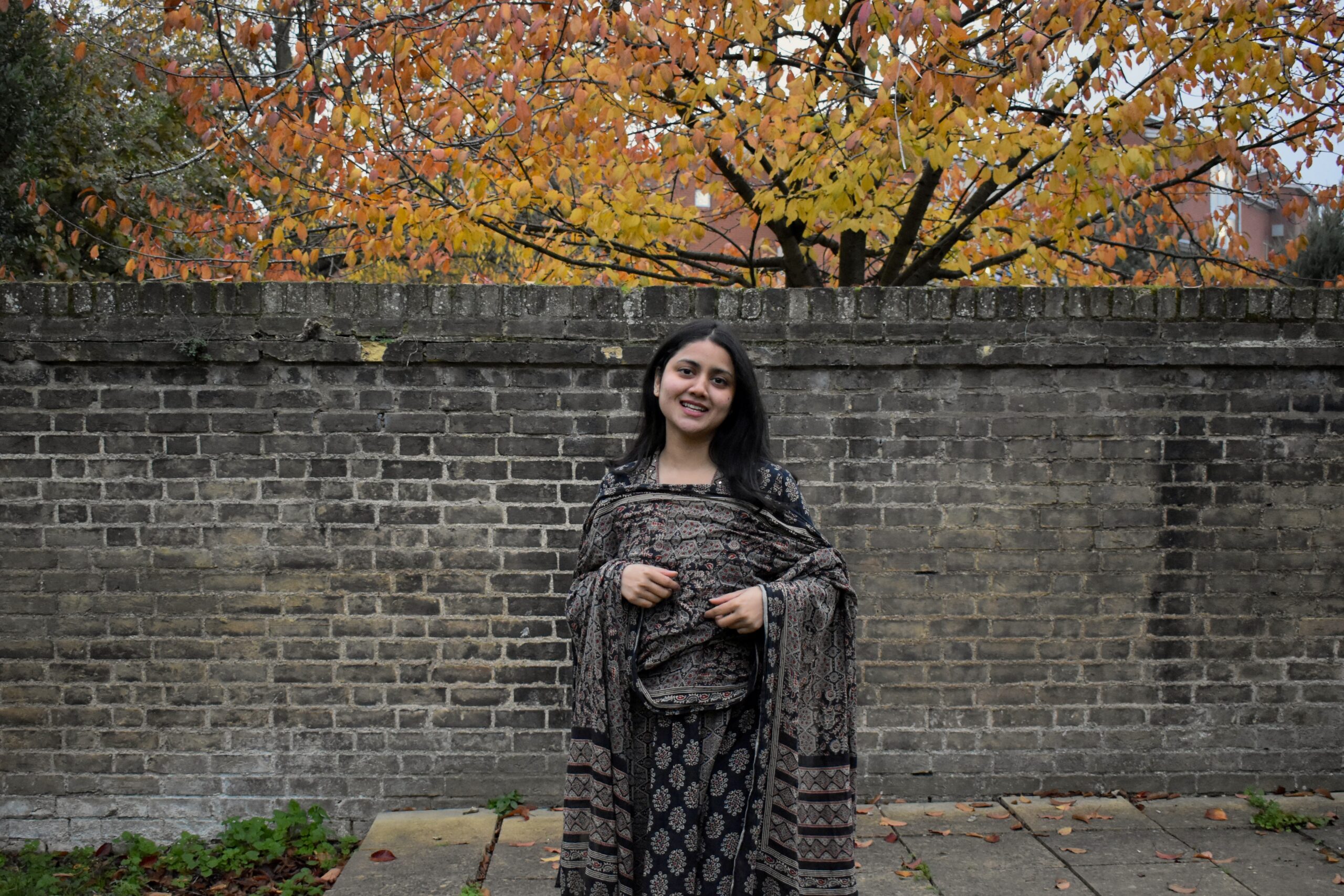 Her chronic health issues increased and she was diagnosed with depression and anxiety. Her college mental health adviser, Rachel Winson, gave her a lot of support. But despite all the pressure, Damni continued to work hard.
Her MPhil dissertation in Modern South Asian Studies at Cambridge was on the spatial and temporal structures of platform work in relation to the gig economy’s position in India’s caste society. It won the UK-wide British Association for South Asian Studies (BASAS) best dissertation award. Damni also won the best academic performance prize on her course. Her dissertation followed on from work she had done in India in 2021/22 on an action-oriented research project based at the Fairwork Foundation at the University of Oxford. For this, she had to do fieldwork across 10 digital labour platforms, researching gig workers’ stories and writing up papers and online articles.
After finishing her MPhil in 2023, Damni worked as a lecturer at a prestigious private university in India and began thinking about how to manage her anxiety better while applying for her PhD. She got three fully funded offers and opted for Gates Cambridge, drawn by her impression that Gates Cambridge was a welcoming, supportive and active community.
Damni hopes her PhD research will contribute towards policy changes to improve workers’ rights. While she has been doing it she has also been involved in several passion projects, including Towards Equity which mentors students from marginalised backgrounds for policy-related jobs. Since 2021, she has also been mentoring marginalised students in India who want to apply to study abroad through Project EduAccess
Having completed her fieldwork, Damni is now writing up. She is very appreciative of the opportunities Gates Cambridge has given her. “I am grateful to Gates Cambridge for showing me that there are infinite possibilities in life. I have been exposed to people from different disciplines who have inspired me and made me think in different directions. I am grateful for the kind of work I have been able to do in Cambridge and for the academic freedom I have,” she states.
Cambridge has opened doors to other funding, for instance, she won a grant from the Sociological Review Foundation to work on research methodology and ethnography. She has also been part of the CRASSH network on caste as practice and its Cambridge Inequality Laboratory. In her time at Cambridge, she has organised workshops and attended conferences, including presenting at the British Sociological Association conference.
Damni plans to remain in academia, but to do work that is public-facing and she finds herself in a good position to make change. “There is so much sociologists can do with good qualitative research and engagement with policymakers,” she says.
*Photos by Myrto Ioakeimidou