



Darragh Walsh
- Alumni
- Ireland
- 2001 CASM Mathematics
- St John's College
Darragh Walsh
- Alumni
- Ireland
- 2001 CASM Mathematics
- St John's College
Elizabeth Ann Walsh
- Alumni
- United States
- 2015 MPhil Social Anthropology
- King's College
Elizabeth Ann Walsh
- Alumni
- United States
- 2015 MPhil Social Anthropology
- King's College
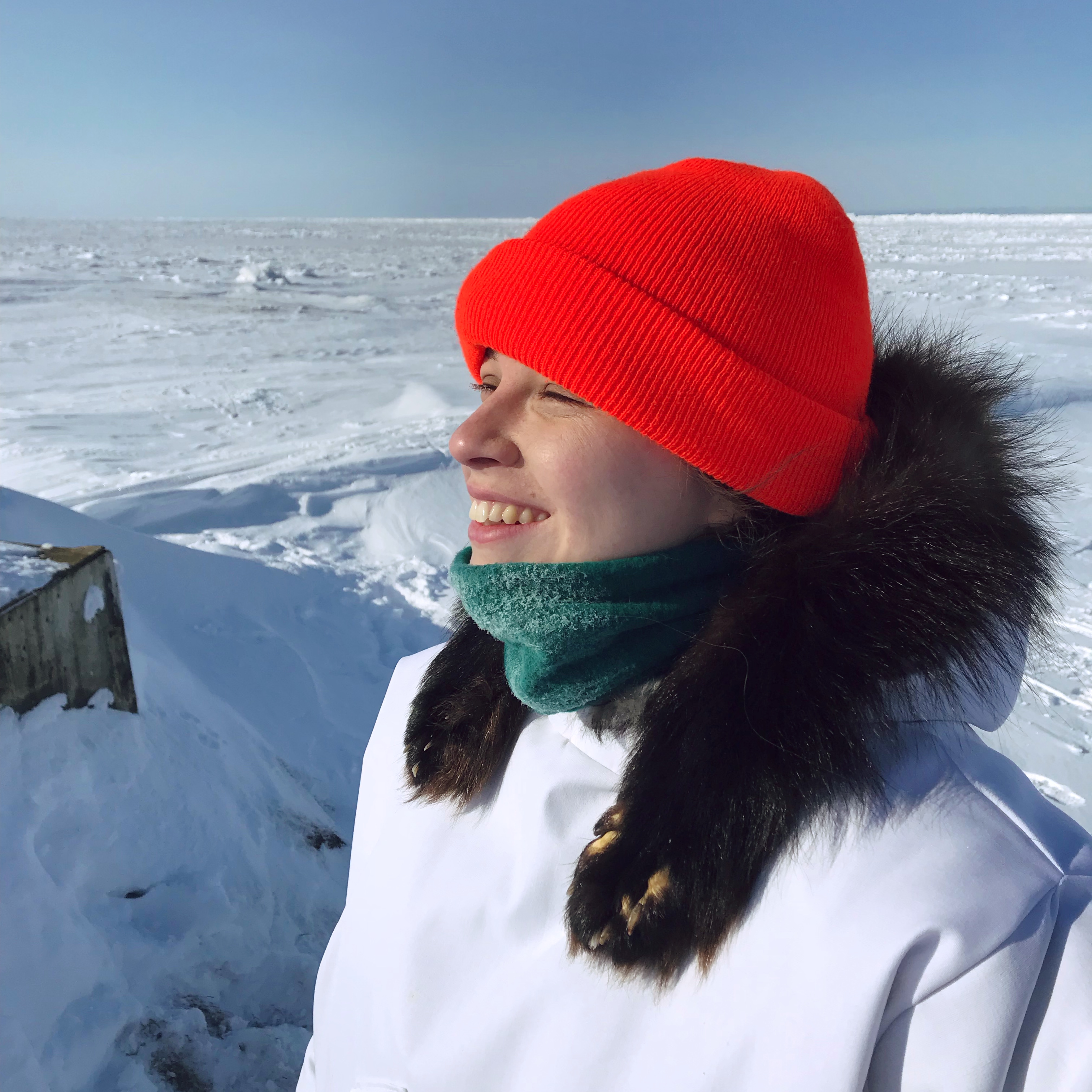
Liz is currently a third-year PhD student in the Department of Social Anthropology at the University of Cambridge. She began her postgraduate career researching relationships between ethnographic museums and Indigenous source communities, focusing specifically on critiques of digital and non-material repatriation and disparities in interpretational authority. Her recent fieldwork in the Alaskan Arctic has led her to broaden her focus to other cultural institutions while interrogating the integration of non-Native settlers into geographically-isolated Native communities. With a specific interest in how Indigenous sovereignty is recognised and exercised within the politically-charged Arctic, her work considers the competing interests of multi-national corporations, settler nation-states, and local Indigenous peoples in determining the future of economic and social development in the North.
Previous Education
Columbia University
Passaic County Community College
Alexander Walther
- Alumni
- Germany
- 2011 PhD Biological Science @ MRC CBU
- Trinity Hall
Alexander Walther
- Alumni
- Germany
- 2011 PhD Biological Science @ MRC CBU
- Trinity Hall
I am a computational neuroscientist and data scientist who did his PhD at Cambridge (2011-15).
Njoki Wamai
- Alumni
- Kenya
- 2012 PhD Politics & International Studies
- Queens' College
Njoki Wamai
- Alumni
- Kenya
- 2012 PhD Politics & International Studies
- Queens' College
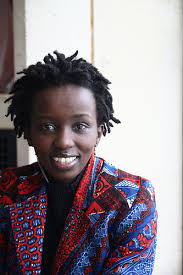
Njoki is an assistant Professor in International Relations Department at Kenya's oldest private university United States International University-Africa. She was previously a Post Doctoral Researcher at the Politics and International Studies department (POLIS). Her research focus is on the tensions between international and local practices of transitional justice in Kenya. At Cambridge, Njoki was the founding president of the Cambridge Eastern African Society (CamEAS) and and the Black Cantabs project which aims to curate the achievements of black Cambridge alumni at www.blackcantabs.com. She is also a co-founder of the African Society of Cambridge University (ASCU).She is an alumnus of the Africa Leadership Centre (ALC) at King's College London. Njoki worked in the non-profit sector in Kenya at Kenya Human Rights Commission and at the Centre for Humanitarian Dialogue. Her research interests include critical transitional justice, critical theory, politics of Africa, African feminisms and development of political thought from Africa.
Previous Education
University Of Nairobi
King's College London (University of L
Patrice Wan Hok Chee
- Alumni
- Mauritius
- 2001 MPhil Finance
- Trinity College
Patrice Wan Hok Chee
- Alumni
- Mauritius
- 2001 MPhil Finance
- Trinity College
John Wang
- Scholar
- Austria
- 2026 PhD Pharmacology
- Fitzwilliam College
John Wang
- Scholar
- Austria
- 2026 PhD Pharmacology
- Fitzwilliam College
“Any sufficiently advanced technology is indistinguishable from magic.” This perspective by Arthur C. Clarke resonated with me during my undergraduate studies in Natural Sciences at University College London. Initially interested in drug design, my research on antibody-drug conjugates (ADCs) led me to realise that therapeutic efficacy is not solely determined by the drug itself, but by how precisely its delivery, targeting and release can be controlled. This led me to see drug delivery not just as a biological challenge, but as an engineering problem - one of designing and controlling molecular architecture, interactions and functions at the nanoscale. With antimicrobial resistance threatening modern medicine, my PhD will focus on engineering programmable drug delivery systems using DNA nanotechnology to target drug-resistant bacteria such as MRSA strains. By improving where and when antimicrobial agents act, this approach aims to enhance efficacy while limiting non-specific exposure that drives resistance. I look forward to working within the Gates community to translate these ideas into real-world solutions that improve lives globally, advancing more precise, accessible and equitable antimicrobial therapies.
Previous Education
University of Cambridge Pharmacology 2026
University College London Natural Sciences (Biomed&Chem) 2025
Julia Chang Wang
- Alumni
- United States
- 2014 Mphil Modern European History
- Trinity College
Julia Chang Wang
- Alumni
- United States
- 2014 Mphil Modern European History
- Trinity College
I was born in Beijing and moved to Chicago with my parents at age 9. Because of my immigrant background and love of history, I'm studying immigrant participation during the 1960s in Great Britain and France at Cambridge in the MPhil program in Modern European History. As an undergraduate at Harvard, I studied History, Economics, and French, focusing on the history of empire and decolonization in the twentieth century. Outside the classroom, I edited for the undergraduate history research journal, sang in an all-female choir, and danced in different shows on campus. I hope to continue some of my extracurricular interests in England. After my time at Cambridge, I hope to use what I learned to pursue a career in legal academia and work in an international capacity on improving the rights of immigrant populations, particularly socioeconomic rights like education. I am excited to be part of the Gates community!

Lea Wang
- Scholar
- United States
- 2026 MPhil History and Philosophy of Science and Medicine
- Trinity College
Lea Wang
- Scholar
- United States
- 2026 MPhil History and Philosophy of Science and Medicine
- Trinity College
I was born and raised in Holland, Pennsylvania and am a recent graduate of Harvard College, where I earned my A.B. degrees in Applied Mathematics and Social Studies. My academic interests span politics, science and technology studies, and histories of the environment and economy. At Harvard, my work examined disaster insurance and the political economy of climate reparations. As a Gates Cambridge scholar, I will pursue an MPhil in History and Philosophy of Science and Medicine, focusing in particular on the role of climate models in adjudicating questions of legal responsibility for climate change. By examining the intersections of technology and politics, I seek to articulate our obligations to one another—especially in confronting the epochal challenges of climate change. I am honored to join an engaged community of scholars committed to advancing public scholarship where it is needed most.
Previous Education
Harvard University Social Studies, Applied Math 2026
Stan Wang
- Alumni
- United States
- 2011 PhD Surgery
- Trinity College
Stan Wang
- Alumni
- United States
- 2011 PhD Surgery
- Trinity College
Yalan Wang
- Alumni
- China
- 2002 PhD Engineering
- Christ's College
Yalan Wang
- Alumni
- China
- 2002 PhD Engineering
- Christ's College
I feel honoured to be a Gates Cambridge Scholar, which has enabled me to realise one of my dreams rooted since my childhood, - to pursue studies and gain experience in one of the world’s best learning centres. The training and expertise obtained at Cambridge, the passion for my work and the unceasing effort would make me step towards to contributing something to this world either in academic research or in industrial development, I believe!
Yimeng (Monique) Wang
- Scholar
- China
- 2025 PhD Physiology, Development and Neuroscience
- Downing College
Yimeng (Monique) Wang
- Scholar
- China
- 2025 PhD Physiology, Development and Neuroscience
- Downing College
“If brain regions were filed under literary genres, the frontal lobes would surely be found in the Fantasy section.” My journey with this fantasy began at University College London during my undergraduate studies in Neuroscience. I became particularly drawn to the complexity of emotions and the prefrontal cortex, a heterogeneous and intricate region that remain understudied. I was motivated to explore how abstract emotional experiences can be grounded in distinct patterns of prefrontal circuit activity. My curiosity also extends to situations in which these processes go awry, particularly in psychiatric disorders, where disruptions in the prefrontal cortex can have profound consequences. Now continuing this journey through my PhD, I intend to investigate the functional asymmetry between the left and right dorsolateral prefrontal cortex, examining whether they differ in processing emotional valence and functional connectivity. Beyond theoretical research, I also hope to translate my findings into refined therapeutic strategies. In many ways, I feel I am charting my own story through the brain’s Fantasy section, seeking to decode some of its most intricate and compelling narratives.
Previous Education
University College London Neuroscience
Yingqi Wang
- Alumni
- Canada
- 2008 MPhil Pharmacology
- Gonville and Caius College
Yingqi Wang
- Alumni
- Canada
- 2008 MPhil Pharmacology
- Gonville and Caius College
During my MPhil I will be investigating pain sensation, and especially noxious heat receptors as they are one of the most complex protein receptors in the human body. From this course, apart from developing a solid understanding of molecular pharmacology and biochemistry, I also hope to acquire invaluable experience in experimental techniques, which would prepare me well for a PhD. Beyond postgraduate education, I aim to crack into the scientific world or head into industry.
Kuenga Wangmo
- Alumni
- Bhutan
- 2005 MPhil MPhil Archaeology
2006 PhD Archaeology - Fitzwilliam College
Kuenga Wangmo
- Alumni
- Bhutan
- 2005 MPhil MPhil Archaeology
2006 PhD Archaeology - Fitzwilliam College
I am interested in strengthening the historiography of my country through studying past material culture. My research will include extracting information from trees and tree-rings in association with other archaeological finds to construct a more objective account of the past.
Caleb Ward
- Alumni
- New Zealand
- 2003 BAaff Medicine
- Corpus Christi College
Caleb Ward
- Alumni
- New Zealand
- 2003 BAaff Medicine
- Corpus Christi College
Eric Washkewicz, C.S.C.
- Alumni
- United States
- 2013 MPhil Energy Technologies
- Churchill College
Eric Washkewicz, C.S.C.
- Alumni
- United States
- 2013 MPhil Energy Technologies
- Churchill College
I'm originally from West Orange, NJ and I'm currently a seminarian with the Congregation of Holy Cross (the same religious community as fellow Gates Scholars Fr. Kevin Grove C.S.C. and Fr. Chase Pepper C.S.C.) pursuing my Masters of Divinity at the University of Notre Dame.
I previously served a Lieutenant in the US Navy, designated as a Submarine Warfare Officer. I completed my undergraduate education at the US Naval Academy in Annapolis, MD, where I received a Dual Major in Mechanical Engineering (BS) and Ocean Engineering (BS), and was a 4 Year Member of the Varsity Lightweight Rowing Team. I earned an MPhil in Energy Technologies as a Gates Scholar at Cambridge University.
In September of 2014, after my time in Cambridge, I completed the Navy Nuclear Training Pipeline in Charleston SC at NNPTC and qualified Engineering Officer of the Watch at NPTU on the MTS-635 S5W Reactor.
In May 2016 I reported to the USS HARTFORD, a Los Angeles Class Fast Attack Submarine in Groton Connecticut. I previously served as the Fire Control Officer, Anti-Terrorism Officer, Chemical-Radiological Controls Assistant, Assistant Engineer, Assistant Operations Officer, and most recently as the Communications Officer and Primary COMSEC Manager (Both EKMS and KMI). I qualified Submarines in June of 2017, and completed the Prospective Nuclear Engineer Officer's Course (PNEO) to be certified as an Engineer in S6G plants. In 2017 I served as the EOOW and JOOW during one EUCOM Deployment. In 2018 I served as the Primary Officer of the Deck (OOD) during ICEX 2018 and a Surge Deployment. I served as Contact Manager and OOD during my third and final deployment to EUCOM.
In 2019 I left the USS HARTFORD and reported to the US Naval Academy, where I serve as a Physics Instructor, the Officer Representative for the Catholic Midshipman Club and a Volunteer LWT Rowing Coach.
My hobbies and interests include multi-day hiking, long distance cycling, renewable and alternative energy, and mountain climbing. My longest ride to date was a 10 day cycling trip across the UK totaling 1,089 miles.
Jeremiah Wathen
- Alumni
- United States
- 2002 MSc Physics
- Peterhouse
Jeremiah Wathen
- Alumni
- United States
- 2002 MSc Physics
- Peterhouse
Amy Watson
- Alumni
- United States
- 2010 MPhil Early Modern History
- Jesus College
Amy Watson
- Alumni
- United States
- 2010 MPhil Early Modern History
- Jesus College
Previous Education
Yale University BA-History 2010
Samuel Watson
- Alumni
- United States
- 2009 CASM Applied Mathematics
- Trinity College
Samuel Watson
- Alumni
- United States
- 2009 CASM Applied Mathematics
- Trinity College
I am the Director of Graduate Studies for the Data Science Initiative at Brown University. I arrived at Brown in 2015 after completing a PhD in mathematics at MIT and served for three years as a Tamarkin Assistant Professor in the department of mathematics. I won the university's Teaching with Technology award and am currently developing online learning resources for data science.
For the past four summers, I have worked with the Office of Minority Education at MIT as a mathematics instructor for their Interphase program, which is designed to prepare and support incoming freshmen.
My research area is mathematical probability: I study random, discrete two-dimensional systems and various continuum objects that emerge as limits of these discrete systems.
