


Gitte Hansen
- Alumni
- Denmark
- 2009 PhD Asian and Middle Eastern Studies
- Wolfson College
Gitte Hansen
- Alumni
- Denmark
- 2009 PhD Asian and Middle Eastern Studies
- Wolfson College
My research deals with femininity in Japanese culture and cultural expressions. I am especially interested in women as agents of violence - violence towards the self (eating disorders and self-harm) and violence towards others. I work on a wide range of cultural expressions including Murakami Haruki's literary works and Miyazaki Hayao's animations.

Duncan Hanson
- Alumni
- Canada
- 2007 PhD Astronomy
- Queens' College
Duncan Hanson
- Alumni
- Canada
- 2007 PhD Astronomy
- Queens' College
Angela Harper
- Alumni
- United States
- 2018 PhD Physics
- Churchill College
Angela Harper
- Alumni
- United States
- 2018 PhD Physics
- Churchill College
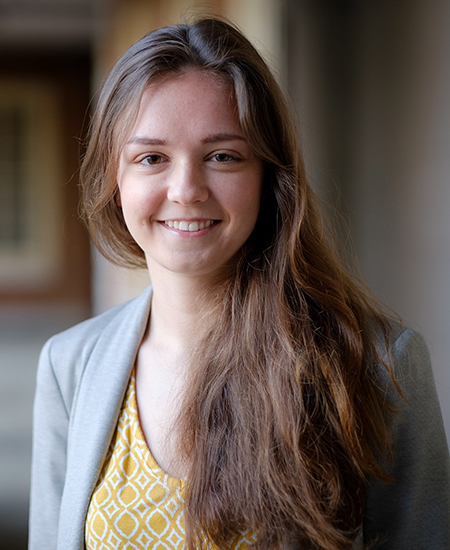
At Wake Forest University, where I completed my BS in Physics, the words "Pro Humanitate" or "For Humanity" are present on every school crest and throughout the campus. It was at Wake Forest that I developed my passion for using physics not only as a way to further an understanding of our universe, but also as a means of giving back to the community and our world as a whole. There, I not only worked to develop low cost organic transistors, but helped to create a Women in STEM program at the University and at a local secondary school. At Cambridge, I will continue my work in physics, discovering and modelling materials for energy storage devices in an attempt to create higher capacity, longer lasting batteries. By searching for novel materials from first principles, I hope to reduce experimental resources by computing the most favorable materials and thus limiting the number of experiments necessary. This work will address the urgent need for higher capacity energy storage to fully utilize sources of carbon-free energy such as wind and solar power, and reduce our global reliance on fossil fuels.
Previous Education
Wake Forest University
University of Cambridge
David Harris
- Alumni
- United States
- 2011 MPhil Advanced Chemical Engineering
- King's College
David Harris
- Alumni
- United States
- 2011 MPhil Advanced Chemical Engineering
- King's College
At Auburn University I was an active member of the American Institute of Chemical Engineers (AIChE), Cupola Engineering Ambassadors, and the University Honors College. I have conducted undergraduate research with biomaterials and in vitro cell culture to help design safer and more effective drug eluting stents. I also participated in two summer programs, including the Summer Institute in Anatomy at Johns Hopkins University and the NSF REU in Cellular Engineering at Rice University. I was named a Barry M. Goldwater Scholar in April of 2010. My plans are to eventually pursue a combined M.D./graduate degree and have a career in translational medical research. I am particularly interested in biotechnology and the medical device industry. At Cambridge, I plan to study for an M Phil in Advanced Chemical Engineering to broaden my knowledge of these fields and obtain more experience in research and entrepreneurship.
Muhamad Hartono
- Alumni
- Indonesia
- 2019 MPhil Biotechnology
2020 PhD Chemical Engineering - Downing College
Muhamad Hartono
- Alumni
- Indonesia
- 2019 MPhil Biotechnology
2020 PhD Chemical Engineering - Downing College
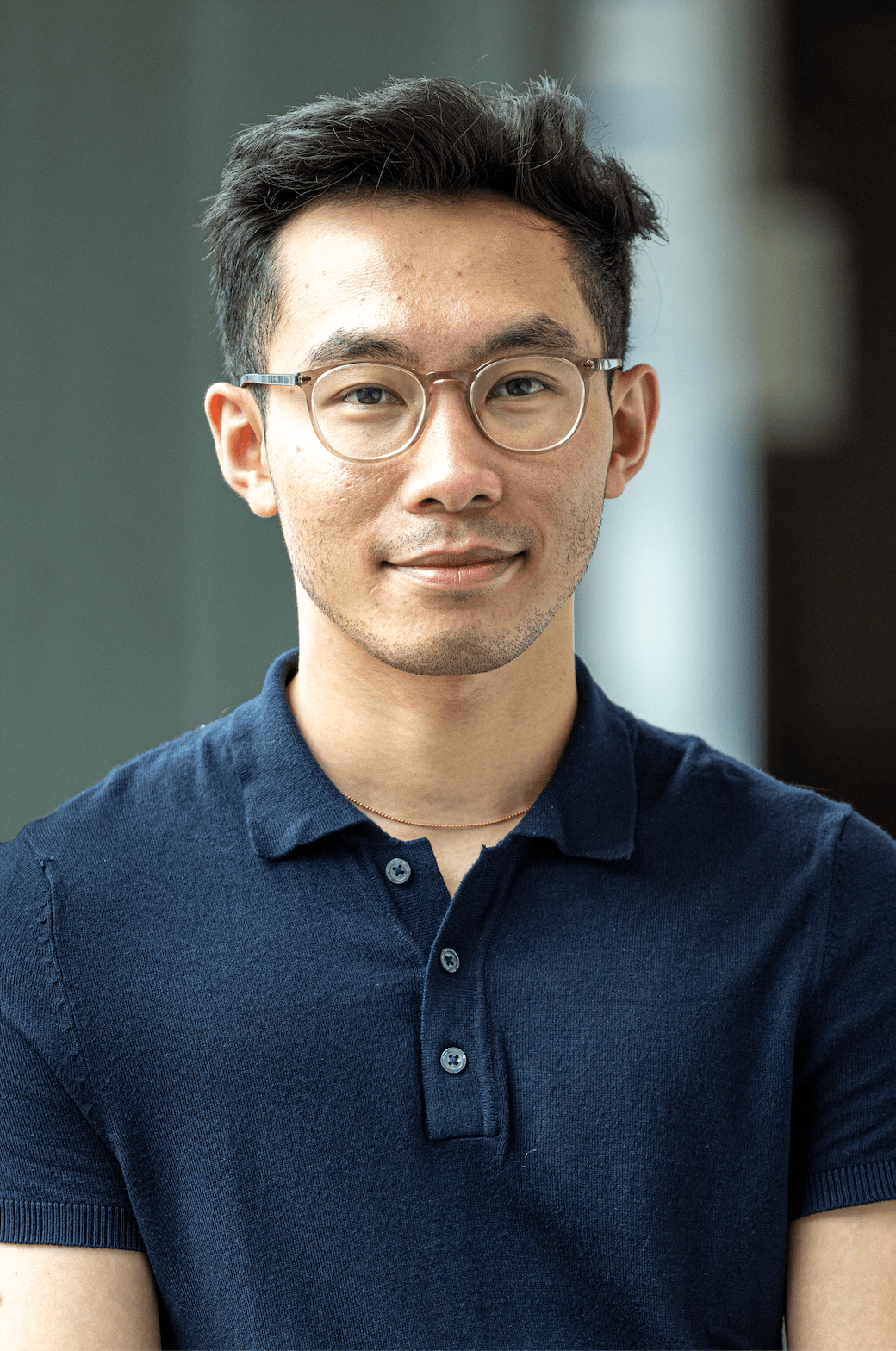
My research focuses on developing a novel method to detect cellular senescence after cancer therapy. Senescence, a natural cellular response to damage including chemo- and radiotherapy, has been shown to promote tumour growth and cancer recurrence. Therefore, the ability to detect senescence in cancer after treatments can be helpful to improve the prognosis of cancer treatments. In particular, I am interested in exploring nanomaterials to build a stimuli-responsive detection method capable of reporting senescence burden.
David Haskell
- Alumni
- United States
- 2001 MLitt Architecture
- Queens' College
David Haskell
- Alumni
- United States
- 2001 MLitt Architecture
- Queens' College
Nathan Hawkins
- Alumni
- New Zealand
- 2016 MPhil Philosophy
2017 PhD Philosophy - Gonville and Caius College
Nathan Hawkins
- Alumni
- New Zealand
- 2016 MPhil Philosophy
2017 PhD Philosophy - Gonville and Caius College
‘What is truth?’ Pontius Pilate (John 18:38)
It’s an old question. But one that has taken on new importance in an age increasingly labelled ‘post-truth’. One core part of the question is what determines truth. Some claim that truth is a subjective notion, perhaps determined by an individual's perspective. Others think truth is objective, determined by the configuration of the world. Each approach raises more questions. How does an individual's perspective/the world determine what is true? Are there really two notions here that have become confused, or is only one plausible? It also seems difficult to see how either approach explains mathematical truths such as 2+2=4.
My PhD thesis studies the concept of truth. In particular, the way the notion was understood by German mathematician-cum-philosopher Gottlob Frege. Frege holds a unique perspective on truth. He claims that truth is indefinable. And yet he also holds that it is a substantial notion that grounds all factual claims. This gives him a unique perspective on the role of logic. While science studies truths, logic studies truth itself. For logic describes the laws of truth, which are the laws by which we reason. So logic, for Frege, is the fundamental science.
This suggests a middle road. Perhaps truth resides (first and foremost) in the inter-subjective experience of correct thinking. In the law-like principles of valid reasoning. 2+2=4 is true, not because the world is arranged a certain way, nor because we have collectively or individually decided to treat this claim as true, but because we cannot reason that it is false. It is true because it is an absolute inter-subjective fact. Truth is a notion grounded in the interaction between thinking subject(s) and thought about object(s).
(While in New Zealand, I studied a BA with a double major in Philosophy and Mathematics, as well as an MA Philosophy. Since arriving in Cambridge I have completed an MPhil in Philosophy (also as a Gates scholar) and am now engaged in a PhD.)
Previous Education
Massey University
University of Cambridge
Deborah Hayden
- Alumni
- United States
- 2005 PhD Anglo Saxon
- Hughes Hall
Deborah Hayden
- Alumni
- United States
- 2005 PhD Anglo Saxon
- Hughes Hall
My PhD dissertation explored the evolution of linguistic pedagogy and thought in medieval Ireland. Following a year of lecturing and postdoctoral research in Cambridge, I am spending the summer working as a visiting researcher at the Dublin Institute for Advanced Studies, School of Celtic Studies, funded by the American Association of University Women and the British Academy. In October 2011 I will begin a Junior Research Fellowship in Celtic at Christ Church, Oxford.
Erin Hayes
- Scholar
- United States
- 2022 PhD Astronomy
- Lucy Cavendish College
Erin Hayes
- Scholar
- United States
- 2022 PhD Astronomy
- Lucy Cavendish College
During my first semester as a student at the University of Pennsylvania, I developed an insatiable curiosity for astrophysics in my introductory physics class. Soon after, I became involved in research on dark matter and the transient universe, including black holes, microlensing, and supernovae. My curiosity, combined with research experience, grew into a B.A. and M.Sc. in physics from the University of Pennsylvania and a desire to pursue a PhD in astronomy. Additionally, it spurred in me a passion for encouraging more young women to pursue a STEM education, which I have enjoyed doing as a mentor and tutor. At the University of Cambridge’s Institute of Astronomy, I will study supernovae in the near infrared as a probe of the accelerated expansion of the universe. In addition, I will continue my efforts to increase the involvement of women and underrepresented groups in physics through mentorship and advocacy. I look forward to being part of the Gates-Cambridge community to learn from and engage with scholars who are actively working to improve the lives of others in every field.
Previous Education
University of Pennsylvania BA in Physics 2018
University of Pennsylvania MS in Physics 2018
Michael Hayoun
- Alumni
- United States
- 2008 MPhil Bioscience Enterprise
- Gonville and Caius College
Michael Hayoun
- Alumni
- United States
- 2008 MPhil Bioscience Enterprise
- Gonville and Caius College
I'm a fellowship-trained attending physician practicing emergency, medical toxicology, and addiction medicine in the suburbs of Nashville, TN.
Previous Education
Rutgers New Jersey Medical School M.D. 2010
Rutgers University Certificate in Behavioral Pharmacology 2008
Links
Simone Haysom
- Alumni
- South Africa
- 2009 MPhil Environment, Society and Development
- Corpus Christi College
Simone Haysom
- Alumni
- South Africa
- 2009 MPhil Environment, Society and Development
- Corpus Christi College
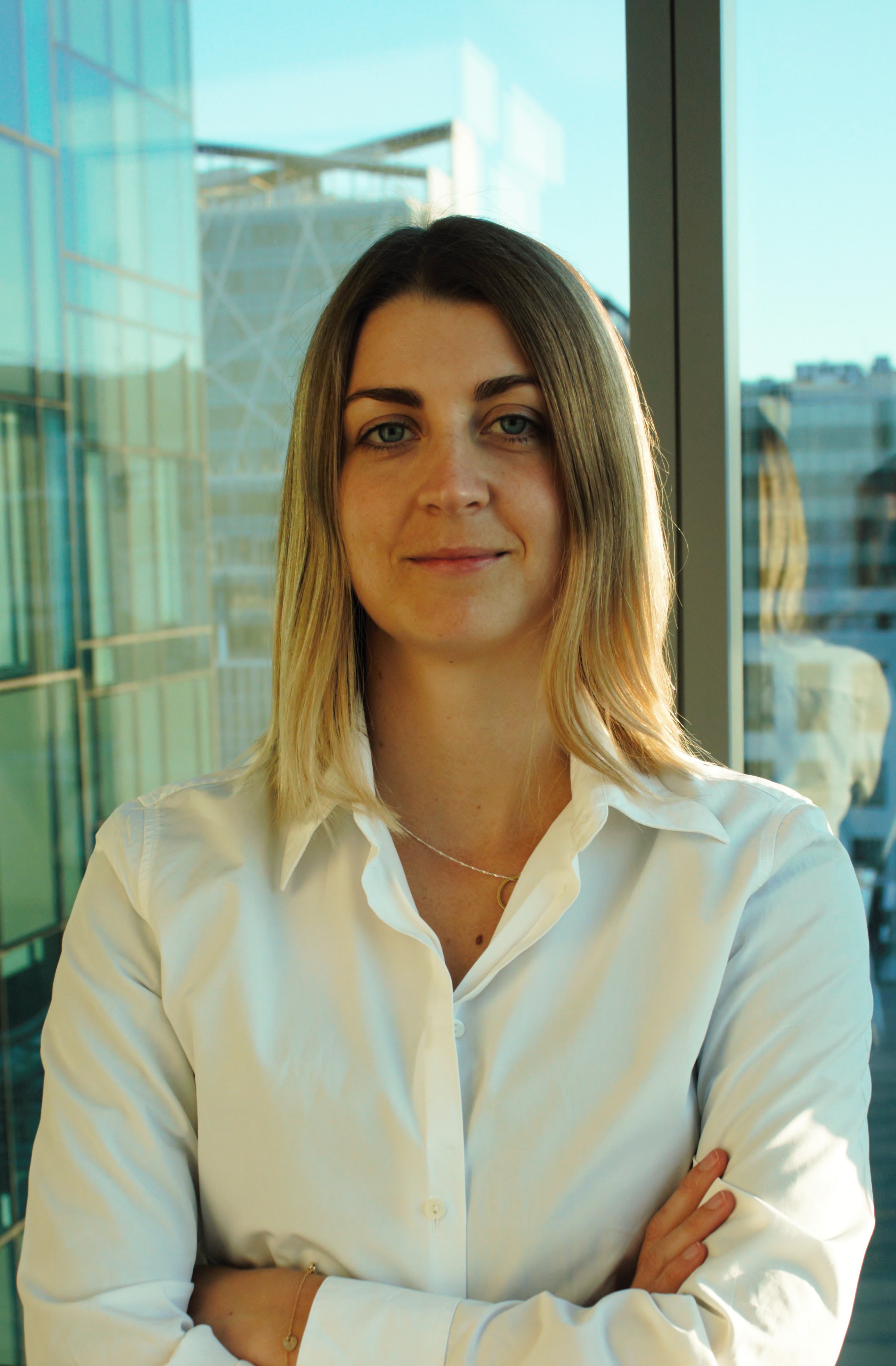
Simone Haysom has expertise in policing and organised crime, urban change, displacement, and humanitarianism in conflict settings. Previously a Research Associate with the Overseas Development Institute in London, she is now a Senior Research Analyst at the Global Initiative against Transnational Organised Crime. Recent major work projects include documenting and analysing the heroin trade along Africa's east coast, and researching the livelihoods of Syrian refugees in Amman. Her first non-fiction book, about the recent rise of vigilantism in Cape Town and the Commission of Inquiry into policing in Khayelitsha township, is scheduled for publication by Jonathan Ball in September 2018. She will be a Visiting Academic at the African Studies Centre at the University of Oxford until September 2018.
Wesley Hazen
- Alumni
- United States
- 2013 MPhil Criminology
- Selwyn College
Wesley Hazen
- Alumni
- United States
- 2013 MPhil Criminology
- Selwyn College
Gates Alum, Selwyn (2013), Ents Officer Selwyn MCR (2013-2014), Dreamer by choice
Jin He
- Alumni
- China
- 2005 PhD Education
- St John's College
Jin He
- Alumni
- China
- 2005 PhD Education
- St John's College
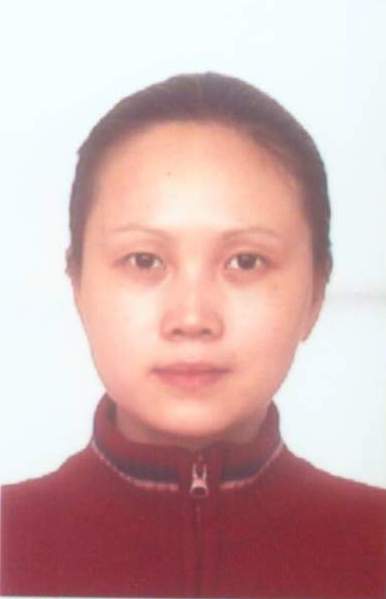
My field of research is Second Language Education, which I have pursued for over 10 years. However, I am also extremely interested in early education, educational policy-making and management. My career goal is to become a professional educator and help improve education in my home country. I am very glad to be able to conduct further research at Cambridge and I would particularly like to extend my thanks to the Gates Trust for generously sponsoring my study at Cambridge.
Ximin He
- Alumni
- China
- 2006 PhD Chemistry
- Lucy Cavendish College
Ximin He
- Alumni
- China
- 2006 PhD Chemistry
- Lucy Cavendish College
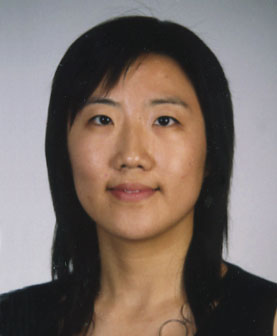
Dr. He is an assistant professor at UCLA. Her research focuses on biologically inspired materials based on stimuli-responsive polymers and micro/nano-structure fabrication, for applications in biomedicine, environment, and energy. Postdoctoral Fellow, Harvard University (2011-2014); Ph.D. in Chemistry, University of Cambridge (2011).
Morgan Healy
- Alumni
- United States
- 2020 PhD Education
- Lucy Cavendish College
Morgan Healy
- Alumni
- United States
- 2020 PhD Education
- Lucy Cavendish College
Ninety percent of a child's brain develops by age five. Investment in quality early education services has a higher economic and social return than investment in education services at any other age. And yet, early education interventions are rarely funded at-scale. Of those that do exist, few are understood by their mechanisms of effect or differential effectiveness across subpopulations. For my dissertation, I plan to address these issues by evaluating two large-scale parenting programs in the UK (VIPP-SD) and Brazil (Primeira Infancia Melhor; PIM). My hope is that evaluation findings can be leveraged to inform service delivery and program targeting (PIM) and broaden the evidence-base of these interventions to more distal child outcomes including self-regulation. Prior to Cambridge, I worked at the Harvard David Rockefeller Center in Sao Paulo, and fellow with the Mayor of Baton Rouge on the city's Cradle to K Parenting Program.
Previous Education
Harvard University International Education Policy 2019
Boston College Secondary Education, History 2016
Friederike Hedley
- Scholar
- Germany
- 2024 PhD Psychology
- Newnham College
Friederike Hedley
- Scholar
- Germany
- 2024 PhD Psychology
- Newnham College
Learning under uncertainty is a core daily demand. In an ever-changing world, we must learn to deal with its uncertain nature. How is learning under uncertainty represented in the developing brain? How does anxiety arise as a function of maladaptive uncertainty representations during development? What are important mitigating factors when uncertainty is unavoidable? My PhD research empirically investigates these questions using data-driven, computational modelling approaches. I grew up in a small harbour town in the marshlands of northern Germany – a steadfast childhood on the banks of the river Weser. When I moved to Hong Kong and started my MPhil in the wake of the 2019-2020 protests, I interviewed people for whom that same consistency was absent. My research focused on the cognitive processing of individuals who were affected by internalising psychopathology. In Cambridge, I am thrilled to join Prof. Rebecca Lawson’s Prediction and Learning Lab and address one of the world’s most prevalent mental disorders with actionable solutions.
Previous Education
University of Hong Kong Cog. Psychology / Neuroscience 2024
Universität Witten/Herdecke Psychology and Psychotherapy 2020
Universität Witten/Herdecke Management 2018
Victoria Heidt
- Alumni
- United States
- 2024 MPhil Development Studies
- King's College
Victoria Heidt
- Alumni
- United States
- 2024 MPhil Development Studies
- King's College
My passion for sustainable peacebuilding in post-conflict settings stems from being raised in an intergenerational, Russian-American household. Witnessing the consequences of unredressed harm following conflict in the Soviet Union drove my desire to study government, justice, and peacebuilding at Georgetown University. While at Georgetown, I worked with Ambassador Norman Eisen at the Brookings Institution on issues of legal accountability following January 6th. Prior, I supported several non-profits such as PEN America and Triangle Project. Most recently, I am a Researcher at the Georgetown Institute for Women, Peace, and Security where I helped create the first policy tracker in the world with a gender focus. At Cambridge, I will read for an MPhil in Development Studies. I look forward to exploring how transitional justice, democratization, and international law can meet the needs of historically neglected individuals in conflict and post-conflict states.
Previous Education
Georgetown University Government; Justice & Peace 2024
Joshua Heihre
- Scholar
- Malaysia
- 2025 PhD Clinical Neurosciences
- King's College
Joshua Heihre
- Scholar
- Malaysia
- 2025 PhD Clinical Neurosciences
- King's College
Born and raised in Kuala Lumpur, Malaysia, I followed an interest in bioscience and the human condition to London for medical school. There, my longstanding curiosity about the inner workings of the human body, combined with exposure to patients with acute brain injury – whether on the wards, in clinics, or in the operating theatre – deepened my interest in the pathophysiology and management of these complex conditions. My research centres on understanding and targeting the molecular and cellular mechanisms driving brain injury, with a particular focus on mitochondrial dysfunction and neuroinflammation following traumatic brain injury (TBI). During my PhD in Clinical Neurosciences, my work will involve ex vivo metabolic analysis of cerebral microdialysate from neurocritical care patients as well as development of in vitro cellular models of TBI to investigate these secondary injury processes, identify biomarkers, and aid in the clinical translation of novel neuroprotective agents. It is an honour to join the cohort of Gates Scholars, and I look forward to growing within this mission-driven community as I work toward bridging the gap between innovative research and compassionate patient care.
Previous Education
King's College London MBBS in Medicine and Surgery 2021
