


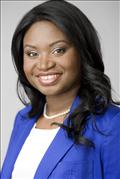
Mekondjo Kaapanda
- Alumni
- Namibia
- 2001 PhD Legal Studies
- Sidney Sussex College
Mekondjo Kaapanda
- Alumni
- Namibia
- 2001 PhD Legal Studies
- Sidney Sussex College
Vsevolod Kachanov
- Alumni
- Ukraine
- 2013 MPhil Materials Science & Metallurgy
- Corpus Christi College
Vsevolod Kachanov
- Alumni
- Ukraine
- 2013 MPhil Materials Science & Metallurgy
- Corpus Christi College
I was born in Kharkiv, Ukraine. When I reached the age of 14 my family moved to Israel, where I developed interest in biotechnology which I took as an elective module during high school. I am currently a final year student on BEng in Biomaterial Science at Sheffield University and I am excited to start an MPhil in Materials Science and Metallurgy within Cambridge Centre of Medical Materials from fall 2013. I am extremely grateful to Gates Cambridge Trust for this opportunity and I am looking forward to develop my skills and knowledge in order to contribute to the innovations in healthcare.
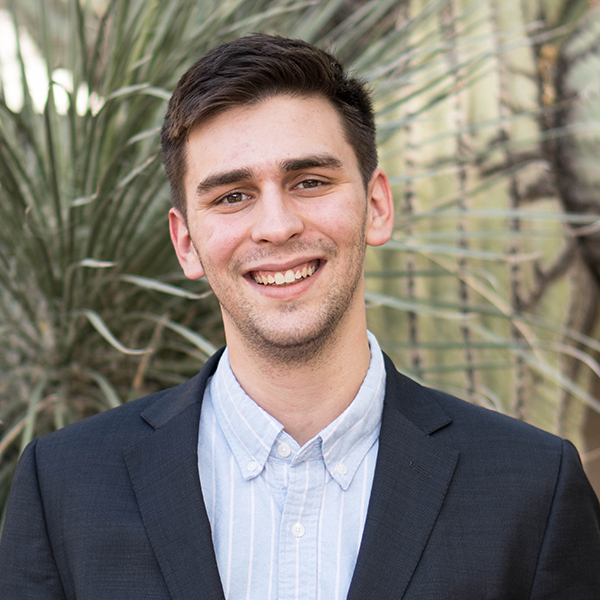
Dino Kadich
- Alumni
- United States, Bosnia and Herzegovina
- 2018 MPhil Geographical Research
2019 PhD Geography - Girton College
Dino Kadich
- Alumni
- United States, Bosnia and Herzegovina
- 2018 MPhil Geographical Research
2019 PhD Geography - Girton College
From a young age, I was keenly aware that the neat categories that bound and define our sense of belonging--ideas like "home," "nation," and "family"--were much more complex and difficult for some than for others. My experience growing up as a refugee from Bosnia and Herzegovina in Tucson, Arizona, gave me the opportunity to understand how political geography is produced in the everyday, through acts of inclusion and exclusion small and large. When I began my studies at the University of Arizona, I learned that such quotidian experiences were of enormous value to scholars trying to understand how political geographic realities that we take for granted are enacted and reproduced. As an MPhil student in geography at Cambridge, my work has focused on using participatory video to bring out how actually-existing political contestations over urban space and belonging play out among youth in Sarajevo. In my PhD, I hope to continue this engagement in Bosnia and expand it to Istanbul, Turkey, where a set of shared histories and contemporary struggles beckons for research that can think about how young people navigate nationalist politics and everyday material struggles across contexts. My experiences as a Gates scholar have been some of the most enriching in my life, and I am honoured to return to this community.
Previous Education
University of Cambridge Geographical Research 2019
University of Arizona Geography and Africana Studies 2018
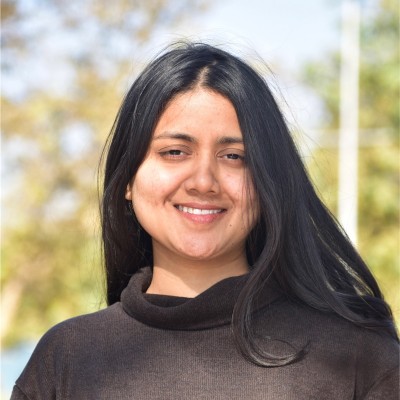
Damni Kain
- Scholar
- India
- 2024 PhD Sociology
- Gonville and Caius College
Damni Kain
- Scholar
- India
- 2024 PhD Sociology
- Gonville and Caius College
Working in the Indian Parliament, I saw my ‘research’ translate into social change and action. My academic and work experience spanning the last five years at the intersections of digital technology, the gig economy, and the future of work and caste is motivated by the pursuit of action-oriented research. As a Cambridge Trust and Commonwealth Scholar (2022-23) at the University of Cambridge, I explored the spatial and temporal structures of platform work by placing the gig economy in the caste society of India. This was inspired by my previous work at University of Oxford’s Fairwork Foundation studying platform economy, the Centre for Internet and Society and the Parliament actively contributing to parliamentary interventions advocating the rights of seven million gig workers in India. During my PhD, I wish to take forward my research on caste in the gig economy through an ethnography of home-based platform services. I aim to understand how caste and the structures of the gig economy co-produce each other while reordering social, bodily, and sensorial relations of work. Using ethnographic evidence, I aim to create a better future of work — informing state policies, digital labour platforms, and consumers of the gig economy.
Previous Education
University of Cambridge Modern South Asian Studies 2023
University of Delhi Political Science 2021
Links
https://www.sociology.cam.ac.uk/people/damni-kain-2024
https://research.sociology.cam.ac.uk/profile/damni-kain-2024
https://www.instagram.com/damni.kain
https://www.linkedin.com/in/damni-kain-b21a73220
https://www.linkedin.com/in/damni-kain-b21a73220/?originalSubdomain=uk
https://x.com/DamniKain?lang=en
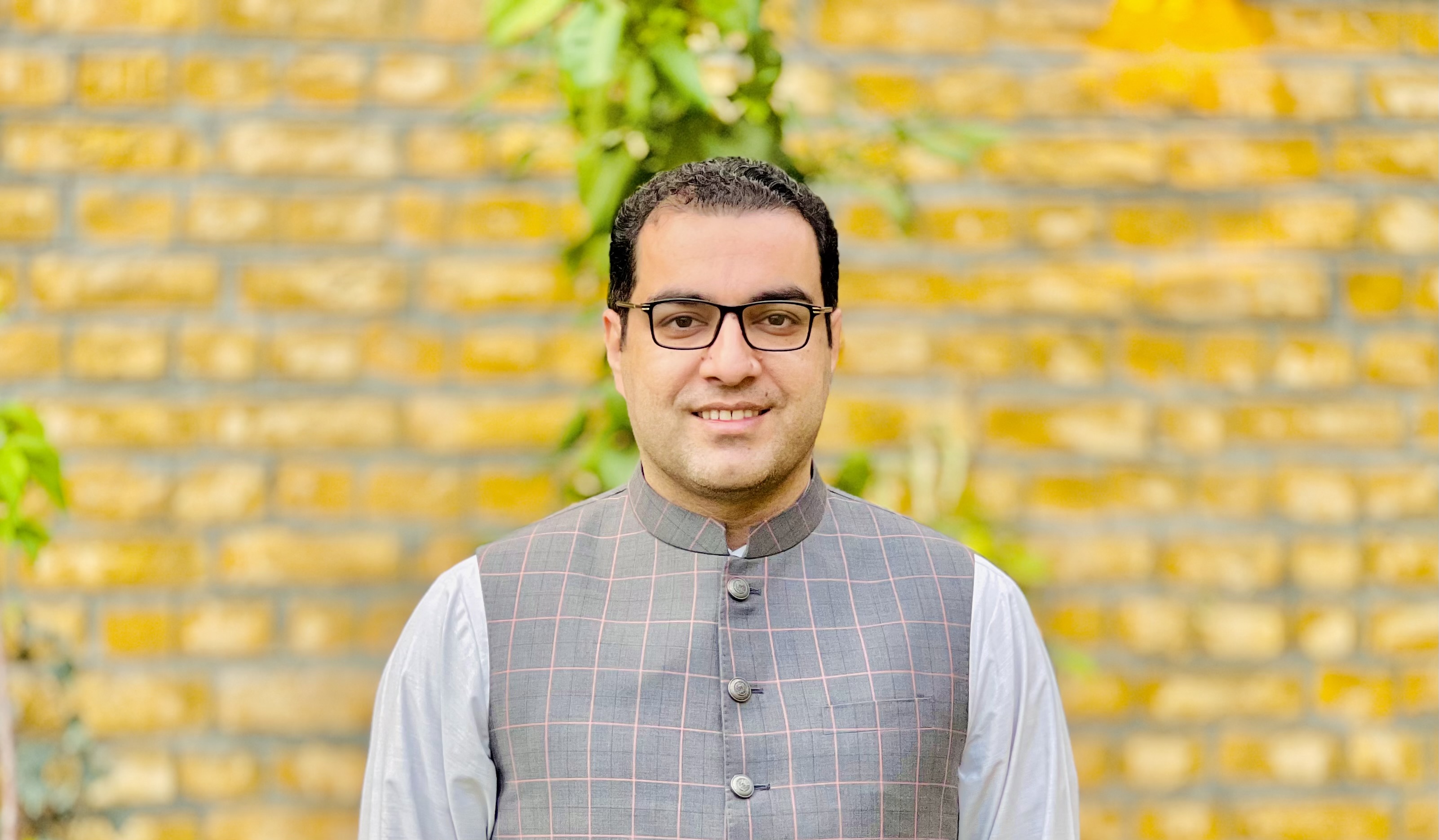
Rafiullah Kakar
- Scholar
- Pakistan
- 2024 PhD Education
- St John's College
Rafiullah Kakar
- Scholar
- Pakistan
- 2024 PhD Education
- St John's College
My professional experience at highest levels of policy helped me realize the influential role of de-facto power dynamics and informal institutions in shaping development outcomes, especially in fragile contexts. This spurred my interest in comparative politics of development. In my PhD, I seek to understand the political economy of sub-national state capacity through a comparative study of education policy in two Pakistani provinces: Balochistan and Khyber Pakhtunkhwa. Despite a common history and social composition, these provinces exhibit differing capacities for improving education outcomes. Through a 'political settlement analysis,' I aim to unravel the drivers behind this variation.My interest in sub-national state effectiveness stems from my upbringing in a remote village along Pakistan’s border with Afghanistan, where conflict and state fragility were pervasive. While my academic journey—from Government College University Lahore to the University of Oxford on a Rhodes scholarship—enabled me to escape the fragility trap, many others remain ensnared.I eagerly anticipate joining the Gates community & leveraging its diverse network to bridge the gap between academia, policy and media. I enjoy cricket, hiking and evening walks
Previous Education
University of Oxford Governance & Development 2015
University of Oxford Public Policy 2014
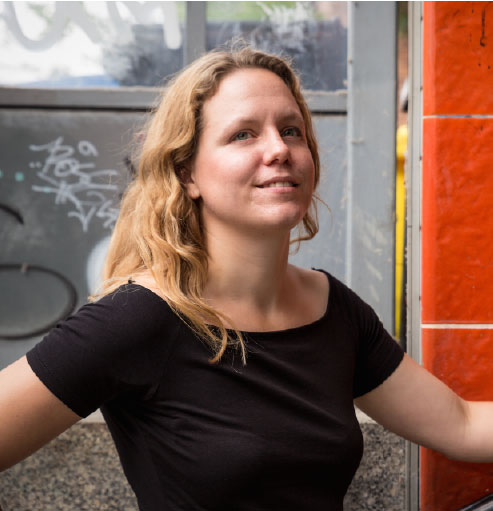
Jesse Kalata
- Alumni
- United States
- 2008 MPhil International Relations
- Jesus College
Jesse Kalata
- Alumni
- United States
- 2008 MPhil International Relations
- Jesus College
Jess Blokland (nee Kalata) was a 2009 Gates Scholar in the International Relations program. She is a US-born political scientist specialized in transatlantic security policy and democratic theory. Concerned with plummeting rates of political participation across modern democracies and the lack of transnational publics in a globalized world, in April 2015 she founded the social enterprise Art is Activism to promote social and political art as a modern medium of democratic participation and social change. She is in the process of creating a transnational, nonprofit platform for activist artwork and building a global network to connect activist artists with social movements and their target publics. Jess currently resides in Potsdam, Germany, where she is finishing up her doctorate on the party politics of German external security policy. She is a member of Impact Hub Berlin and the German Mompreneurs network for female entreprenuers with children.
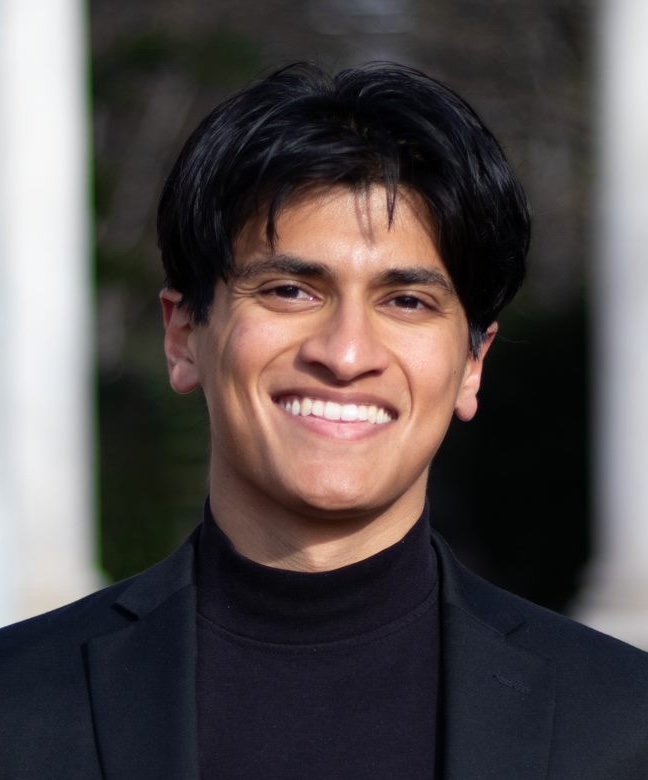
Ishan Kalburge
- Scholar
- United States
- 2024 PhD Engineering
- Churchill College
Ishan Kalburge
- Scholar
- United States
- 2024 PhD Engineering
- Churchill College
When my grandfather was diagnosed with Parkinson’s Disease, I was driven to deepen my understanding of human cognition to develop solutions that could help people like him. At The Johns Hopkins University, I pursued a B.S. in Biomedical Engineering, Applied Mathematics and Statistics, and Economics, developing interdisciplinary skills to achieve my goals. Through my research, I explored the largely unknown processes underlying human decision-making under uncertainty. As a Gates Cambridge Scholar, I will pursue a PhD in Engineering, building upon my past research by investigating how humans form internal representations of uncertainty and developing computational models that emulate such representations. Improving our understanding of how the brain tracks uncertainty is crucial to advancing our understanding of human cognition in health and disease, and will pave the way for developing trustworthy and energy-efficient artificial intelligence. While at Cambridge, I will also work to expand STEM outreach initiatives in under-resourced communities and lead dialogue on developing responsible AI regulatory policies. In my free time, I hope to work on my jazz improv skills on the piano!
Previous Education
Johns Hopkins University Biomedical Engineering, Applied Mathematics & Statistics, Economics 2023

Kimia Kamelian
- Alumni
- Canada, Iran, Islamic Republic of
- 2022 PhD Medicine (Science)
- St Edmund's College
Kimia Kamelian
- Alumni
- Canada, Iran, Islamic Republic of
- 2022 PhD Medicine (Science)
- St Edmund's College
My research experience in viral genetics and my desire to make a meaningful intervention in guiding public health responses to epidemics has led me to the PhD program in Medicine at the University of Cambridge. During my MSc degree at the University of British Columbia, I investigated the utility and limitations of sequencing in monitoring circulating viruses. I found myself drawn to the field of viral genomics and the applications of sequencing. I became aware of the power of technology when I observed the direct impact a change in prescription, put forth after detection of drug resistance, can have in the life of an individual living with HIV. My experiences left an indelible mark as I realized that my research could influence clinical practice. My future aim is to expand on the utility of viral sequencing, either for diagnostics and guiding of prescribed regimens or for surveillance purposes, and contribute to communities that are not extensively studied or studied prospectively to reduce health disparities. I am incredibly honored to join the Gates Cambridge community, and I look forward to sharing knowledge with future global leaders across multiple disciplines.
Previous Education
University of British Columbia Master of Science 2017
University of British Columbia Integrated Sciences 2016
University of British Columbia Bachelor of Science 2011
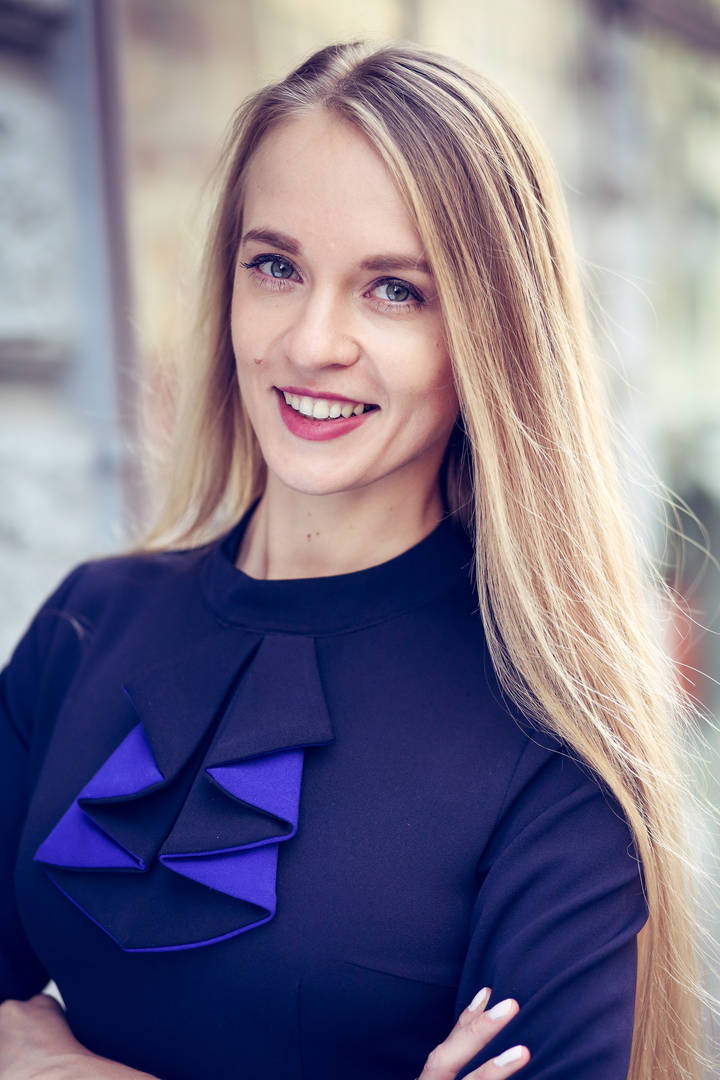
Anastasiia Kamenska
- Alumni
- Ukraine
- 2010 PhD Biochemistry
- Wolfson College
Anastasiia Kamenska
- Alumni
- Ukraine
- 2010 PhD Biochemistry
- Wolfson College
I got a lifetime opportunity to work towards a PhD degree in Biochemistry, the field that inspires me the most. I strongly believe that our better understanding of the mechanisms that regulate translation of proteins in cells can have a tremendous number of implications. I hope that the unique expirience Cambridge Department of Biochemistry provides will help me to develop as a cutting-edge scientist. I am excited to become a part of a powerful Gates Scholars network and want to commit and gain the most of it.
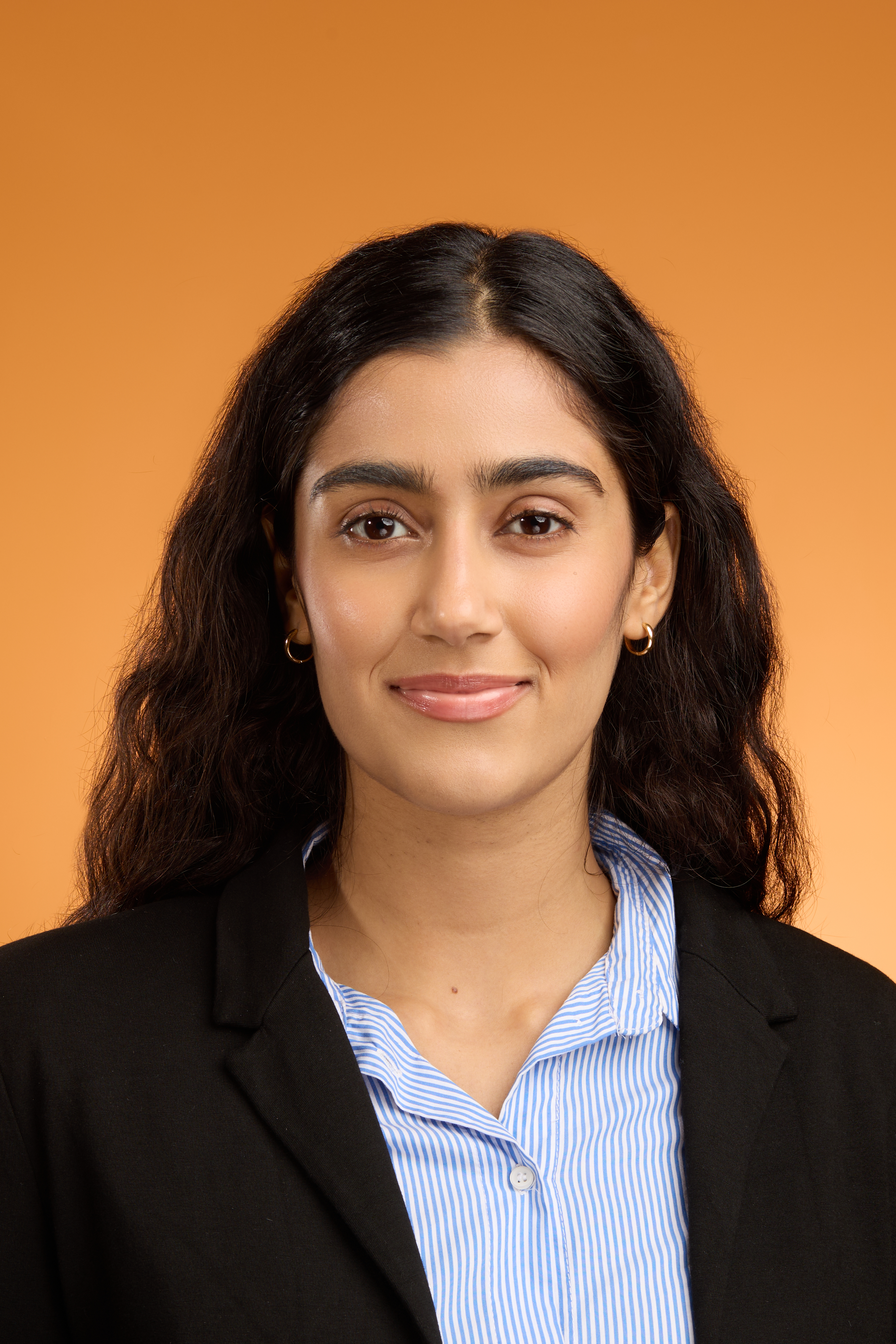
Yashita Kandhari
- Alumni
- India
- 2025 MPhil Ethics of AI, Data and Algorithms
- Hughes Hall
Yashita Kandhari
- Alumni
- India
- 2025 MPhil Ethics of AI, Data and Algorithms
- Hughes Hall
My interest in sociotechnical research first emerged as an undergraduate sociology major at Davidson College. This led me to my role at Point of View, a Mumbai based nonprofit, where I worked to build knowledge on the digital experiences of women and gender diverse people in India, and advocate for digital rights and freedoms. Through my work and research, I have a firsthand understanding of how technological infrastructures exacerbate unequal power hierarchies, and I am committed to creating change. To that end, I am pursuing an MPhil in Ethics of AI, Data, and Algorithms at Cambridge. I will explore how AI can be used to benefit the Global Majority, and what alternative, feminist imaginaries of AI systems can look like. I am deeply honoured and grateful to be a part of the Gates Cambridge community, and look forward to building a better world together.
Previous Education
Davidson College Sociology
Jonathan Kanen
- Alumni
- United States
- 2015 PhD Psychology
- King's College
Jonathan Kanen
- Alumni
- United States
- 2015 PhD Psychology
- King's College
My curiosity about how people think and behave evolved into a desire to study the brain, which I explored as an undergraduate at Vassar College. Fascinated by the prospect of beginning to understand the neural basis of psychiatric disorders, I explored the field after graduation in the lab of Elizabeth Phelps at New York University. I obtained a compelling sense of how animal studies can be translated into human neuroscience to uncover the roots of mental illness, and became inspired to pursue a career as a psychiatrist and researcher. I have completed a substantial portion of my MD degree at Cooper Medical School of Rowan University, which I will finish after Cambridge, before pursuing specialization in psychiatry. During my PhD I will integrate pharmacological and neuroimaging methods to examine the influence of the neurochemical serotonin on emotional and behavioral flexibility. Serotonergic drugs are among the most common medications I will prescribe yet the precise role of serotonin in mental illness and its remediation is not completely understood. Complementing my MD training with PhD training at Cambridge will optimize my ability to increase communication between neuroscientists and psychiatrists. The Gates Cambridge Scholarship will make me a more impactful physician – helping patients beyond those who enter my office – by advancing our understanding of mental illness, and working to counter a formidable disease burden costly to individual sufferers and to society.
Previous Education
Vassar College
Cooper Medical School of Rowan University
Ryan (Joonsuk) Kang
- Scholar
- Korea, Republic of, United States
- 2022 PhD Chemistry
- Trinity College
Ryan (Joonsuk) Kang
- Scholar
- Korea, Republic of, United States
- 2022 PhD Chemistry
- Trinity College
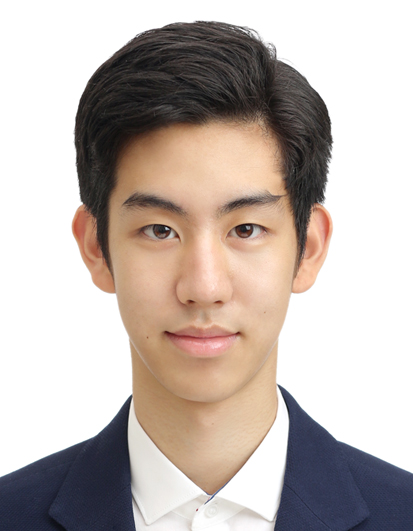
I was born in the United States but moved back to South Korea after a few years, before finally coming to the UK. I am currently in my last year of my Natural Sciences at Cambridge degree specialising in Chemistry.Growing up, I was fascinated by the insects and birds I would see whilst hiking in the mountains in and around Seoul. Throughout my school life, this wonder and curiosity I had for the natural world evolved from the macroscopic to the microscopic – the fundamental chemical reactions that drives everything. Pursing my interests in chemistry led to my involvement in the Chemistry Olympiads, where I represented the UK in the International Chemistry Olympiad for two years. During this time, I began to appreciate the importance of organic synthesis, especially in the development and production of pharmaceuticals. For my PhD, I will be investigating new reactions and new reactivities in the context of biological systems. By explicitly targeting biomolecules, the aim is to not only discover and optimise relevant reactions but also expedite the process of new chemistry being used in therapeutic applications to improve and save lives.
Previous Education
University of Cambridge Chemistry 2022
Ty Kannegieter
- Scholar
- United States
- 2024 PhD Biological Science (MRC Toxicology Unit)
- Darwin College
Ty Kannegieter
- Scholar
- United States
- 2024 PhD Biological Science (MRC Toxicology Unit)
- Darwin College
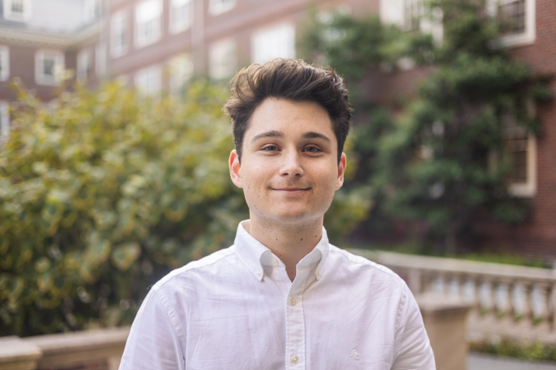
Originally from the sprawling metropolis of Daphne, Alabama, I studied biology at Harvard University. There, I worked in a structural virology laboratory, rationally designing immunogens for ssRNA viruses (primarily SARS-CoV-2, dengue, and influenza). In my PhD, I hope to leverage translational immunology to combat one of the most under-recognized public health threats in the world: agro-industrial chemical pollutants.In my graduate studies, I aim to develop active and passive immunotherapies targeting these persistent organic pollutants. Initially, I will investigate this question in the context of the acute toxicities of pesticides, a major health concern in rural areas. However, I hope to demonstrate that these methodologies are applicable to broad ranges of acutely and chronically toxic pollutants, ranging from agricultural chemicals to ubiquitous flame retardants, plasticizers, and surfactants which impose tremendous burdens on global health.Beyond the lab, I love to play music, write, and get outside as much as cell cultures will allow. I am exceptionally excited to grow while at Cambridge as a researcher, individual, and member of our global academic community!
Previous Education
Harvard University Biology

Deusdedit Kansiime
- Scholar
- Uganda
- 2022 PhD English
- Sidney Sussex College
Deusdedit Kansiime
- Scholar
- Uganda
- 2022 PhD English
- Sidney Sussex College
During my undergraduate and graduate studies at Makerere University in Uganda, I was fascinated by the gap between the literature we were taught and the literary texts that had currency on the Ugandan cultural scene. These texts were produced by an emerging generation of writers whom my university professors knew so little about and had so little interest in, yet these writers and their writing fraternities constituted the most vibrant literary ecosystem that resonated with contemporary publics. These were the writers dominating shortlists of literary prizes in the region. They associated themselves with non-academic, non-commercial literary organisations – LINGOs. I intend to use my PhD to explore the underbelly of this network of literary value in Africa by examining the institutional logic of these literary organisations in light of their posture as expressions of literary activism. By theorising literary activism in a LINGO framework, my PhD project shall help inform publishers, literary award organisations, writers and academics about the emerging literary enterprise in Africa. It will also help demonstrate how the LINGO framework is essential in reconfiguring cultural discourses and creating new spaces for free expression.
Previous Education
Makerere University Literature 2021
Makerere University Education - English Major 2016
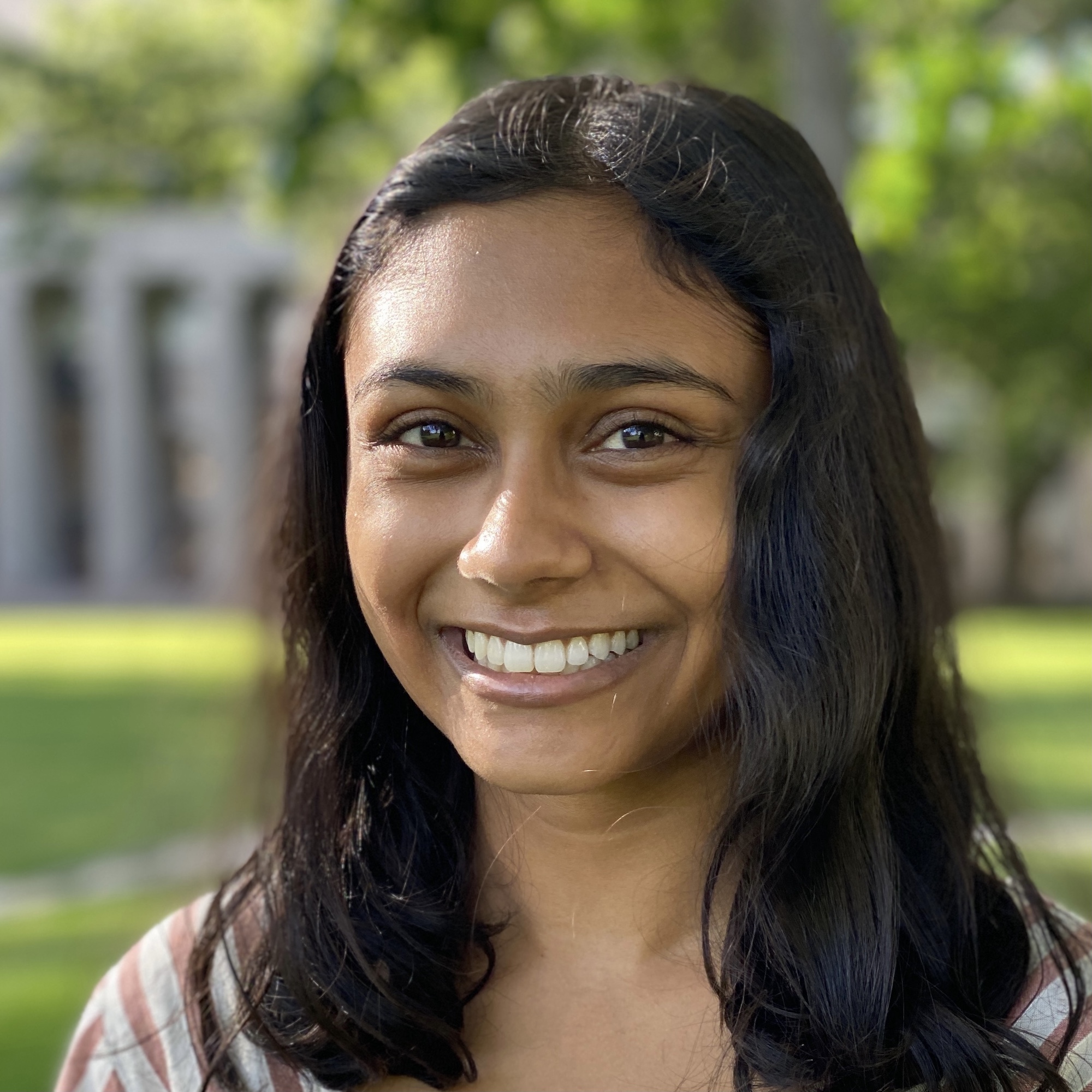
Anjali Kantharuban
- Alumni
- United States
- 2022 MPhil Theoretical and Applied Linguistics
- Churchill College
Anjali Kantharuban
- Alumni
- United States
- 2022 MPhil Theoretical and Applied Linguistics
- Churchill College
I grew up as a first-generation immigrant in California before attending the University of California, Berkeley to study Computer Science and Linguistics. As a non-standard dialect speaker, I have seen first-hand how globalized communication has intensified pressures to convert to specific languages in exchange for economic reward. While getting my bachelors, I was exposed to natural language processing and its capacity to make information and tools more broadly accessible by allowing interactions with technology to take place in human languages. At the same time, I noticed that the field still primarily focuses on a small set of languages. My goal is to make natural language processing equally functional for all languages, in all their variations, to prevent a further loss of linguistic and cultural diversity. Specifically, I want to create natural language interfaces for computational systems so minority language speakers can use them without altering their method of communication.
Previous Education
University of California, Berkeley Computer Science, Linguistics 2022
Vijay Kanuru
- Alumni
- India
- 2006 PhD Chemistry
- Fitzwilliam College
Vijay Kanuru
- Alumni
- India
- 2006 PhD Chemistry
- Fitzwilliam College
Dr Vijay Kanuru is a leading nanomedicine inventor and a prolific bio-nanotech innovator turned entrepreneur, who is on a mission to conquer lethality of cancers with advanced bio-nanotechnologies and artificial intelligence. A Digital Oncology Researcher working at the converging intersections of machine learning, clinical oncology, and translational nanomedicine, with a goal to tame cancer lethality into a clinically manageable disease. Currently building AI-driven Onco Therapeutic Index OTI platforms to help clinicians manage advanced and metastatic cancers by predicting not only right drug targets pertinent to tumor gene mutations but also dose risk profiling in order to reduce toxicity. Over a decade in translational nanomedicine, molecular oncology and drug repurposing of small molecules, has made a difference to several thousand patients.
Previous Education
Harvard Medical School CME Immuno Oncology Nano Medicine
University of Cambridge PhD in Molecular Nanosciences
Stanford Medical School CME Cancer Survivorship Management
Links
http://www.drvijaykanuru.in
https://www.linkedin.com/in/dr-vijay-kanuru-883aa735
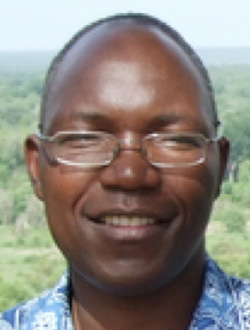
Martin Kaonga
- Alumni
- Zambia
- 2001 PhD Geography
- Fitzwilliam College
Martin Kaonga
- Alumni
- Zambia
- 2001 PhD Geography
- Fitzwilliam College
Dr Martin Kaonga is the Director of Science and Conservation in Cambridge, UK. At A Rocha, he heads projects on international conservation policy. He received a PhD in Environmental Science from the University of Cambridge, and has worked at the University of Zambia and Natural Resources Development College, Lusaka.

Siddhartha Kar
- Alumni
- India
- 2012 PhD Public Health and Primary Care
- Hughes Hall
Siddhartha Kar
- Alumni
- India
- 2012 PhD Public Health and Primary Care
- Hughes Hall
I studied medicine at the Byramjee Jeejeebhoy Government Medical College and trained as a doctor at the Sassoon General Hospitals in Pune, India. I hold an MPH degree in epidemiology from the University of Texas at Houston in the US, where I pursued graduate research training in genomics at the MD Anderson Cancer Center. I received a PhD in genetic epidemiology from the University of Cambridge in the UK in 2017, as a Gates Cambridge Scholar and as the first Homerton College Junior Research Fellow in Clinical Medicine. I was subsequently awarded a Future Leaders Fellowship by UK Research and Innovation in 2020, enabling me to establish a research group at the University of Bristol that uses inherited genetic variation to investigate the causes and correlates of tumour genomic features with the aim of informing the prevention, diagnosis, and treatment of common cancers.
