


Xueliang Liu
- Alumni
- China
- 2010 MPhil Physics
- Trinity College
Xueliang Liu
- Alumni
- China
- 2010 MPhil Physics
- Trinity College
I have been interested in the application of science and technology to solve global problems, particularly in energy. Despite been one of the most abundant and clean resource, solar energy composes only a negligible fraction of our energy supply today largely due to its high-cost. A promising approach to tackle this problem is to make solar cells using novel materials that are significantly cheaper, such as plastics. In my research, I will specifically investigate the internal geometry of plastic mixtures, which is a key property that needs to be understood and optimized in order to improve upon the currently low performance of the plastic solar cells. I hope that my research may contribute to the global collaborative effort to make solar energy more widely utilized in our society in the future.
Yingjie (Amy) Liu
- Alumni
- China
- 2001 PhD Biological Science
- Newnham College
Yingjie (Amy) Liu
- Alumni
- China
- 2001 PhD Biological Science
- Newnham College

Yu Liu
- Alumni
- China
- 2004 PhD Engineering
- Sidney Sussex College
Yu Liu
- Alumni
- China
- 2004 PhD Engineering
- Sidney Sussex College
I have a definite career goal to become a world-class researcher in Aerospace Engineering. I choose Cambridge for its top-class faculty and advanced facilities in Aeroacoustics. Upon completion of my PhD program, I will come back to China and continue my research in this area. I look forward to leading my own acoustical lab at a major research university. I believe that a postgraduate experience at Cambridge will greatly benefit both my own career and China’s aerospace industry.
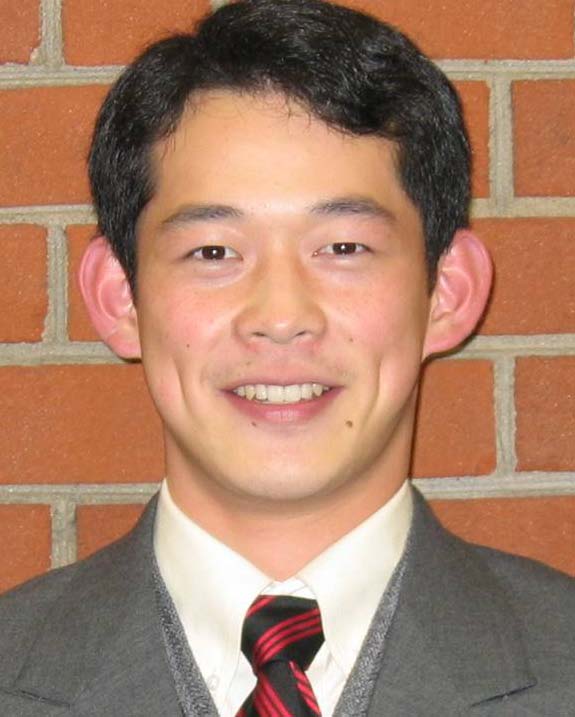
Tzu-Huan Lo
- Alumni
- United States
- 2004 MPhil Chinese Studies
- Wolfson College
Tzu-Huan Lo
- Alumni
- United States
- 2004 MPhil Chinese Studies
- Wolfson College
I studied British investment in Chinese railways and coal mines at the beginning of the twentieth century.
Yui Chim Lo
- Alumni
- Hong Kong
- 2017 MPhil Asian and Middle Eastern Studies
- Hughes Hall
Yui Chim Lo
- Alumni
- Hong Kong
- 2017 MPhil Asian and Middle Eastern Studies
- Hughes Hall
Anyone who tries to walk on a single leg is sure to stumble, but walking on the two legs of academic studies and societal service enables me to stride forward. Studying History and Chinese at the University of Hong Kong, my undergraduate research deals with the Sino-British negotiations over the future of Hong Kong, an event with profound implications for the lives of generations of Hong Kong people. By using recently declassified British government records, I challenge existing claims regarding the roles of the Governor of Hong Kong and local elites in the fateful negotiations of the 1980s. I have also worked on a public history project to preserve and publicise knowledge about the declining local fishing industry, and have assisted underprivileged children in their studies as a voluntary teacher. In the MPhil Chinese Studies at Cambridge, I will research the history of Hong Kong-Commonwealth relations, thus adding a special perspective to the fields of Hong Kong’s and China’s foreign relations. I hope to help Hong Kong citizens understand their past and their identities, generate ideas for the future of our city, and encourage my future students to realise their potential and work for the benefit of others. It is definitely my honour to be a member of the Gates Cambridge community. I believe the common experience shared with my peers in the Gates community will empower us to serve people in need with greater ability and commitment.
Previous Education
University of Hong Kong

Aaron Lobo
- Alumni
- India
- 2006 PhD Zoology
- Trinity Hall
Aaron Lobo
- Alumni
- India
- 2006 PhD Zoology
- Trinity Hall
I am a marine conservationist with work experience in South Asia and West Africa. My PhD at Cambridge examined the ecological and socio-economic impacts of trawl fisheries along the Coromandel coast of India. My research also demonstrated the huge role that the animal feed industry (particularly the poultry industry) in India has on driving overfishing. I have had a long-standing interest in finding ways to reconcile conservation and economic development through policy and practice. My work has involved designing, supporting and implementing projects including the management of marine protected areas, setting up fisheries monitoring programmes and undertaking environment and social impact assessments.
Jeffrey Lockhart
- Alumni
- United States
- 2014 MPhil Multi-Disciplinary Gender Studies
- Jesus College
Jeffrey Lockhart
- Alumni
- United States
- 2014 MPhil Multi-Disciplinary Gender Studies
- Jesus College
Previous Education
Fordham University M.S. Computer Science 2014
Fordham University B.S. Computer Science & Women's Studies 2013
Links
Steffen Loesch
- Alumni
- Germany
- 2009 MPhil Advanced Chemical Engineering Practice
2010 PhD Computer Science - Trinity College
Steffen Loesch
- Alumni
- Germany
- 2009 MPhil Advanced Chemical Engineering Practice
2010 PhD Computer Science - Trinity College
My PhD is about computer programming language semantics. This involves mathematically defining what a program does, thereby being able to prove things about its behaviour. More specifically, I work on denotational semantics for concurrency. I believe that in the not-too-distant future, every safety-critical program will not just be tested to work, but proven to be correct. Disasters caused by program errors such as the explosion of the Arianne 5 rocket in 1996 will be a matter of history. Hopefully my research will help to get a small step closer to this ultimate goal.
Links
http://www.steffenloesch.com
https://www.linkedin.com/in/steffenloesch

Corina Logan
- Alumni
- United States
- 2008 PhD Experimental Psychology
- Murray Edwards College (New Hall)
Corina Logan
- Alumni
- United States
- 2008 PhD Experimental Psychology
- Murray Edwards College (New Hall)
Originally from the Seattle, Washington area, I was a Gates Scholar at Cambridge 2008-2011. I investigate how behavioral flexibility relates to invasion success in grackles (an urban bird) and whether training species to be more flexible increases their chances of success in human modified environments as a Senior Researcher at the Max Planck Institute for Evolutionary Anthropology in Leipzig, Germany. I co-founded Peer Community in Registered Reports (https://rr.peercommunityin.org/about/about) which is innovating RRs to make them accessible for all fields and types of research, and co-lead the #BulliedIntoBadScience campaign where early career researchers are working to change academic culture to adopt open research practices to improve research rigor.
Previous Education
Evergreen State College B.S. in Biology 2004
Skagit Valley College A.A. in Acting 2002
Links
http://corinalogan.com
http://www.CorinaLogan.com
www.linkedin.com/in/c-logan-34a311399
Paulina Lohbeck
- Scholar
- Germany
- 2026 PhD Materials Science and Metallurgy
- Selwyn College
Paulina Lohbeck
- Scholar
- Germany
- 2026 PhD Materials Science and Metallurgy
- Selwyn College
I am fascinated by how much can be revealed by looking at something differently - sometimes quite literally through light. This perspective led me from mathematics to photonics and the study of light-matter interactions in two-dimensional semiconductors.Having studied across France and Germany (classe préparatoire Lycée Hoche, Versailles; Dipl. Ing. ENSTA Paris; M.Sc. FSU Jena), I developed an interdisciplinary approach to understanding how these systems behave and why they matter. During my PhD at Cambridge, I will investigate how optical excitation shapes the performance of next-generation optoelectronic devices, with the aim of clarifying the processes that limit their efficiency and potential today.I am deeply honoured to be part of the Gates Cambridge community, where I hope to contribute to an environment in which people from different backgrounds can engage, exchange ideas, and grow together – pour rayonner ensemble.
Previous Education
Friedrich-Schiller-Universität Jena Photonics 2025
ENSTA, IP Paris Applied Mathematics 2025
Yee Ling Lok
- Alumni
- Singapore
- 2025 MPhil Master of Philosophy in Health, Medicine, and Society
- Hughes Hall
Yee Ling Lok
- Alumni
- Singapore
- 2025 MPhil Master of Philosophy in Health, Medicine, and Society
- Hughes Hall
My two obsessions are ethnography and queer joy. I am trained in sociology, where I cultivate my imagination of a better world. I seek to advance public health by letting lived experience enrich knowledge production. Amid the myths and moral judgements surrounding suicide, I am curious about how survivors of suicide loss in the queer community make sense of their loss. Suicide prevention research is universally important and I am hopeful that the networks and training that I will get in Cambridge will strengthen collective attempts at fostering health, justice, and dignity for all. Committed to dismantling stigma, I guide my peers in mental health literacy and professional help-seeking, support survivors of sexual violence, and befriend homeless people. The stigmatised communities I have worked with for six years cultivated my ethos of sensitivity and trauma-informed care. Community-building is important to me, I hope to connect with fellow first-generation university students and poetry lovers.
Previous Education
National University of Singapore Sociology
Sadhana Lolla
- Alumni
- United States
- 2024 MPhil Technology Policy
- Robinson College
Sadhana Lolla
- Alumni
- United States
- 2024 MPhil Technology Policy
- Robinson College
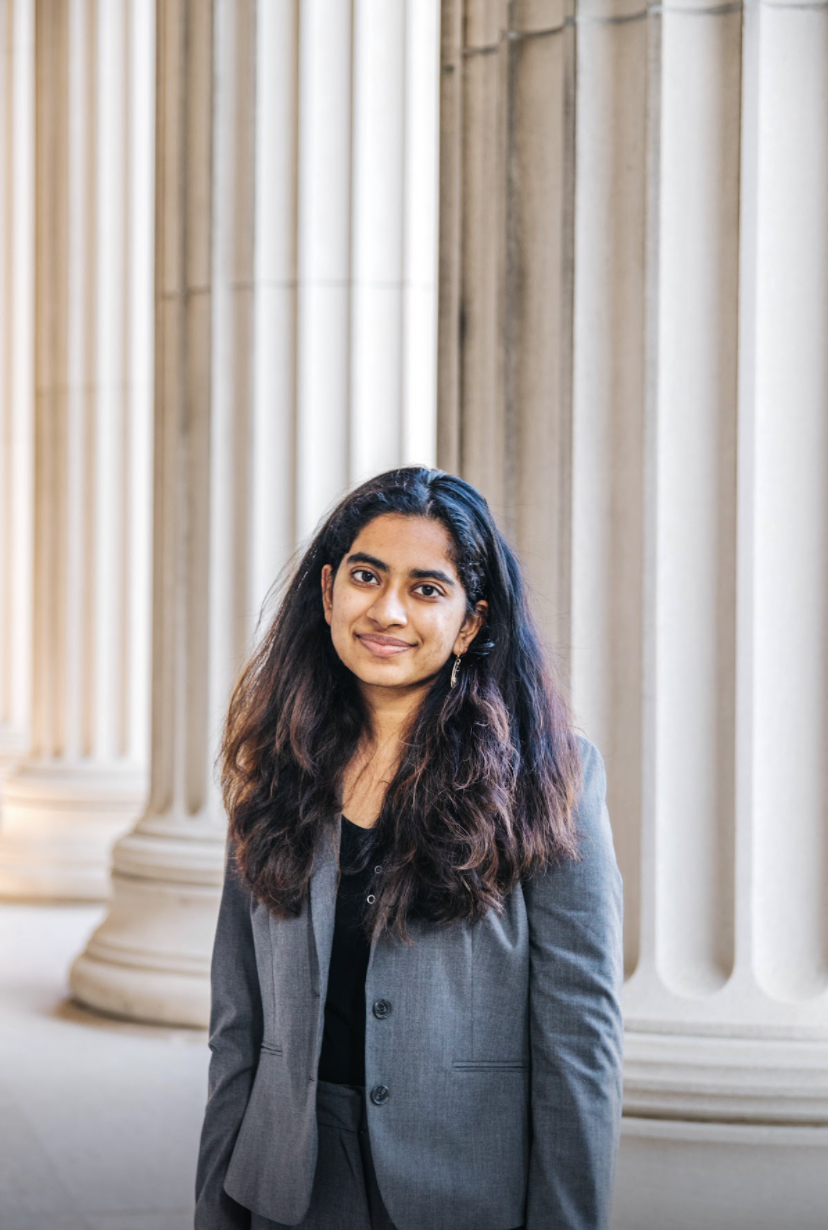
In the rural Indian village that my family calls home, I grew up witnessing my grandmother labor endlessly without assistive technology. Her experiences, and those of millions of women, elderly, and people with disabilities worldwide, underpin my dedication to pursue artificial intelligence solutions that bring robotic assistive technology to underprivileged communities. My background as a machine learning researcher and roboticist has enabled me to deeply appreciate the transformative power of technology, while also recognizing that technologists and governments must work together to leverage cutting-edge artificial intelligence to uplift those who need it the most. By pursuing the MPhil in technology policy, I hope to bring regulators, researchers, and the technology industry together to design policy solutions that promote bias-free, robust, and trustworthy artificial intelligence while spurring innovation. I also hope to uplift the voices of vulnerable communities in conversations about technological development and deployment. I’m thrilled to join the Gates Cambridge community and work together with such a diverse and talented group of peers to improve the lives of others.
Previous Education
Massachusetts Institute of Technology Computer Science 2024
Eoin Long
- Alumni
- Ireland
- 2006 CASM Mathematics
- St John's College
Eoin Long
- Alumni
- Ireland
- 2006 CASM Mathematics
- St John's College
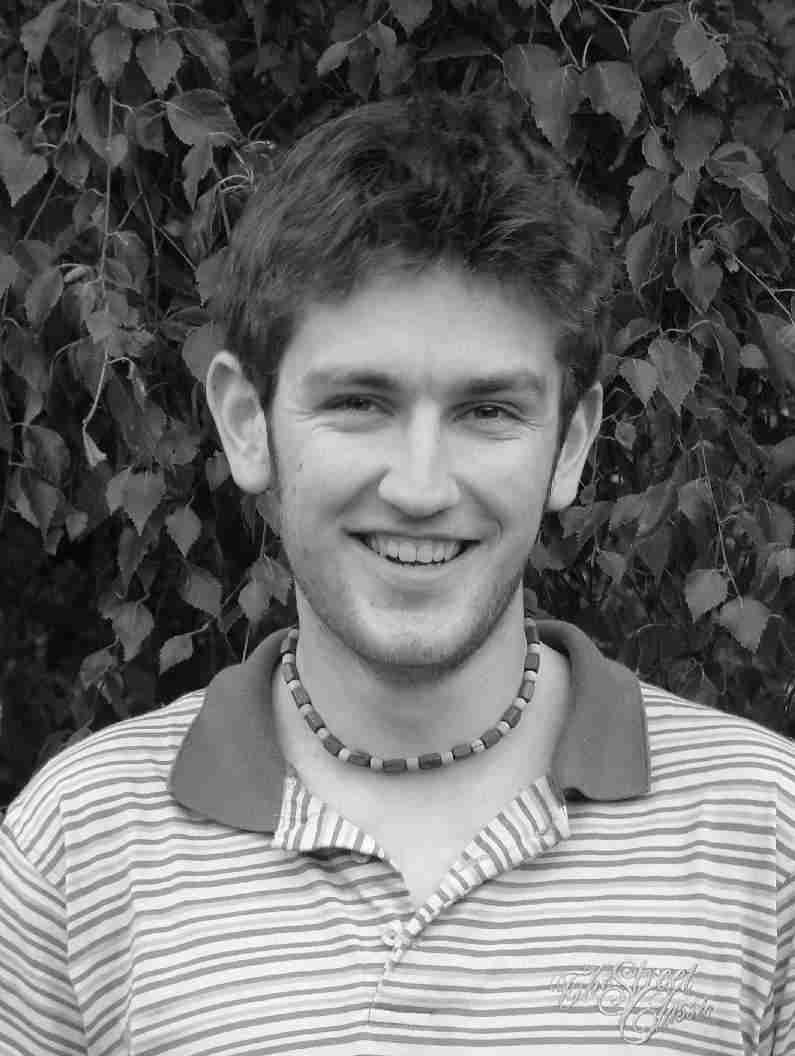
I am from Waterford in Ireland and have just finished my undergraduate degree in Trinity College Dublin. I am mainly interested in number theory, ramsey theory and graph theory but have also developed a taste for some geometry recently (mainly differential). I hope to go on to do a PhD in Cambridge in one of the above areas.
Paula Long
- Alumni
- United States
- 2010 MPhil Asian and Middle Eastern Studies
- Newnham College
Paula Long
- Alumni
- United States
- 2010 MPhil Asian and Middle Eastern Studies
- Newnham College
I did my MPhil in Middle Eastern Studies with Prof. Yasif Suleiman as a Gates Scholar. Previous to this, I did my undergraduate at Duke University, and I worked in the Middle East as an artist in residence and at various social enterprises and startups. I am now a fashion designer in New York City, especially passionate about ethical, sustainable design and designing for social enterprises, as well as exploring the possibilities of new fashion technologies. I hope to eventually work on a design-based social enterprise in the MENA region to marry my passions and interests.
Dien Min Loong
- Alumni
- Malaysia
- 2023 MPhil World History
- St Catharine's College
Dien Min Loong
- Alumni
- Malaysia
- 2023 MPhil World History
- St Catharine's College
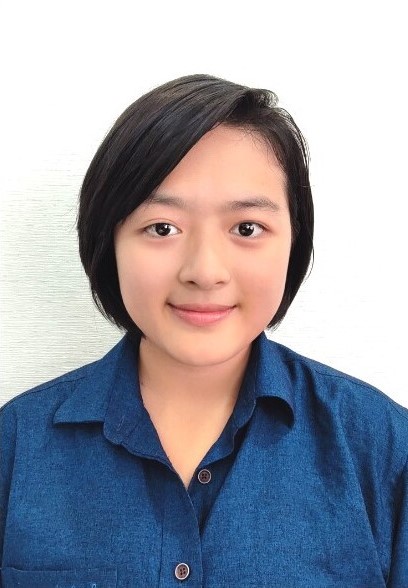
Aspiring historian. My research interests lie in the transregional composition of legal and normative regimes of gender and sexuality across maritime Asia. Fascinated by the transmission of ideas across geopolitical boundaries, I study the nexus between law and sexual norms in the most intellectually, culturally and linguistically vibrant region in the world—Southeast Asia. I am part of Imagined Malaysia, a Malaysia-based non-profit organisation which aspires to cultivate a transnational appreciation of Southeast Asia’s history. At the University of Nottingham Malaysia, my BA thesis was on the lived experiences of Section 377 in pre-war British Malaya. My MPhil thesis takes a more critical view to challenge the purported hegemony of the colonial legal project in Malaya, examining the reception of Section 377 and 377A in multiethnic, multilingual and plural legal official and unofficial spaces. Since 2022, I have worked closely with senior academics, emerging scholars, and PhD students in archival research efforts in Malaysia and the United Kingdom. My interest in bridging academia and civil society has also motivated my involvement in advocacy efforts in Malaysia along the themes of historical literacy, inter-religious dialogue, and child rights, especially in the EU-funded #TanpaPerkauman public education project in 2021.
Previous Education
University of Nottingham Malaysia Campus Int. Relations with French 2022
Sunway College - 2019

Anna Lopatinskaya
- Alumni
- Russian Federation
- 2005 MPhil English & Applied Linguistics
- Fitzwilliam College
Anna Lopatinskaya
- Alumni
- Russian Federation
- 2005 MPhil English & Applied Linguistics
- Fitzwilliam College
I am happy to be awarded a Gates Cambridge Scholarship and to be admitted to the University of Cambridge. I hope to make lifelong friends in this wonderful academic community!
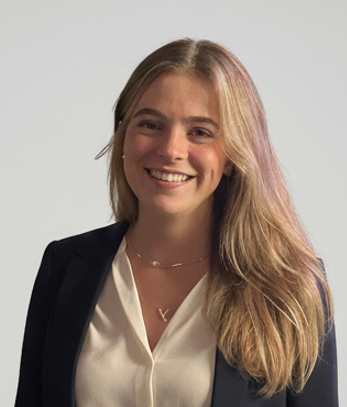
Eugenia Lopez-Belmonte Deza
- Scholar
- Spain
- 2026 PhD Physiology, Development and Neuroscience
- Lucy Cavendish College
Eugenia Lopez-Belmonte Deza
- Scholar
- Spain
- 2026 PhD Physiology, Development and Neuroscience
- Lucy Cavendish College
Growing up alongside my cousin, who has Down syndrome, gave me an early awareness of how complex healthcare challenges shape everyday life and sparked my interest in finding solutions that can make a tangible difference. I soon realised such solutions rarely emerge from a single discipline, but rather at the intersection of fields. This led me to study Biomedical Engineering at UCL, where engineering principles moved beyond theory to be applied to biological systems in clinical contexts, translating experimental findings into real-world impact. Fascinated by neural engineering and excitability, I pursued an MPhil at Cambridge, modelling skeletal muscle channelopathies computationally in Dr Fraser’s Lab. Yet the deeper I delved, the more I asked: how can we move beyond understanding mechanisms to actively transforming patient care? That question made a PhD a necessity. I aim to develop an excitability window to optimise targeted treatments and guide the diagnosis of excitability disorders and ultimately extend this work to the broader ageing population, ensuring scientific progress reaches those who need it most. I am honoured to pursue this as a Gates Scholar, joining a community aiming to make the world a better place.
Previous Education
University of Cambridge Biological Science (PDN) 2026
University College London Biomedical Engineering 2025

Stephanie Gabriela Lopez-Kessinger
- Alumni
- United States
- 2014 MPhil Latin American Studies
- Pembroke College
Stephanie Gabriela Lopez-Kessinger
- Alumni
- United States
- 2014 MPhil Latin American Studies
- Pembroke College
Stephanie (she/her/ella) is a visionary leader dedicated to transforming the public service landscape for Latinas in the United States. As the Executive Director at Latinas Represent, she leverages her personal journey as the daughter of Salvadoran immigrants and a first-generation college graduate to drive impactful change to create a more just and equitable democracy. She is a member of New Profit’s 2024 Civic Lab and served as a 2022 Aspen Institute SOAR Fellow.
