

Apolline Gouzi's PhD argues that arguing that festivals show how the post-war music market musically disentangled itself from the war in a new international context.
Lots of people saw their professional trajectories changed by what happened in WW2. Festivals started up in the late 1940s and allowed people whose reputation had been challenged in the war to perform and younger, less established performers to make their name.
Apolline Gouzi
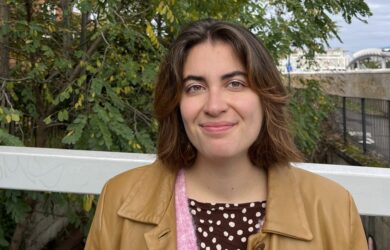
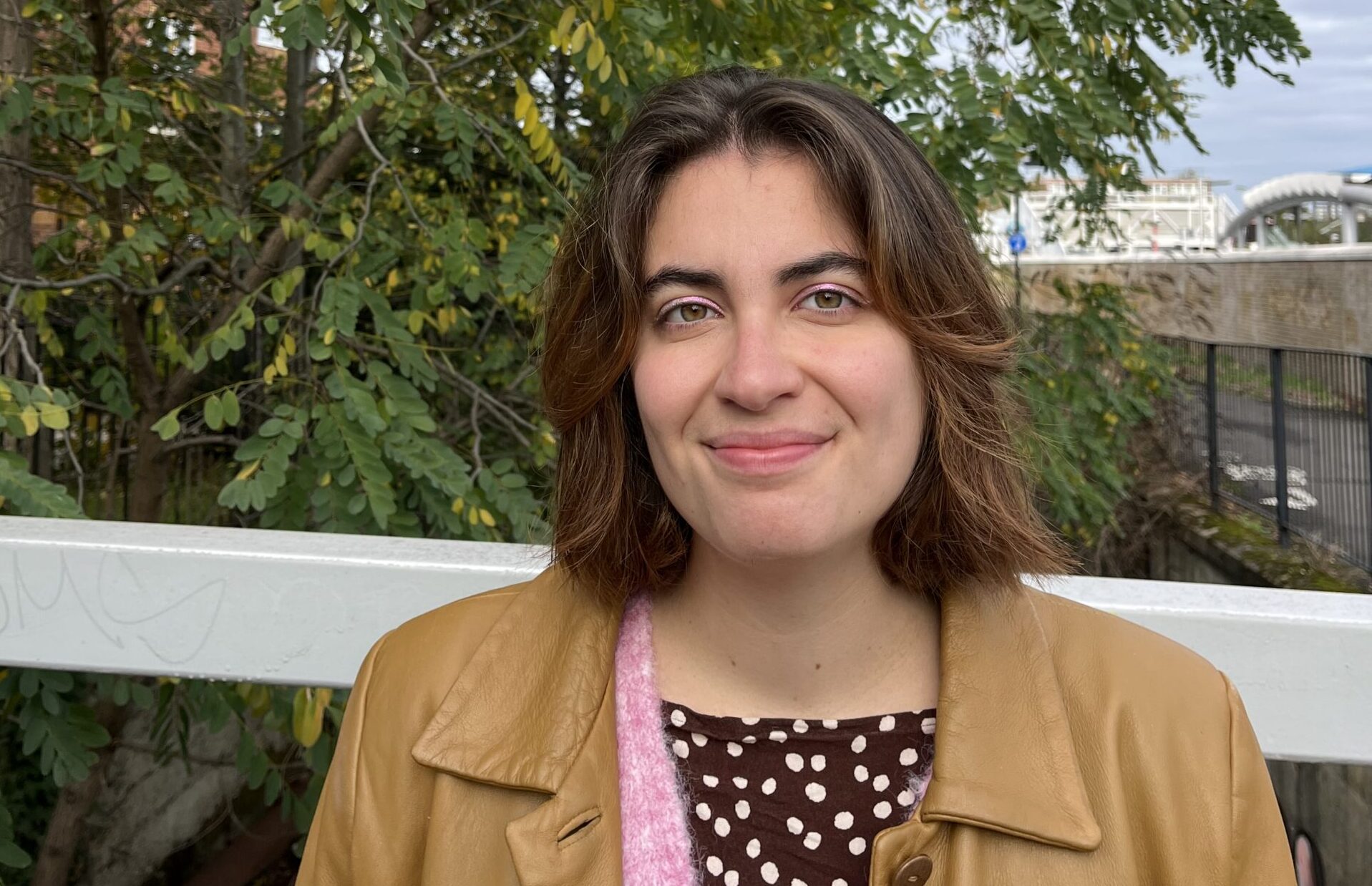
Apolline Gouzi [2023] has been devoted to music from an early age, but it is history of music that is her passion now.
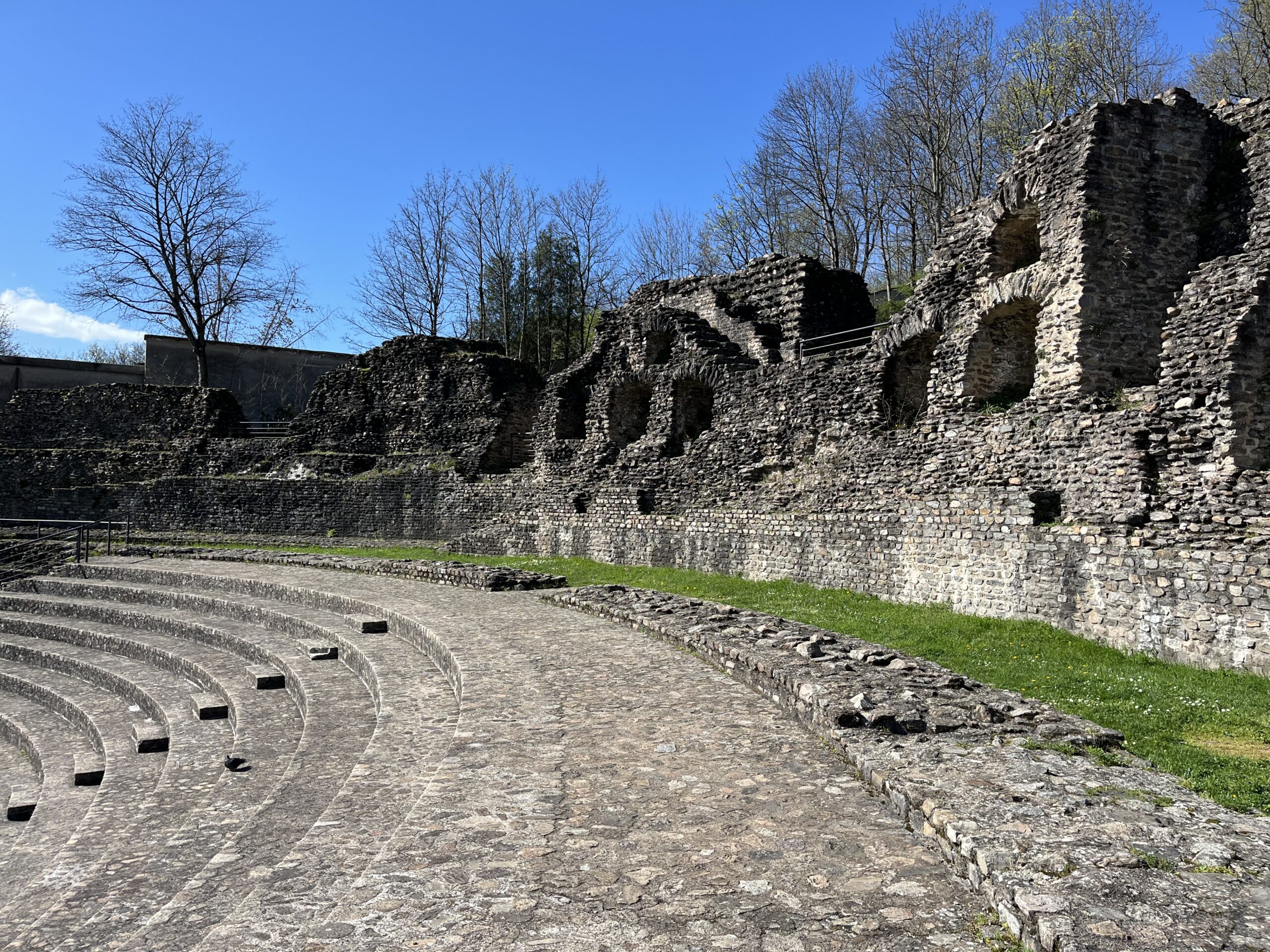
Roman amphitheatre of Fourvière in Lyon
She describes her PhD as detective work – she is piecing together festival archives to uncover how music festivals in the French regions came to international prominence from the 1940s onwards at a time of crisis for secular musical institutions, such as concert halls and opera houses.
Her thesis connects the contexts of the post-war purges in the wake of the Liberation with the simultaneous reconfigurations of French musical circuits, arguing that festivals provide a fertile illustration of how the post-war music market musically disentangled itself from the war in a new international context.
Early years
Apolline was born and grew up in Paris. She describes herself as very bookish as a child. She was also very musically gifted. From a very early age she recalls asking her parents if she could go to music school. Her determination paid off. From the age of six, she attended a municipal conservatoire where she did singing as well as music theory, which she really loved. At eight she started learning the violin and joined the orchestra which took up many hours of her week as she grew up.
She also learned to play the piano and listened avidly to classical music on the radio. She describes being obsessed by Mozart’s arias. She continued to study violin, music theory and opera singing until she left school and was also a member of the choir. In her last year of high school she took a qualification to teach music theory at a conservatoire.
Until she was 15, Apolline was good at a broad range of subjects and didn’t know what course of study to pursue. She was advised to major in STEM, but she soon discovered it was not for her. It made her feel miserable. She found maths particularly difficult because she was constantly questioning many of its premises.
After high school, Apolline went on to do a classe préparatoire at a central Paris high school. These are classes that prepare students for entrance exams to France’s top universities. Apolline wanted to attend the École normale supérieure [ENS] in Paris. The classes were intensive. Apolline studied six days a week, but benefited from a broader range of subjects, across the humanities. There was a music option which was very different to what Apolline had encountered before. She learned about musicology for the first time and discovered a passion for music history and learned that cultural and social historians had also written about music.
She really enjoyed her studies which lasted three years until 2018. She then took the entrance exam for ENS to study music. Apolline also applied to the Paris Conservatoire to do history of music and ended up doing both courses. It had been one of her dreams to attend the Paris Conservatoire.
In addition, Apolline enrolled in the École des Hautes Études en Sciences Sociales in order to qualify for a master’s degree. The Ecole has a partnership with ENS and the Conservatoire which meant she could take classes across all three institutions and they would count towards her qualification.
At university, Apolline continued playing violin, but she had made her peace with the fact she would not be a professional violinist. She gradually reduced her violin playing and she says she doesn’t miss it, although she continues to love music. At Cambridge she spends a lot of time singing in the choir at her college, Wolfson.
Apolline had to spend a year abroad as part of her ENS course. It was her first experience of living in the UK, although she had visited her partner who was doing her Erasmus exchange in London. She should have done the year abroad in 2021, but it was delayed until 2022/23 due to Covid. Through ENS, Apolline got a position as a lectrice at Pembroke College. There she met her now supervisor Katharine Ellis, whose work she knew well and she encouraged Apolline to apply to Cambridge to do her PhD. Although she didn’t think she would get in, she thought she should apply.
From master’s to PhD
Apolline had done her master’s thesis on Benjamin Britten’s tours of France in the mid-20th century. Because he was gay and because of other factors relating to the type of music he composed, he was not considered a good fit for Paris’ music venues. So his music ended up being performed mostly at festivals outside Paris and his operas didn’t make it to Paris stages until the end of the 20th century. Apolline became interested in how he coped with not getting into these central venues and how he ended up considering festivals.
She started looking at festival archives and found piles of administrative information, such as budgets and organisational documents, that she says had not been looked at before, mainly because no-one had been interested and because the second half of the 20th century was not considered a priority for archivists. “It was quite exciting and challenging as the information was so scattered across the archives. I felt like I was a detective,” says Apolline. “It was really interesting to see how festivals were trying to do things traditional venues weren’t doing. They seemed less constrained.”
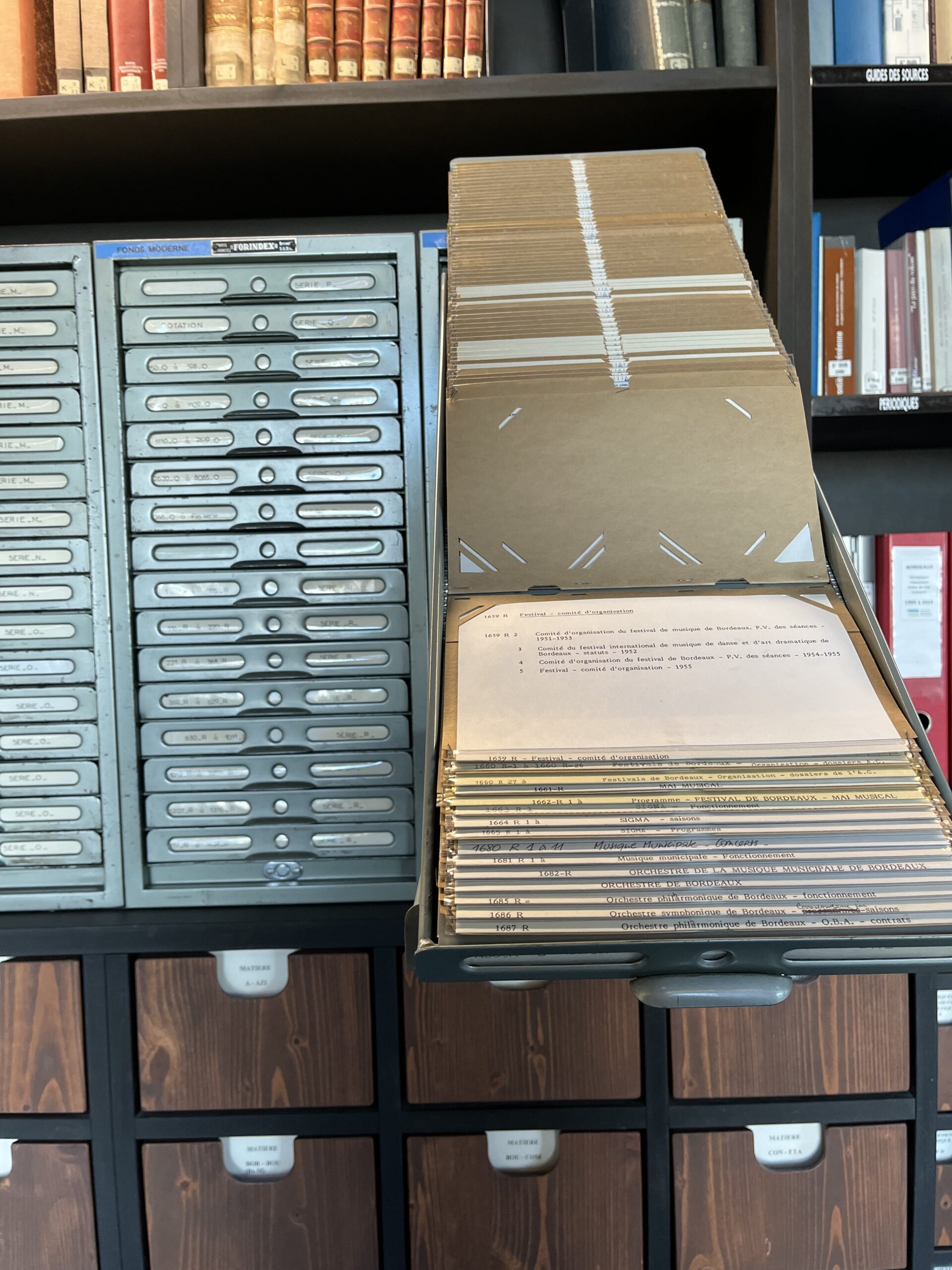
The Bordeaux inventory
She says no-one seemed to be cross-referencing festivals in different regions and in less urban, outdoor settings. That has been the inspiration for her PhD which began with the title ‘Cultural Reconstruction? Postwar Music Festivals in the French Regions (1945-1959)’ and aimed to investigate how classical music festivals acted as shelters for stage music in the context of a collapse of the traditional opera system and how a “local” focus was used to promote the idea that some towns had been protected from change in the aftermath of the Second World War. She aimed to address those questions through several case studies (Festival d’Aix-en-Provence, Mai musical de Bordeaux, Festival de Lyon-Fourvière, Festival de Vichy, Festival de Strasbourg).
In her second year of doing the PhD her focus shifted to looking at how festivals have played an interesting role in the careers of musicians in the wake of the Nazi Occupation in the early 1940s. “Lots of people saw their professional trajectories changed by what happened. Festivals started up in the late 1940s and allowed people whose reputation had been challenged in the war to perform and younger, less established performers to make their name,” says Apolline.
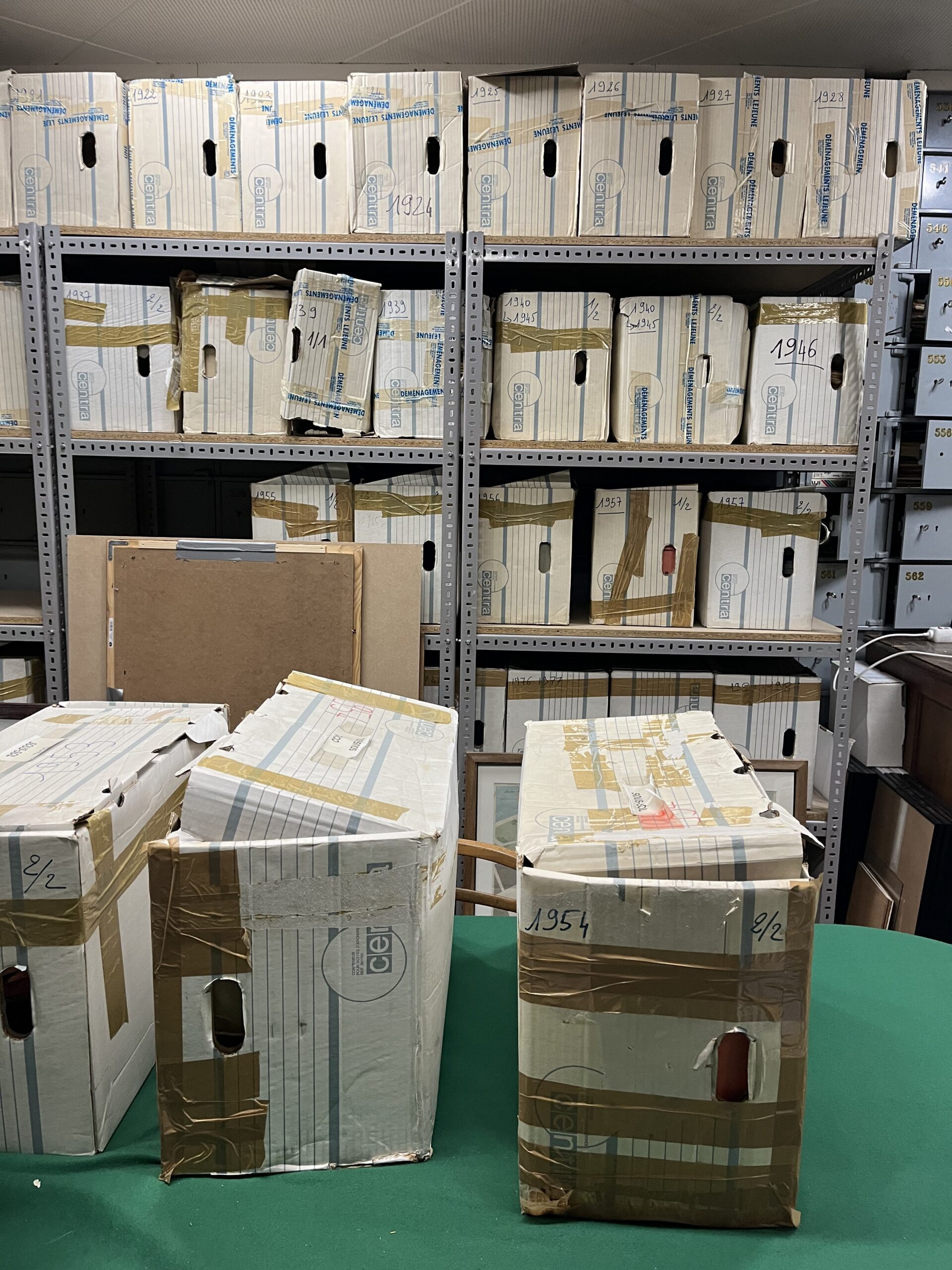
Vichy Casino archive room
Festivals, she adds, provided shelter for people for a range of different reasons – for instance, people accused of collaborating with the Nazis as well as displaced Jewish musicians who had had to go into hiding as a result of the Occupation and of the anti-semitic policies of the Vichy regime. Interestingly, women accused of collaborating were punished more than men. Some who had collaborated with Radio Paris – the station best known for its propaganda broadcasts in the pro-Nazi Vichy regime during the war – were trialled and forbidden from performing for varying lengths of time.
Apolline says her research shows that, despite the different, and sometimes opposing reasons for performance gaps or problems, there seemed to be few tensions at festivals. “Being able to rebuild and find a new persona was vital for some people and everyone seemed to understand that,” she says. She has been following the trajectories of several performers to understand why they accepted festival gigs in some places, but not in others. “I have been tracing what they did in the war and before to see whether that related to where they performed and how the press talked about them,” she states.
Apolline, who has been teaching alongside her studies, is currently in her fourth year and writing up. She hopes to stay in academia, focused on the history of music in France.