

Biology and faith, wildlife conservation and ethical issues around documenting military violence and poverty will be the subjects of this week's Scholars Stories session.
Biology and faith, wildlife conservation and ethical issues around documenting military violence and poverty will be the subjects of this week’s Scholars Stories session.
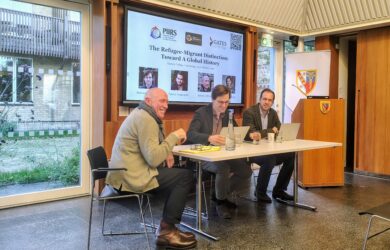
Three Scholars – David Kurz, Katrin Pfeil and Farhan Samanani will speak about personal experiences and ideas that have influenced their work at the event on Tuesday night.
David Kurz [2013], who is studying for an MPhil in Biological Science, will speak about how he has incorporated his personal faith and the study of biology into a unified worldview. He says that before university, Christian faith was not central to his life. He says: “Like many, I had major doubts about church and Christian life; faith in God seemed too much like a sterile, banal system of rituals. However, things began to change around the age of 18 when I got to university. There, for the first time, I was fortunate to experience an intellectually and spiritually satisfying faith that both challenged me and gave me a peace I had never known before. As I began to grow in my faith, I also began spending a lot of time thinking about what it looked like to incorporate my personal faith and study of biology into a coherent worldview.”
He states that his passion for biology has led him to a deep appreciation of the power and beauty of a scientific approach to solving the world’s problems while his faith has helped him answer some of the big questions, which often fall outside the realm of science. He says: “I don’t have all the answers, but the process of wrestling with the relationship between these two founts of knowledge, science and faith, has deeply shaped who I am as a scientist and person.”
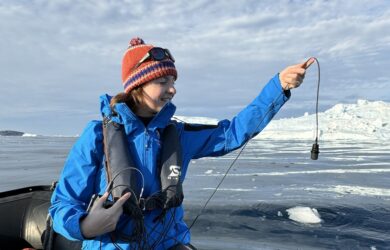
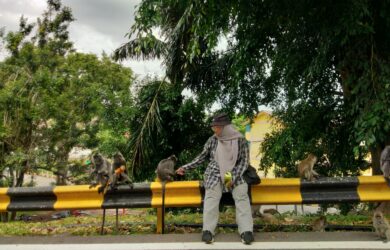
Katrin Pfeil [2012], who is doing a PhD in Criminology, will talk about her experience as a wildlife conservation volunteer in South Africa and how it inspired her to go back and conduct research on poaching and anti-poaching strategies. She says: “Last September I spent four weeks in protected areas in KwaZulu-Natal monitoring endangered species, such as African Wild Dog and Cheetah, with an organisation called Wildlife ACT. During this time I had the chance to learn more about the pressing issue of poaching in the area, both general poaching (snaring, poisoning, hunting with dogs) and specifically rhino poaching as a form of organised crime. The illicit trade in rhino horn has grown to a full-blown international crisis in the last six years, and poaching is still growing at an unprecedented rate. I was hooked.”
She has since developed a research project which is additional to her PhD and has managed to return to the region for the last two months to conduct interviews with park managers, anti-poaching units and state prosecutors, amongst others.
Farhan Samanani [2013], who is doing a PhD in Social Anthropology focused on how people become personally invested in particular political issues, will discuss the ethics of documentary film projects with reference to two personal experiences. While at school, he and a friend attempted to make a film of life in the Dominican Republic after his school raised money for a school building project. They hoped their film would raise awareness of the daily struggles of people in the country, but he says: “All we succeeded in doing was having our own self-righteousness called out, and realising that we ourselves were more detached than we were able to admit.”
He will also talk about a research project in Israel looking at military violence. He says: “I expected to find immorality and detachment and instead found a military that was sincerely concerned with doing the right thing – and was in fact impelling or overlooking these transgressions on the basis of its moral fixation. Together, these experiences helped me to rethink my place in the world, how I was connected to others, and about the rich possibility this connection held. It is this sense of the potential in interconnection that motivates much of my current work – from my research to my work on ethical investment.”
Scholars Stories takes place in the Gates Scholars Common Room from 7-9pm.