

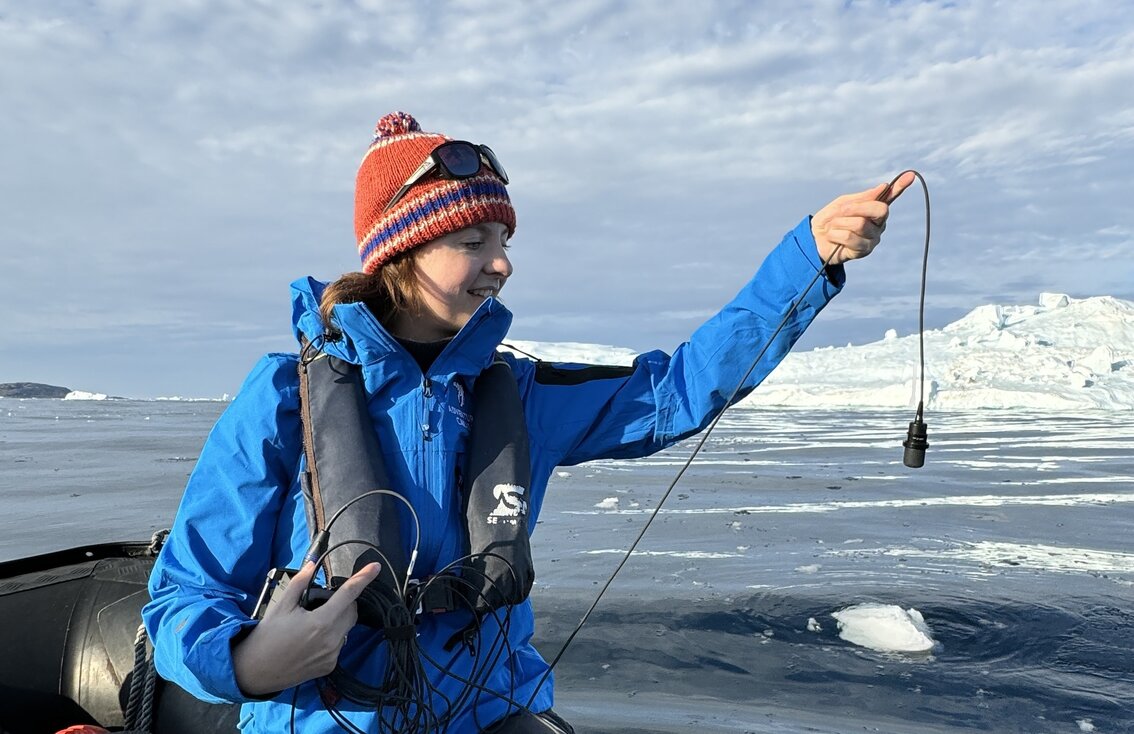
Simone Eringfeld has launched a new podcast related to her research on sight-hearing in Antarctica
My podcast turns my research into an immersive audio experience, allowing listeners to embark on a sonic journey to Antarctica and explore its varied soundscapes by ear.
Simone Eringfeld
Gates Cambridge Scholar Simone Eringfeld [2022] has just released a podcast series, Antarctica Calling, based on her PhD research which invites listeners to connect more deeply to the frozen continent.
 The podcast launch in October coincided with Simone’s solo sound-art installation at the Arctic Circle Assembly in Reykjavik, Iceland, bringing together environmental research, sound art and a broader exploration of how sensory experiences might change the way we understand and care for environments undergoing profound change.
The podcast is a first-of-its-kind research publication built directly from the research data itself. Rather than simply reporting the findings, the podcast lets audiences experience the research for themselves.
Simone is author of Podcasting as a research method: A practical guide which explores the ethics of podcasting, such as informed consent and anonymity, how to approach the editing process while retaining contextual information and what stage of research podcasting can be used.
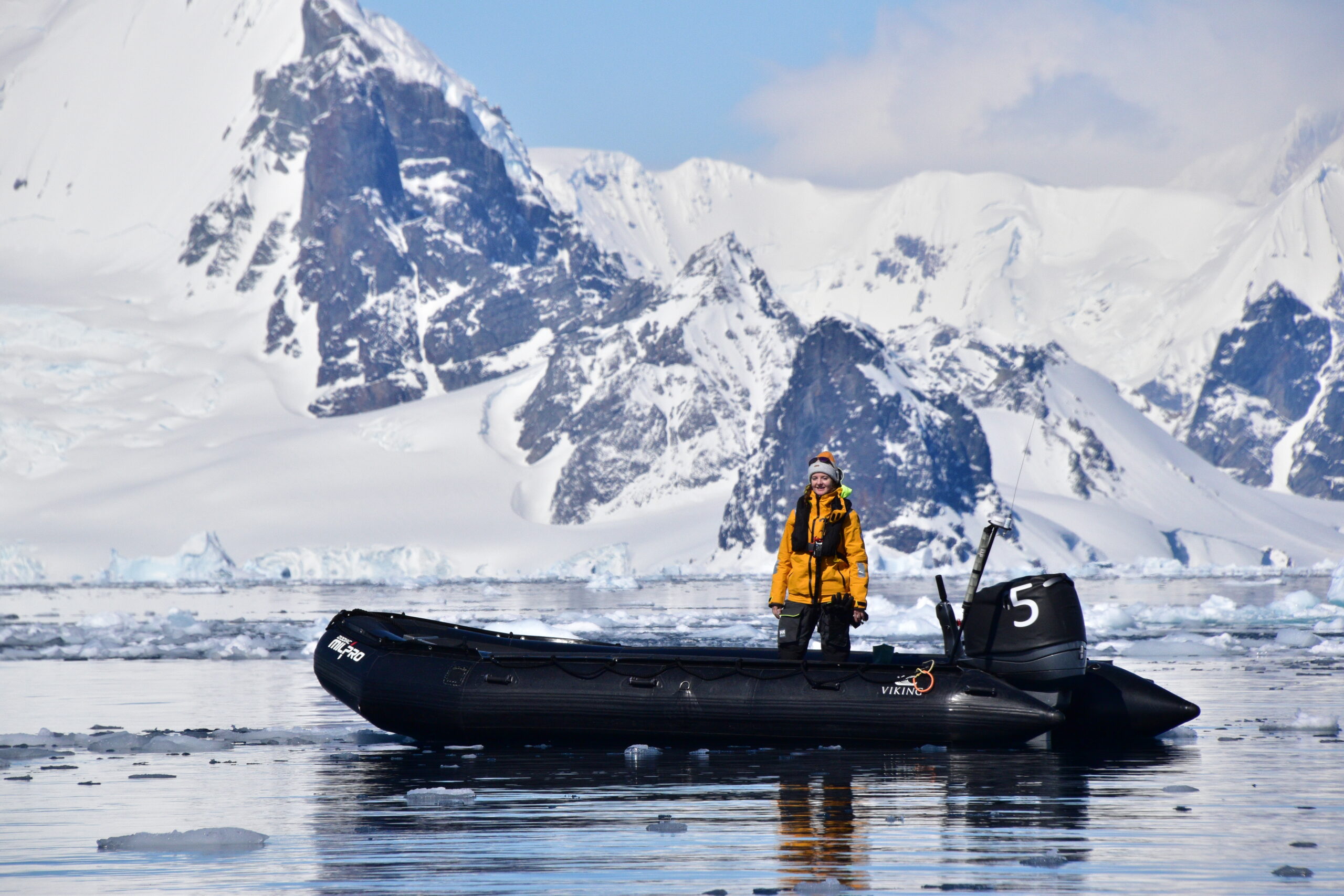 Her PhD started from the premise of investigating whether Antarctic tourism, which gets a bad reputation for its environmental pollution, could also have a positive impact. From there she developed the concept of site-hearing as opposed to site-seeing.
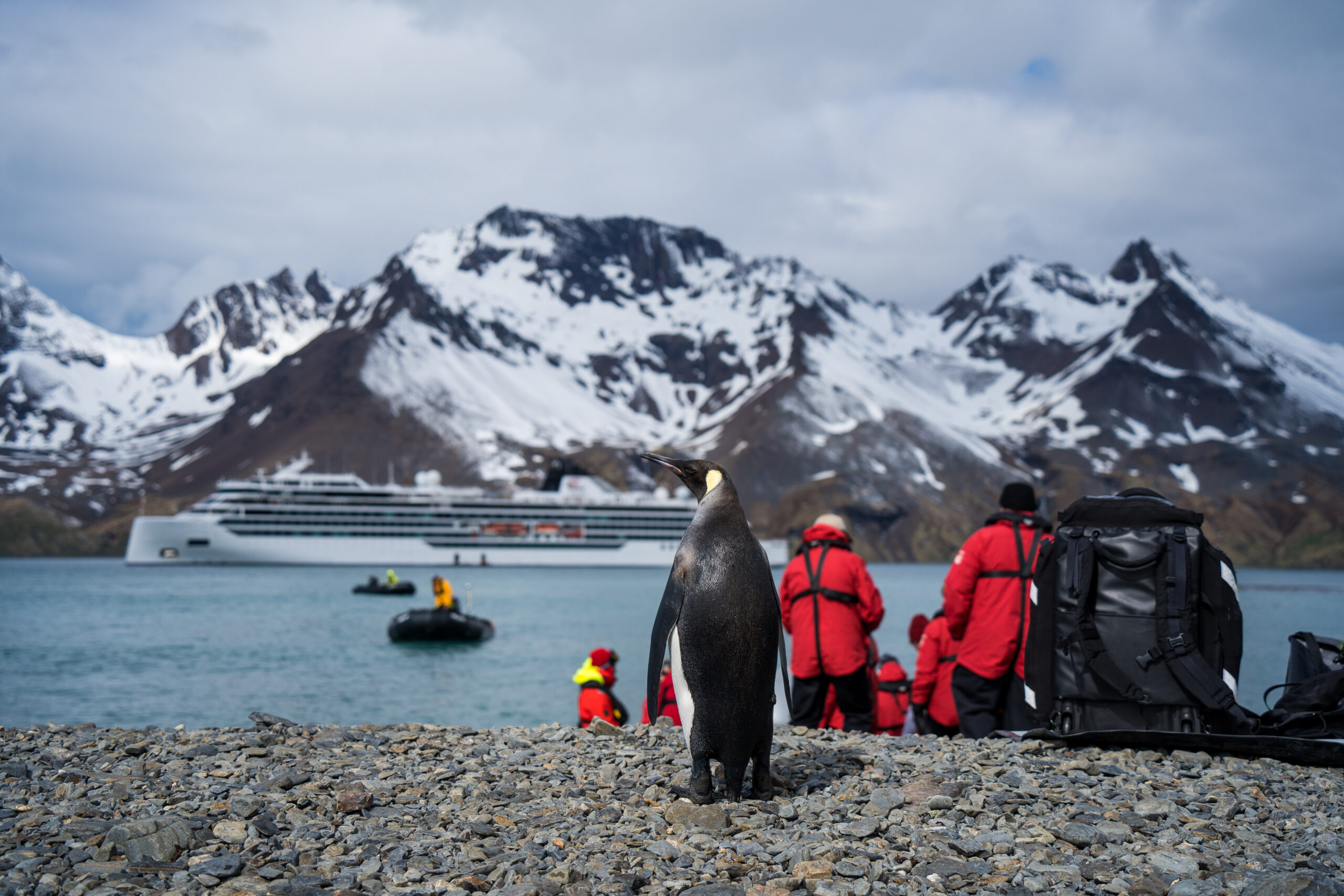
Over three months working aboard ships in the Antarctic Peninsula, Simone engaged tourists in listening workshops, inviting them to experience Antarctica through their ears rather than through their cameras. She says what emerged was a striking tension: the more closely people listened, the more alive Antarctica seemed.
Among 218 participants in the site-hearing trips she developed, 98% said it made them feel more connected to Antarctica, while 92% said it made them care more about the continent.
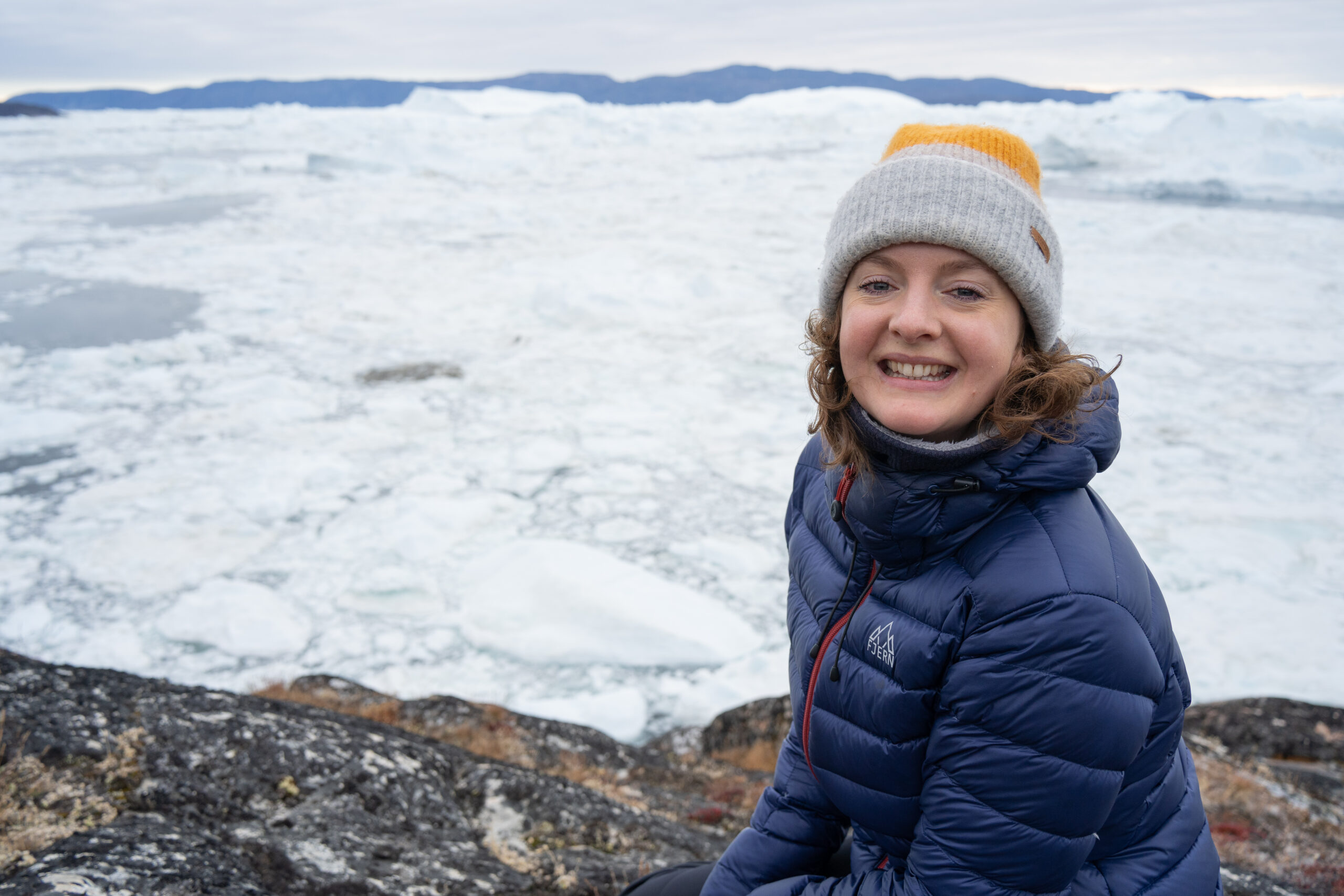 Listening also made visitors more aware of Antarctica as a living ecosystem and of their own presence and interdependence within it.
Simone says: “My research showcases a different way of understanding Antarctica: not as a frozen, silent wilderness, but as a dynamic acoustic environment — one in which humans are increasingly becoming part of the soundscape.
“The podcast turns this research into an immersive audio experience, allowing listeners to embark on a sonic journey to Antarctica and explore its varied soundscapes by ear.”
*Antarctica Calling is available wherever you get your podcasts.