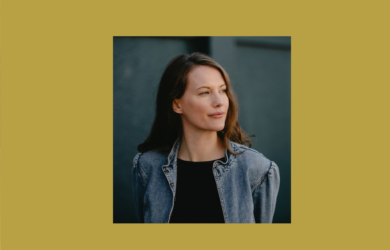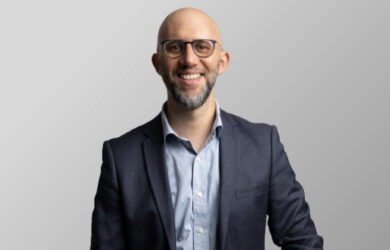


Usama Mirza and Erica Cao talk about their work on community-based mental health in Pakistan and the US.
Everyone is in some way musical. They have a rhythm and pace to their interactions. Music is a form of bonding and each group can choose the genre of music that best suits their interests. Some do dance routines, others are more focused on the lyrics, others do cover art. Everyone can be a creator.
Erica Cao
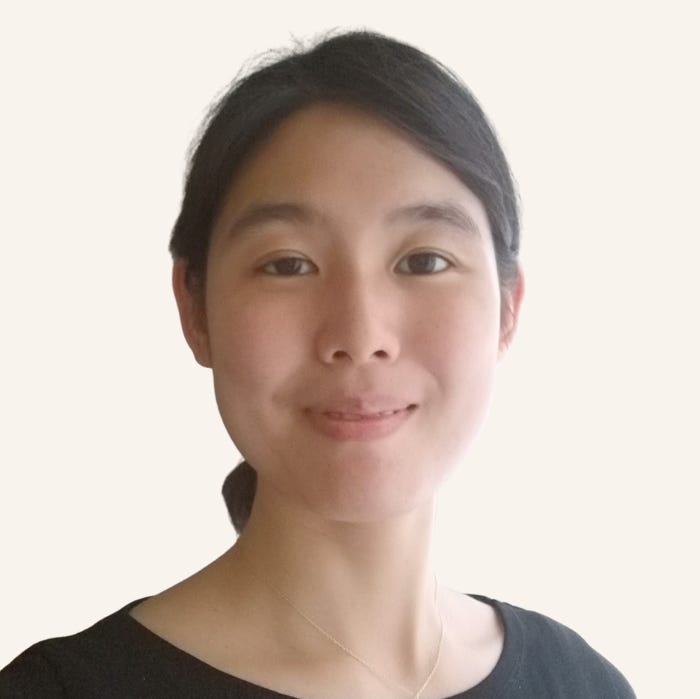
Erica Cao and Usama Javed Mirza share a commitment to community-based mental health as co-founders of organisations that directly address social wellbeing. Erica’s work is in the US and builds on both her MPhil in Music Studies and her PhD in Music, while Usama’s NGO is based in Pakistan.
Saving 9
Usama [2022] is doing a PhD in decolonising science education, but while doing his undergraduate studies in Pakistan he got involved in student-run medical services and became a medical first responder on campus, dealing with everything from fractures to suicide. “It opened my eyes to how much we can do as a community by learning life-saving skills,” he says.
After his master’s, he set up Saving 9, an emergency health responder service which launched Asia’s first mental health ambulance.
The organisation came about as the result of problems Usama and his colleagues had had seeking help for a friend during a serious mental health episode involving psychosis. In urgent need of support, they approached several nearby facilities, but were unable to secure immediate care. With options running out, they made the decision to travel to another city, facing a tense and unpredictable situation along the way. Despite the challenges, they eventually reached a place where their friend was met with understanding and received the care they needed.
That experience convinced Usama of the need for better emergency services. Saving 9 started in Rawalpindi in Punjab and has dealt with over 100 cases. It is spreading to other parts of Pakistan and is integrated with online counselling services so patients can be triaged and connected to the services they most need.
Usama says the aim is to create communities of care that are equipped to save lives by offering pre-hospital psychological care. The service trains members of the community to be mental health responders who can transport patients to affordable quality facilities that can care for them. This is a particular issue in rural areas. Usama is also keen for Saving 9 to offer preventive services in the longer term.
Humans in Harmony
Erica [2017] did her PhD at Cambridge in the middle of her medical school studies. She co-founded Humans in Harmony in 2017, a non-profit organisation which works with students in health professions, social service organisations and patients to co-create and foster agency through music-making.
As an undergraduate, Erica had interned at a non-profit called Genuine Voices who taught music to adolescents at juvenile detention centres. This experience which showed her the power of music, seeded the idea for Humans in Harmony. Its first project was a music programme which taught the adolescents to write songs for paediatric cancer patients. Erica also set up the Send a Song project, which involves medical students writing songs for children in foster care with the aim of building social connection in the students and the children.
She is now a resident psychiatrist in San Mateo, California, and teaches at Stanford while continuing to do participatory action research with communities, using music to identify specific community needs.
Healing
Both Erica and Usama are convinced of the power of music for healing. They met up online recently to speak about their work and to learn from each other’s experiences.
“Space and sounds are an important part of a community of healing,” said Usama.
 Erica added that Humans in Harmony draws on the belief of music’s role in community healing in its songwriting processes, with songwriting styles being tailored to each group. A lot of the songs created in juvenile detention centres where the project started, for instance, were in hip hop style. “It’s about co-creation with communities, about connecting with communities first and foremost,” she said. “Everyone is in some way musical. They have a rhythm and pace to their interactions. Music is a form of bonding and each group can choose the genre of music that best suits their interests. Some do dance routines, others are more focused on the lyrics, others do cover art. Everyone can be a creator.”
The groups begin with improvisation so everyone feels engaged. “From the start that blurs the hierarchies of power,” said Erica whose PhD was on participatory research. She says that kind of research provides the qualitative richness and detail that is often missing in clinical trials.
Usama agreed that bringing clinicians together with community-based care workers like those involved in Humans in Harmony would be very interesting, particularly insofar as measuring what constitutes success in mental healthcare.
He spoke about the ambulance as a therapeutic space. Saving 9 have made sure that furniture on board is comfortable and not in potentially triggering bright colours. Prior to talking to Erica he had not considered how the audio environment could also make patients feel less stressed and he said he would look into that, given that patients often face long journeys in ambulances before they find a place at a hospital.
Erica said emergency rooms at hospitals are often very chaotic environments. “There are so many sounds. The environment in mental health settings is similar. Studies show certain lighting can reduce manic symptoms and potentially calmer audio can help,” she stated.
Building strong organisations
Both Erica and Usama spoke of challenges they have faced with building their organisations. Usama said funding and local politics can be difficult and requires creativity. Another problem in rural areas is that people do not want to be treated near where they live as everyone knows each other.
Erica also spoke about the impact that funding cuts and politics are having a big impact on mental healthcare provision as well as on increasing distress. The patients that her clinic sees are uninsured or underinsured and many have difficulty connecting to therapists and community resources.
Humans in Harmony is geared towards prevention, through, for example, integrating community health workers into collaborative songwriting groups. “We want artists to work in this space and be integrated into clinics,” she says.
Erica and Usama discussed the wider social impacts on mental health generally.
Trauma
Usama spoke about his research in science education and how, during the Covid pandemic, there were clashes in understanding between science and religion, with some Muslims refusing to social distance in mosques because they saw the stipulations as part of a Western attack on their religion. He added that some people were suspicious about health policy due to past trauma related to the abuse of medicine by colonial powers.
A community of care
Erica works at a community mental health centre in the US and sees many patients whose mental health is affected by chronic and intergenerational trauma. Some patients have a trauma response to the actions of immigration enforcement in the US. She says it is important to be aware of questions which might resurface trauma or act as a trigger.
 Like Erica, Usama’s work has embraced different sectors of society and the need to create a more holistic community of care in different settings. He spoke, for instance, of working on an education programme with the US Institute of Peace, which attempted to create an inclusive space for teachers to share their experiences of dealing with mental health problems at their schools and to train them to be mental health responders.
He said the funding fizzled out, but he hopes that it can be reignited in the future. “It could be reconceptualised under the idea of a community of care,” he said. “It changes the mindset about the role of teachers in a school.”
Erica also spoke about the importance of integrating peer support models into mental health work, particularly for adolescent mental health. She mentioned a clinic where a health worker who was incarcerated is working with those who have been incarcerated, building a sense of community based on lived experience.
Usama has been working on an emotional inclusion index in Pakistan to collect data on how schools support the emotional needs of their students. It also provides suggestions for positive actions that they can take.
Usama is hoping to publish on this shortly. He is keen to embed such practices across communities. Both Erica and Usama are convinced that a longer term, more holistic approach is needed to the current mental health crisis.
“Everyone wants to do something about mental health, but politicians often don’t know what to do beyond quick fixes, beyond headlines,” Usama said. “The index shows what they can do without a huge investment of resources.”
*Top photo by Total Shape on Unsplash