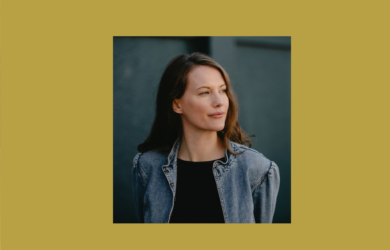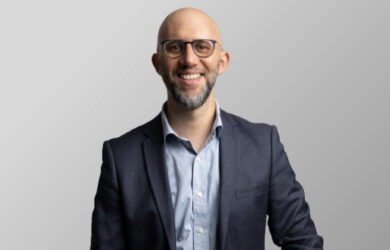



Aninda Sinha is a theoretical physicist whose work focuses on quantum field theory and the fundamental questions about the universe.
Meeting all the stalwarts of Theoretical Physics gave me the feeling that I had to be creative, I had to discover something important, and it gave me the confidence that I could do that. Gates Cambridge enabled my studies. It was a vital phase of my growing up and learning about the world.
Aninda Sinha is a leading theoretical physicist whose career path has seen him pursue the fundamental questions of the universe.
He was drawn to Physics from an early age, having grown up in a scientific family. His father, Atish Chandra Sinha, did his undergraduate studies in Geophysics. Although he went on to be a minister and Leader of the Opposition in the Indian state of West Bengal, he remained, says Aninda, “an academic in his heart”. “We always had discussions about Physics and how the universe worked,” he says.
What’s more, Aninda’s uncle was leading physicist Bikash Sinha, former director of the Saha Institute of Nuclear Physics and the Variable Energy Cyclotron Centre who was also a member of the Prime Minister’s scientific advisory board. Bikash had studied at Cambridge so it seemed a natural choice after Aninda’s undergraduate studies in Physics at Jadavpur University in Kolkata.
While there he ranked first in his year and met his future wife, Urbasi [2002], another physicist who would also go on to be a Gates Cambridge Scholar in 2002 after the couple married in 2001. The two followed different paths in Physics. “She is an experimentalist and I am a theorist, an idealist who lives in a make-believe world,” he laughs. “I can imagine living in the early universe even though I will never do that.”
He adds that having Urbasi with him at Cambridge kept him grounded, particularly at times when he hit the inevitable frustrating patches during his PhD.
Cambridge
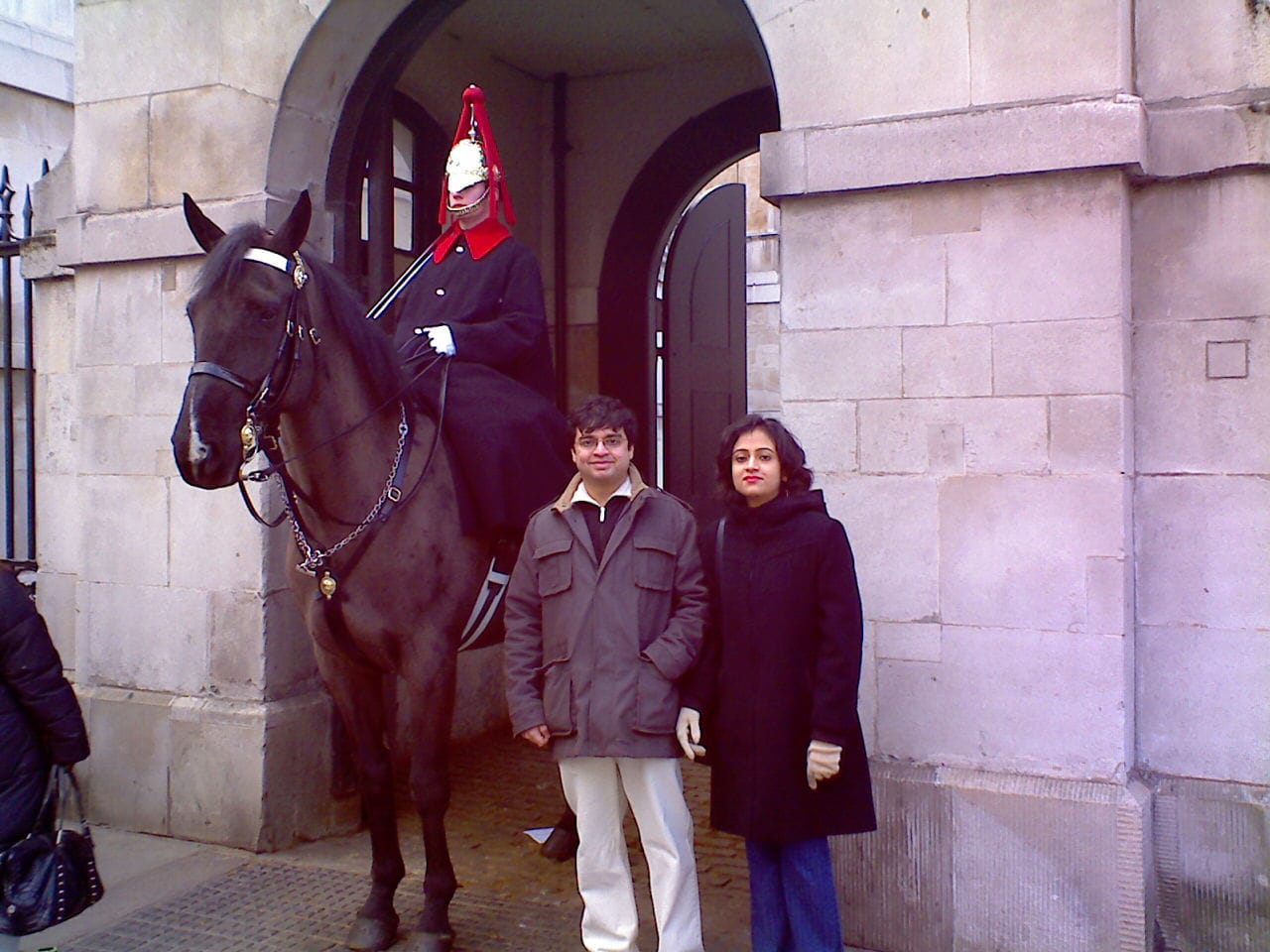
Aninda and Urbasi in London in the early 2000s
Aninda arrived in Cambridge in 1999 with a Nehru Chevening Scholarship to do his master’s. He loved the intellectual atmosphere and the ability to interact with students in diverse fields through his college. “I now realise how important that was,” he says. “Being around people in different disciplines who think differently is very enriching.”
He describes doing his Part 3 in Mathematics – a one-year master’s-level taught course in mathematics regarded as the most difficult and intensive mathematics course in the world – as a hugely stressful time. The announcement for the new Gates Cambridge Scholarship programme was made in the winter and looked attractive to him – the financial support was generous and the association with the Gates Foundation carried a certain prestige, even though Gates Cambridge was, as yet, unknown.
He applied and had his interview in the summer after finishing his master’s exams. One of his Gates Cambridge interviewers had taught him. Even though he had shared the prestigious Mayhew Prize for mathematics, he says he suffered from imposter syndrome.
His PhD was supervised by Professor Michael Green, a pioneer of string theory. He says having Professor Green as his supervisor was very inspiring. He told Aninda that the ideal student was one who finds his own problem and solves it. “It’s something I took to heart,” says Aninda. His PhD, titled ‘Aspects of IIB Plane-Wave String Theory’, was ambitious. String theory suggests that fundamental particles are actually tiny vibrating strings, with different vibration patterns corresponding to different particles. Aninda’s research sought to understand Type IIB Plane-Wave String Theory, a special version of string theory where strings live in a very specific curved spacetime called a plane-wave background. Unlike most versions of string theory, this set-up is mathematically solvable, allowing physicists to calculate things exactly rather than approximately and to test ideas about, for instance, quantum gravity.
An essay related to his work won the Rayleigh-Knight essay prize, awarded to the highest quality essays on mathematical research topics carried out by PhD students at Cambridge.
Aninda submitted his PhD in 2004, qualifying in 2005, and became a Fellow of Gonville and Caius and at Cambridge’s Department of Applied Mathematics and Theoretical Physics. He says being a Fellow was an interesting experience, with the different traditions associated with the role, including privileges such as a special Fellows’ entrance. “It felt a bit like Alice in Wonderland,” he says, “but it was essential as it gave us a sense of belonging, pride and responsibility. There was a lot of expectation on us to do something amazing.”
At Gonville and Caius he met Professor Stephen Hawking whose work on a grand unified theory had similarities with the work being done on string theory, a unified description of gravity and particle physics. As a postdoctoral student Aninda’s work had diversified to broader issues about string theory and he co-authored a paper with Professor Green on how rare quantum effects change the predicted masses of vibrating strings in a simplified version of string theory, and whether those changes agree with predictions from an equivalent quantum field theory.
Waterloo
In 2007, Aninda took up a post as a Postdoctoral Fellow at the Perimeter Institute for Theoretical Physics in Waterloo in Canada. There he worked closely with theoretical physicist Robert Myers on c-theorems in quantum field theory. These formalise the idea that the parameters of a physical theory which change when you look at the system at different length or energy scales are irreversible and that physics becomes simpler as you go from high to low energies.
The two scientists quantified a language for quantum entanglement, the phenomenon whereby two or more particles become linked so that their properties are connected, even when the particles are separated by large distances. Entanglement is a primary feature of quantum mechanics. Aninda and Robert were looking at how quantum entanglement can provide a framework for understanding how information is organised across scales, which degrees of freedom remain relevant and how effective descriptions emerge as we move from high-energy to low-energy physics.
One of the biggest questions in modern physics concerns quantum entanglement just after the Big Bang and how that primordial quantum information may have become reorganised into the large-scale structures and effective degrees of freedom we observe in the universe today.
Back to India
Aninda’s original contract was for three years and in 2010 he and Urbasi decided to move back to India to be near their parents and to start their family. Aninda won the Ramanujan Fellowship – followed five years later by the Swarnajayanti Fellowship, and took up a post at the Indian Institute of Science in Bangalore, India’s premier institution for science where he is currently Professor of High Energy Physics.

Aninda and Urbasi on a recent trip to the UK
His role includes teaching. Although he had been a tutor at Cambridge and given a few lectures in Canada, this was his first role teaching a full course and he loved it. “I believe that if you really want to learn a subject you need to teach it,” he says. “Explaining something to a diverse group of students is very challenging if you don’t know your subject inside out and it’s always a good thing to revisit what you know.”
He says the experience of working at the Institute is completely different from Cambridge and Waterloo. He got involved in a bootstrap programme to test the principles of quantum field theory and has been working on it for over 10 years. The aim is to provide diverse perspectives on quantum issues. Aninda speaks about the gaps in fundamental physics. In schools children are taught about the four fundamental forces in Physics, he says, but there is no discussion about why there are only four and how gravity fits into that, given it is thought to have emerged only after the Big Bang. He says the framework needs to be rebuilt starting from primitive principles of Physics so that it works across different scales, from the quantum level to the theory of general relativity. That will require a lot of work and testing of calculations.
His work on the bootstrap programme aims to help researchers achieve tangible outputs for their work more quickly and filter out pathways that are unlikely to yield results, although he admits it can be hard to predict what research will have impact. He cites Paul Dirac, the quantum physicist, whose equation connected special relativity and quantum mechanics and predicted the existence of antimatter. It is considered one of the seeds of modern science. “The only thing with blue skies thinking is that you have to be prepared that your research may not be picked up in your lifetime,” he says, adding that ideas can remain dormant and then resurge at different times resulting in scientific progress.
Through his career, Aninda has won several prizes, including the 2016 International Centre for Theoretical Physics Prize and the Shanti Swarup Bhatnagar Prize for Science and Technology 2019, which he won for his influential work on aspects of quantum field theory and string theory, such as conformal bootstrap, a mathematical method to constrain and solve models of particle physics or statistical physics that exhibit similar properties at different levels of resolution.
The prestige and funding that accompanied the prize has enabled him to improve research set-ups in India. He is a fellow of two science academies in India and has been involved in proposals on how science can be improved in India in the longer term.
He has recently been working on various papers, including one that suggested a new formula for pi, with colleagues and postdoctoral students at his Institute, and says that many findings have emerged organically.
Aninda has moved recently into more applied science territory. He has written a couple of papers with Urbasi on quantum computing and medicine in relation to electrocardiograms and better diagnosis. He has also worked with Urbasi and her colleagues at the Raman Research Institute to set up a tabletop experiment to measure the probability that particles can move through slits in a twisted path – a prediction that has since been verified experimentally.
For Aninda, Cambridge was a vital stage in his scientific progress. Although his work at Waterloo had more impact than what he did at Cambridge, he says Cambridge gave him the mindset to ask the right questions. His supervisor gave him support and ideas, but essentially the process was about discovering the ability to find his own problem and solution.
“Meeting all the stalwarts of Theoretical Physics gave me the feeling that I had to be creative, I had to discover something important, and it gave me the confidence that I could do that,” he says. “Gates Cambridge enabled my studies. It was a vital phase of my growing up and learning about the world.”