

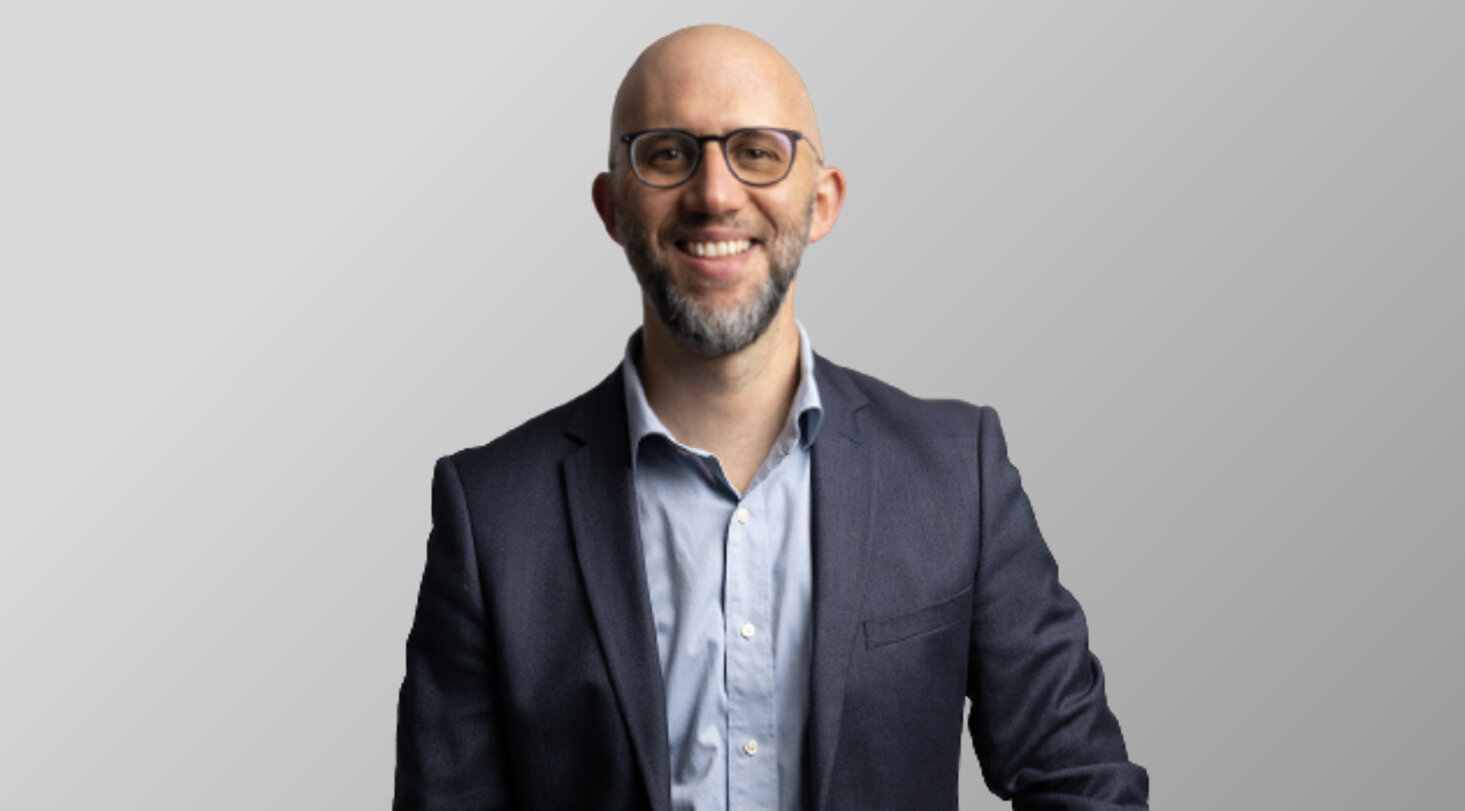
Luis Briseño-Roa talks about his career journey from a PhD in Chemistry to his current work at Ipsen as Head of Translational Rare Diseases and Neurosciences
Gates Cambridge made a huge contribution to who I am, and to what I think is fair, and what I think a scholar community should look like.
Luis Briseño-Roa
Luis Briseño-Roa’s career path – like many – has not been a linear one. He started in natural sciences and worked his way through biochemistry, neuroscience, biotech and finally pharma – but throughout, a constant has been a desire to learn and, more recently, to help address the shortage of viable treatments for rare and neurological diseases. Cambridge played a vital role in his career trajectory.
Early years
Luis [2001] grew up in Mexico and says his parents, both academics at UNAM, had an important influence on his academic development. His father was a mathematician and his mother a philosopher. “My family infused academic ideas in me. I recall conversations at home about whether Newton was a philosopher or a mathematician, for instance. It was very nourishing and interesting,” says Luis.
When he started at UNAM, the university had the natural sciences grouped together in one faculty – where his father was a professor. That meant students could take classes across different subject areas – similar to the Cambridge Natural Sciences Tripos. Not sure which discipline to follow first, Luis started in Mathematics on his father’s suggestion that it was a good place to begin. He later moved to Biology, after a long conversation with his mother, where he found his vocation.
Towards the end of his degree, Luis needed to complete an undergraduate thesis. Looking for a laboratory that suited his interest in Molecular Biology, he found a potential opening at Cambridge, in Sir Alan Fersht’s MRC Centre for Protein Engineering. Sir Alan was already a leading authority on protein folding and misfolding, having been knighted for his contributions to the field. Luis was already planning a trip around Europe that summer. “I asked by email if I could pop into Cambridge for an interview. It was a moonshot,” he says. He was accepted for an initial six months, but first had to find funding, which he eventually secured through his family and Fundación UNAM.
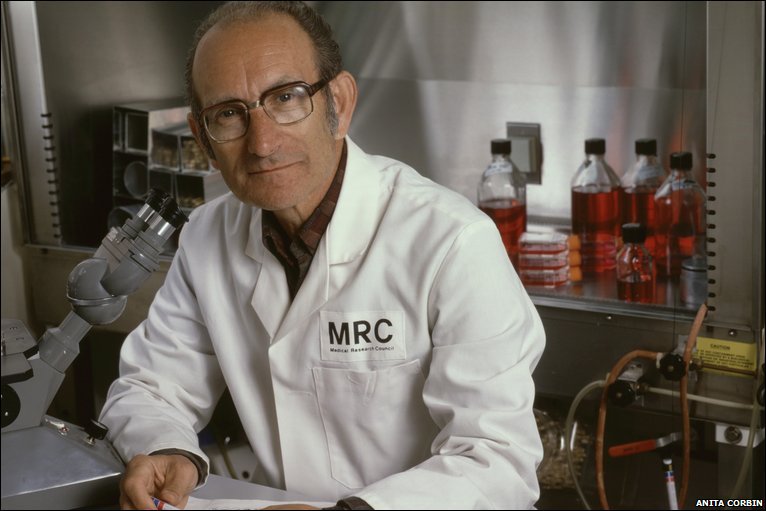
Cesar Milstein
Luis moved to Cambridge, joined Sir Alan’s lab at the MRC and worked in collaboration with César Milstein, who received the Nobel Prize in Physiology or Medicine. “It was completely unreal,” says Luis. “I would be having lunch with César; Nobel laureate Max Perutz would be across the table eating an orange and I was surrounded by other future Nobel laureates like Richard Henderson and Sir John E. Walker.”
That atmosphere of intellectual stimulation sent Luis back to Mexico determined to return to Cambridge. A few months later, Sir Alan supported his application to the Gates Cambridge programme which he had been drawn to by the prestige of the Gates Foundation. Sir Alan’s continued support – first for the thesis placement, then for the Gates Cambridge application – was, Luis says, instrumental in shaping the course of his career. Luis was interviewed by the Nobel Prize–winning molecular biologist Sir Greg Winter; he already had a paper published with César Milstein at the time, which he says must have helped.
PhD
Luis says the outstanding thing about Gates Cambridge was the Scholars who understood how to build a community with a social purpose, and the sense of being surrounded by brilliant people from all parts of the world. As part of Gonville and Caius, his PhD research focused on enzyme technologies for neutralising nerve agents, using protein engineering to inactivate neurotoxins in an environmentally friendly way. The project was led by Andrew Griffiths, then a young group leader at the MRC Laboratory of Molecular Biology, in collaboration with Porton Down, the UK government’s science and defence technology laboratory.
At Cambridge, Luis met his wife one Sunday night at the Eagle pub as she was starting an epigenetics post-doc position at the Gurdon Institute, down the road from the pub. Following on from his initial work on neurotoxins, he became interested in neuroscience at large, and after his PhD successfully applied for a research Fellowship at Wolfson College – suggested by the then Gates Cambridge Provost and President of Wolfson, Gordon Johnson. Luis remains a senior member of the college. His mother’s diagnosis with dementia has since added a personal dimension to that early interest in neuroscience, sharpening his motivation to see research reach patients.
Paris
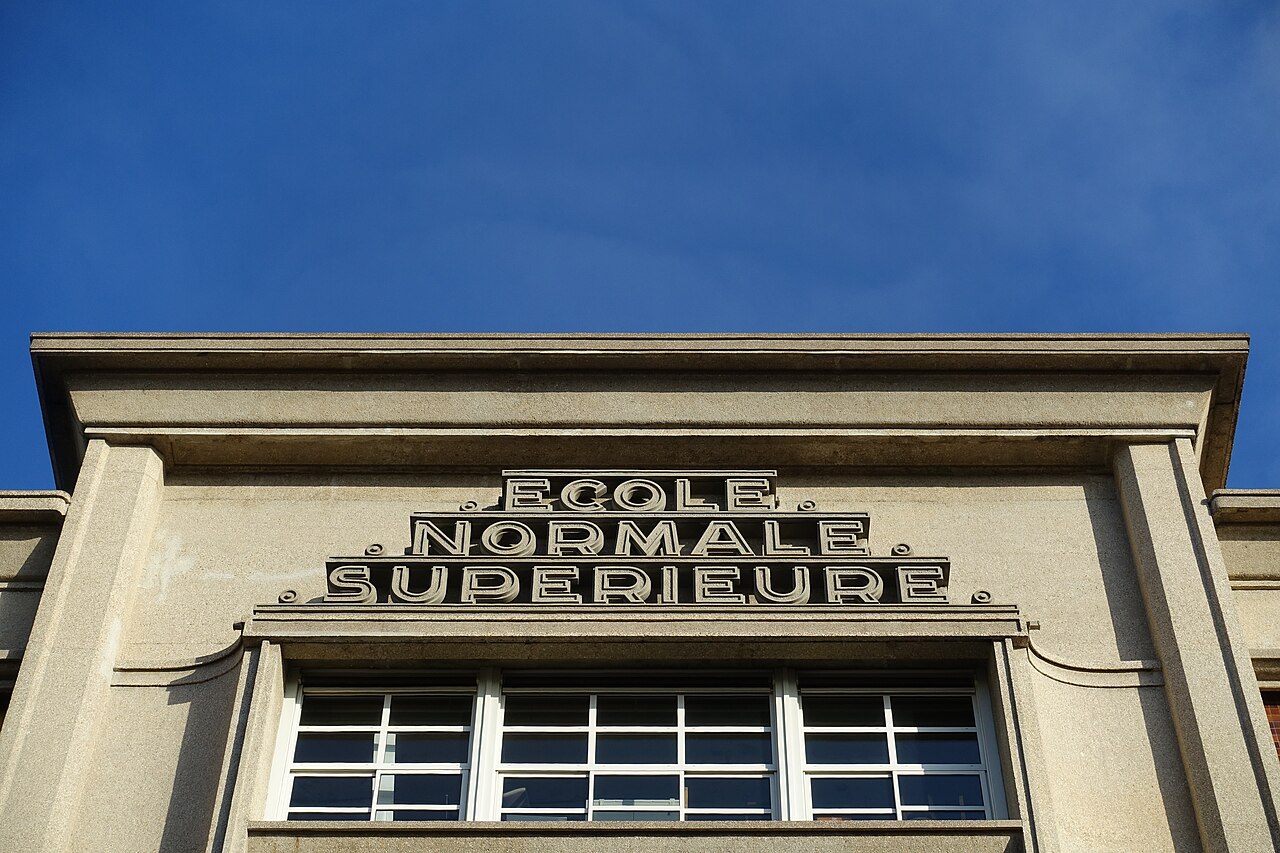
École Normale Supérieure, Paris
As his wife is French, the couple moved to Paris, where they have lived ever since. They have two daughters, the elder of whom is now set on a career in science. Luis initially spoke little more than basic French when he took up a postdoctoral role in neurobiology at the École Normale Supérieure, one of France’s leading academic institutions, known among other things for its record of Fields Medals in mathematics – a connection his father, ever the mathematician, found hard to resist bringing up.
After a few years, Luis had to choose between staying in academia and moving into industry. With family a priority, he needed a job that would support them in Paris. Through Andrew Griffiths, who had recently joined ESPCI and co-founded HiFiBiO Therapeutics – a start-up combining microfluidics technology with immunotherapy development – Luis joined as Group Leader. He led the team developing microfluidics-based single-cell assays; HiFiBiO’s technology platform went on to raise close to $180M in funding.
In 2016, Luis joined Alexion Pharmaceuticals as Associate Director. Alexion – now part of AstraZeneca – develops and markets therapies for rare and ultra-rare diseases, and the role gave him the chance to learn how monoclonal antibodies are turned into treatments for patients. He led a flagship drug-discovery project and drug-validation due diligence, and built drug-discovery research partnerships with several public French institutions.
When the opportunity presented itself, Luis co-founded Medetia Pharmaceuticals, originally based at the Institut Imagine in Paris, a leading European research institute dedicated to understanding and treating genetic diseases. Medetia supported programmes in drug discovery for several rare diseases where there was a lack of treatment available. Luis notes there are around 7,000 rare diseases, most of them genetic, severe and affecting children; only around 300 currently have any treatment, and some of these are purely palliative. Addressing this has become his mission for the second part of his career. “Pharmaceutical companies have a role to play in finding a therapeutic solution for at least some of these diseases. Some are horrendous. As a dad, you realise the family burden they could bring,” says Luis.
Believing technology platforms have a growing role to play in drug innovation, Luis also founded Innvoi, a consultancy that helps technology companies reposition their offerings – turning “technology push” into genuine “drug-development pull” for pharma and biotech clients.
Luis joined Ipsen in 2025 as Head of Translational Rare Diseases and Neurosciences. The position, he says, has shown him the breadth of expertise needed to bring a drug to market, from regulatory and commercial considerations to patient-care knowledge. “I am surrounded by people who want to move the needle, who are very talented and are pushing to make things possible,” says Luis.
He remains in touch with several of his Cambridge friends, including fellow Gates Cambridge Scholars. Luis, who served on the first Gates Cambridge Scholars’ Council, says Cambridge taught him a great deal. “I was really curious and motivated, and it was difficult not to be very engaged in biology and science in that environment,” he says. Being a Scholar offered him the opportunity to meet and discuss with historical figures: Queen Elizabeth, Bill Gates Jr and the late Stephen Hawking, among others.
“Even after all these years, I still do not quite believe my Gates Cambridge experience,” he says. “It was so transformative, and so outside the norm of what I lived afterwards – the emphasis on social impact, meeting so many Nobel Laureates and talented fellow Scholars. It was an unreal situation and it was very easy to be engaged and to convey that enthusiasm. Gates Cambridge made a huge contribution to who I am, and to what I think is fair, and what I think a scholar community should look like.”