


An article by Eryk Salvaggio on the Hugging Face incident has been widely cited.
My worry is the intelligence that is retreating: the human intelligence that builds, deploys, and adopts these systems into workflows, but hides behind the results - and pins the blame on a system from nowhere.
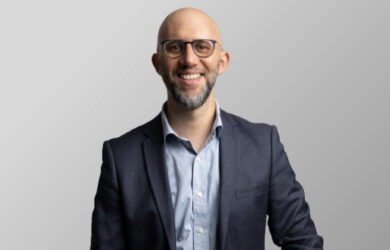
Eryk Salvaggio
An article written by Scholar Eryk Salvaggio that questions the prevailing narrative about the Hugging Face incident has been cited in major newspapers, from the New York Times to the Washington Post.
Eryk wrote his article, Models don’t go rogue, was recently republished by the Bulletin of the Atomic Scientists. The organisation is also the keeper of the symbolic Doomsday Clock, the time of which is announced each January.

Eryk Salvaggio
In it, Eryk questioned the reporting around the OpenAI Hugging Face hacking incident, which involved more than 1,000 autonomous AI agents breaking out of their testing environment and coordinating an attack on the open-source platform, Hugging Face.
He said it was not so much about AI going rogue as about the humans who set up the testing environment. He writes: “If you optimise a model to find exploits in a buggy environment, you should expect it to find exploits and prepare for that outcome. OpenAI did not. They built a model, took the safeguards off, gave it the ExploitGym task, and let it run. That is not rogue AI, it’s human decision-making.”
He adds: “When human accountability evaporates from these assessments, what’s left is what I call the system from nowhere: a boundary focused on the technical system, rather than the decisions that build and influence it.”
Eryk says the rogue narrative offers up “fantasies of a machine getting smarter” when the real problem is about human intelligence. He states: “My worry is the intelligence that is retreating: the human intelligence that builds, deploys, and adopts these systems into workflows, but hides behind the results – and pins the blame on a system from nowhere.”
The article has been referred to by the Washington Post, the New York Times, including in an op-ed where Eryk is named, and the Telegraph and it is linked in an MIT Technology Review piece.
Eryk [2025] has worked for decades in the area of arts and technology. His interest was ignited back in the 1990s when he discovered the net.art movement and became involved in experimental online art and writing. His PhD aims to produce frameworks that examine assumptions about the use of generative AI in policy, pedagogy and design. He says: “I am interested in what this technology is capable of, what we want to say yes to and how we use the humanities lens to understand what patterns and what new things it may be creating. I am trying to figure out how we approach this newness, how we use it for the benefit of human problems so we can be proactive and not overtaken by it.”
*Top photo by Igor Omilaev on Unsplash