


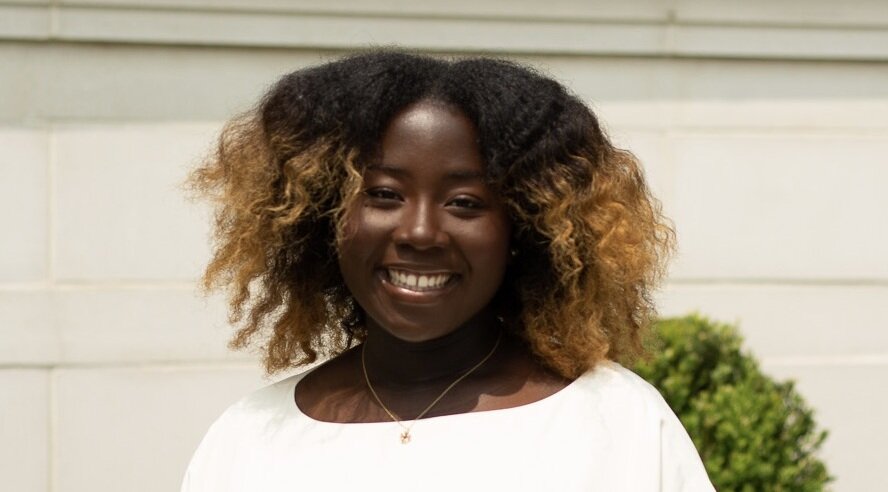
Ifeanyi Umunna talks about her studies in the legal field and her work both in law and politics as she takes up a new role as student body co-president at Harvard Law School.
Gates Cambridge is a very rich environment. I really enjoyed being surrounded by different perspectives from different disciplines and if I want to create legislation in the future about AI or anything else I know who to call!
Ifeanyi Umunna
Ifeanyi Umunna has just been elected student body co-president at Harvard Law School for the 2026–2027 academic year. It’s a role that positions her as a central figure in student advocacy and governance.
She has earned that position through years of dedication in both the political and legal spheres. Ifeanyi, has worked on a variety of political initiatives, including Congressional campaigns, as well as representing students throughout her academic career. She has done all of this while also attaining top marks in her studies and working across the legal profession, including during her time in the UK where she did her MPhil in Criminology as a Gates Cambridge Scholar.
Early years
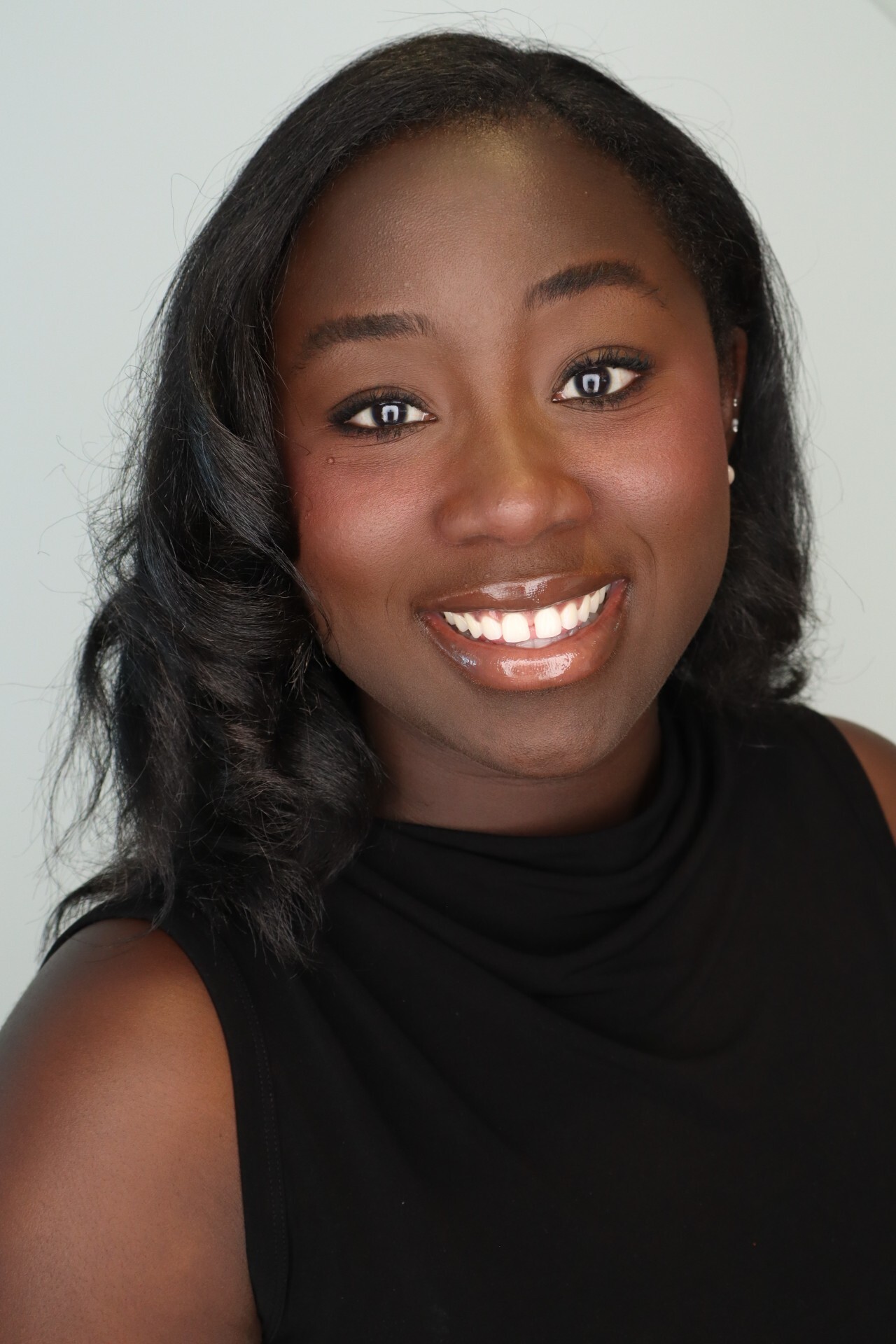 Ifeanyi [2024] was born in Silver Spring, Maryland, but grew up in Boston. Her mother has been a big inspiration for her. Professor Dehlia Umunna is the first Nigerian professor at Harvard Law School and Faculty Director of the Law School’s Criminal Justice Institute. Ifeanyi recalls conversations at home about the law when she was growing up and her extended family’s experiences with incarceration informed her view of the criminal justice system in the US.
As her mother was a single parent and childcare was expensive, she would take Ifeanyi with her to court, training and class. That experience shaped her views about the law which was strengthened by meeting judges and other justice officials.
Ifeanyi also developed an early interest in politics and says law and law-making was “always a fact of life for me”. As a six year old in 2008, she attended President Obama’s inauguration with her mother and says it had a huge impact on her. “It seemed so normal when I was a child that we could have a Black president and now I can hardly believe it happened. I cannot believe this America was that America,” she says, adding that she has always understood the power of voting, having accompanied her mother when she voted.
At high school Ifeanyi became active in student politics and was class president twice. She was also Model United Nations club president. Although she was given the freedom to explore different avenues, including an interest in marine biology, she realised by the end of high school that her true passion was in law-making.
Undergraduate studies
Ifeanyi was very motivated to study hard at university, knowing she wanted to continue in academia after her undergraduate studies. In fact, she graduated from the American University in Washington DC in 2023 – a year early – with a perfect 4.0 GPA. Her degree was in Political Science and Government – and she also had a minor in African American and African Diaspora Studies as well as certificates in advanced and collaborative leadership.
During her studies, Ifeanyi, who is part of the historic black Zeta Phi Beta Sorority, became involved in student politics. She served as president of the Black Student Union and student director in the School of Public Affairs Leadership Programme. She also interned with Public Defenders’ offices and supported local homeless outreach efforts. Through that work she learned more about the justice system which led her to start ZeEntry, a non-profit organisation that helps people who have had contact with the justice system gain access to technology and better opportunities.
Politics and law
Ifeanyi got a good insight into the political system early on in her degree when she started working first as an intern and then as an organiser for a Democratic Congressional candidate in California’s first district in the northeastern region of the state. She worked, remotely from Boston, to get the vote out and on voter education. The area was a Republican one and quite unique – it had been the site of a campaign to secede from California. And it was very different from Boston. Ifeanyi learned how to tailor her message to a very diverse audience and not to make too many assumptions about voters. “You can’t put people in a box too early,” she says. “People can be single issue voters on a whole range of issues which may go against party lines.”
Following that Ifeanyi did several internships, for example, she worked for Democratic Congresswoman Ayanna Pressley, the first Black woman elected to Congress from Massachusetts. She also interned twice for the American Civil Liberties Union at the Trone Center for Justice and Equality in public defence, initially in relation to the first amendment which protects freedoms of religion, speech, press, assembly, and the right to petition the government.
And she worked at the Center for Policing Equity, a non-profit research organisation that uses data science to identify and reduce racial disparities in policing. She says she learnt a lot about reform and that she didn’t want to take a reactive approach, but rather to litigate to restrict disproportionate actions being taken in the first place.
After graduating, Ifeanyi worked as a teaching assistant on a very competitive pre-law programme that she had successfully applied to with a view to going to Law School to be a public defender. She was encouraged, however, to take a year to do something different before she started at Law School. She had heard of the Rhodes Scholarship as a child and decided she wanted to go to Oxbridge. She was accepted by both Cambridge and Oxford, but felt Gates Cambridge aligned very much with her faith background and commitment to service. “I believe I was meant to be on this path,” she says. She is very pleased she took the advice to take time out and feels it has enriched her.
Before starting at Cambridge, Ifeanyi worked for Stephen Lynch, another member of Congress. While Pressley was more associated with the modern left-wing vanguard of the Democratic party, Lynch was more of a traditional Democrat, having been in Congress since 2001. Ifeanyi worked full time as a staff assistant doing everything from answering phones to scheduling meetings. She was involved, for instance, in running a Congressional art competition for high school students. She also did some work in a district representative’s office in Boston where she helped with casework and with issues such as tax refunds and student loan forgiveness. There she learned about the importance of state and local government and its impact on people’s everyday lives.
Cambridge
Ifeanyi began her MPhil in Criminology in 2024. She loved all the different communities she was part of, including her college, Murray Edwards, which is Cambridge’s newest women-only college. “Every day had a sleepover energy,” she says. “It was such a beautiful experience. I learned so much.” She was on a taught MPhil course and she said that, unlike on a traditional Law School course where you learn specific skills linked to the legal profession, she instead learned how to think about certain ideas more creatively. Her dissertation was on the link between public assistance and recidivism and compared public assistance programmes in Norway, the US and the UK. After finishing her course she worked for the UK’s Public Defender Service for three months.
Ifeanyi also enjoyed being an active member of the Cambridge community, serving as communications chair of the African Society. She held positions within the Gates Cambridge Scholars’ Council, including interim internal community officer, and was on the committee to review the Council’s constitution.
In August 2025, she started at Harvard Law School and quickly became active in student leadership as well as a student attorney with Harvard Defenders. She has two more years of her course to go and hopes one day to run for office. In the US she is very involved in the Oxford and Cambridge Society of New England and encourages other students to consider studying in the UK.
Ifeanyi says she is keen to take the Gates Cambridge ethos of improving the lives of others forward. She adds: “Gates Cambridge is a very rich environment. I really enjoyed being surrounded by different perspectives from different disciplines and if I want to create legislation in the future about AI or anything else I know who to call! Gates Cambridge gifted me that and I am eternally grateful.”