

Debate veteran Sharmila Parmanand will take part in a live experiment this week when she debates against a robot.
As an experienced debater, I am familiar with my own limitations in terms of my ability to curate my knowledge sources and process huge volumes of data. In this regard, the potential contribution of a thinking machine is huge.
Sharmila Parmanand
A Gates Cambridge Scholar will be one of a number of humans who will debate against a robot at the Cambridge Union in a live experiment this week.
Sharmila Parmanand, an international debate coach, will take part in the debate on 21st November, entitled "Artificial Intelligence will bring more harm than good in the next decade”.
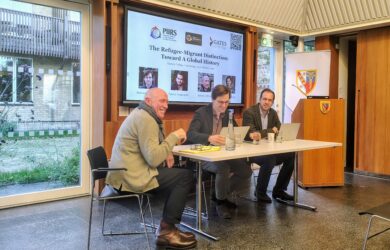
She will debate against Project Debater [pictured], an AI-powered machine developed by IBM.
Project Debater will deliver the opening speeches for both sides of the debate and the humans in both the for and against teams will develop these arguments further and respond to each other.
Sharmila will be speaking for the Proposition along with Professor Neil Lawrence, DeepMind Professor of Machine Learning at the University of Cambridge and the co-host of the Talking Machines podcast.
Speaking against the motion are Professor Sylvie Delacroix, a Law and Ethics at the University of Birmingham and a member of the Public Policy Commission on the use of algorithms in the justice system, and Harish Natarajan, a champion debater and Head of Economic Risk Analysis at global tracking company AKE International in London.
At the heart of the experiment is the speech-by-crowd approach that will be taken by Project Debater. The machine will be collecting arguments from the audience, validating their quality, clustering them and presenting them in an organised and coherent fashion.
Sharmila says: "Considering the subjective nature of debating (unlike math equations or say, chess, which has clearer score functions), it is exciting to see how well the machine will synthesise arguments and engage with and deploy elements of persuasion such as humour and figures of speech. As an experienced debater, I am familiar with my own limitations in terms of my ability to curate my knowledge sources and process huge volumes of data. In this regard, the potential contribution of a thinking machine is huge.
"The event aims to showcase what a discussion can look like when we combine professionals in a field, experts in critical thinking and technology powered by a mass audience."
Sharmila [2016], who is doing a PhD in Multidisciplinary Gender Studies, says her team is likely to argue that the development of AI happens in a social and political context that makes regulation and public scrutiny difficult and where the most at-risk populations have the least access to political capital to advocate for themselves. She says this can lead to huge harms such as the entrenchment of problematic algorithms in criminal sentencing and predictive policing, mass-scale privacy violations and surveillance to suppress political dissent. She states: "By acknowledging these risks, we can contribute to the conversations on AI governance and the attempts to ensure the development of safe and beneficial AI."
*For more information about the event, click here.
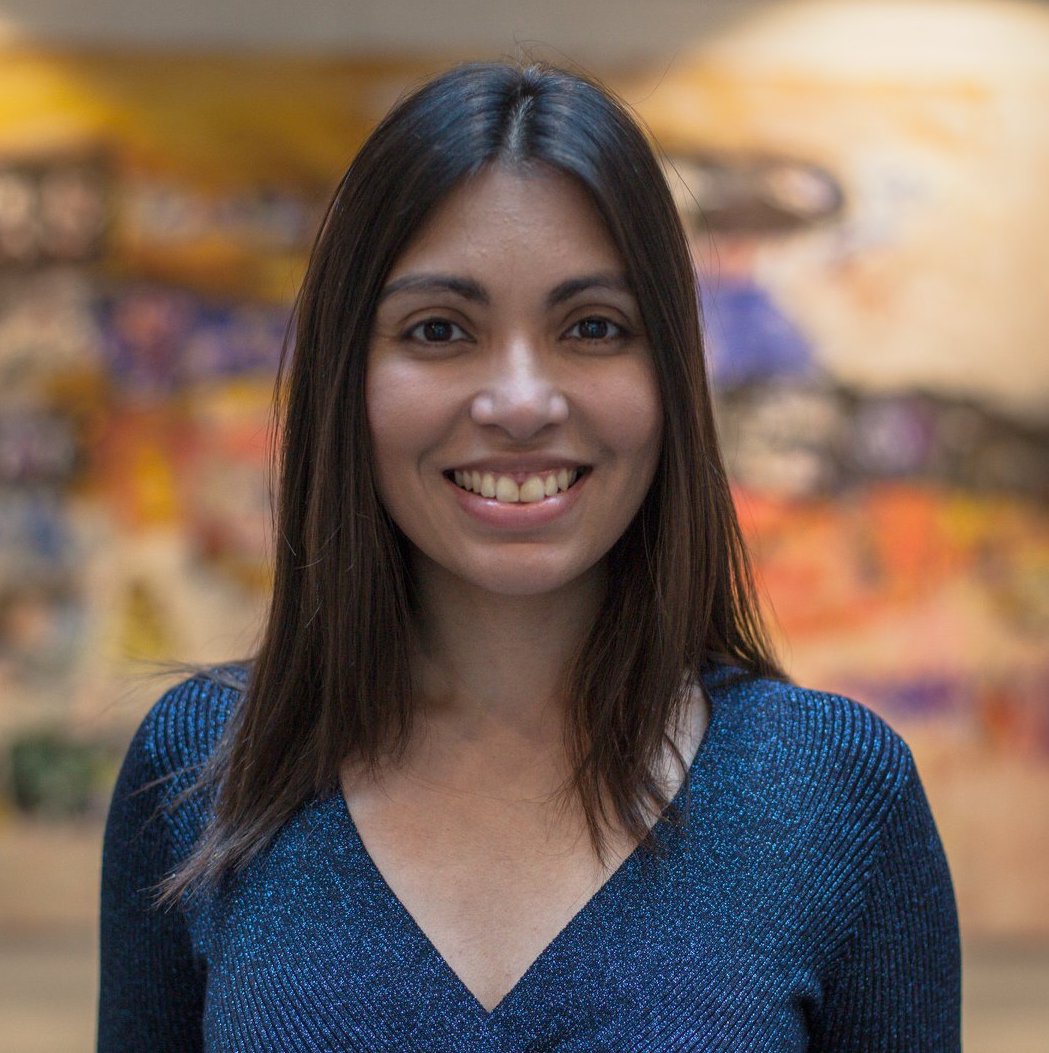
Sharmila Parmanand
- Alumni
- Philippines
- 2016 PhD Multi-disciplin Gender Studies
- Homerton College
My research projects interrogate how development and state interventions targeted at women in the global south reflect and shape their lived realities, with a focus on gender and international development, the politics of knowledge production, and feminist entanglements with the state on issues of human rights and women’s precarious labour.
Previous Education
University of Melbourne
Ateneo de Manila University