

Gitte Marianne Hansen has been awarded an AHRC Leadership Fellowship to explore the works of Japanese writer Murakami Haruki
By examining Murakami beyond his Japanese written word, we gain insight into how his stories and characters are understood, interpreted and imagined.
Gitte Marianne Hansen
The award-winning Japanese writer Haruki Murakami was recognised as one of the world’s 100 most influential people by Time in 2015, but his work has been criticised for its representation of women, with his fiction held up as a reflection of Japanese patriarchy.
However a new project, led by Gates Cambridge Scholar Gitte Marianne Hansen, will challenge such conclusions, showing how Murakami’s depiction of female characters is more nuanced, also portraying them as protagonists and narrators who act as subjects in their own worlds.
Gitte [2009] has been awarded an AHRC Leadership Fellowship which runs from February 2017-July 2018 to explore the works of the Japanese writer and is planning a conference, translation workshop, art exhibition and film screening. She will also write a monograph.
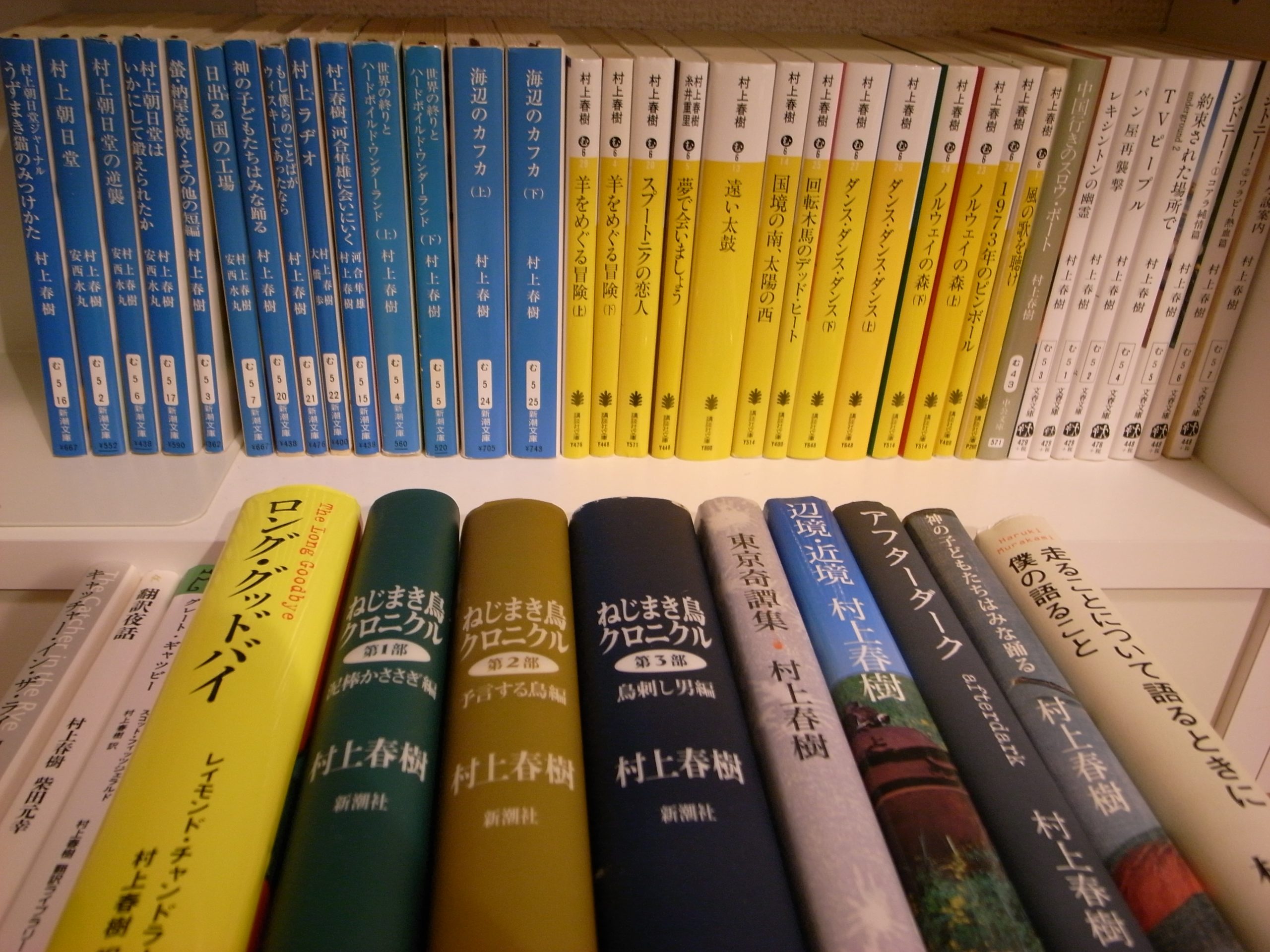
Born in Kyoto, Japan, in 1949, Murakami has received many international honours, including the Franz Kafka Prize, Jerusalem Prize and the Hans Christian Andersen Literature Award. His most recognised novels include Norwegian Wood (1987), The Wind-Up Bird Chronicle (1994-95) and 1Q84 (2009-10). In addition to exploring these widely read novels, Gitte’s project will also examine Murakami’s less known works, including short stories published only in Japanese.
It will focus on themes of gender and transmediality. Gitte says Murakami’s works are interesting to explore in terms of representations of women and gender issues in Japanese society. She adds that his writing has been translated into more than 50 languages and his stories and characters are increasingly becoming transmedial, inspiring global producers of cultural products such as film makers, artists, travelogue writers, computer game programmers and dance choreographers.
“By examining Murakami beyond his Japanese written word, we gain insight into how his stories and characters are understood, interpreted and imagined,” says Gitte, who is currently a lecturer in Japanese Studies at Newcastle University. “The aim is to shed light on the processes of translating Japanese literary culture – not only into other languages but also other mediums.”
Gitte first became interested in Murakami’s works while she was working as a teaching and later as a Research Assistant at Waseda University in Japan before she did her PhD in Asian and Middle Eastern Studies at the University of Cambridge. Her PhD touched on some of his work, but its main focus was on representations of femininity and what it means to be a woman in relation to the rise in eating disorders and self-harm in Japan. In 2016, Gitte published Femininity, Self-harm and Eating Disorders in Japan: Navigating contradiction in narrative and visual culture, which is based on her PhD.
*The call for papers for Gitte's conference is open until 27th October. Gitte has also put out a call for participants for the translation workshop which closes on 30 November. Picture credit: Wiki Commons.