

Victoria Herrmann will research narratives of US climate vulnerability from Alaska to the Pacific Islands.
Some of the most vulnerable American citizens to climate change are absent from dominant media narratives.
Victoria Herrmann
A Gates Cambridge Scholar is about to embark on a solo research project on narratives of climate change in the Arctic and Pacific for which she has been awarded funding from the National Geographic Society.
Victoria Herrmann’s America's Eroding Edges: narratives of US climate vulnerability from Alaska to the Pacific islands project will use the 2015 UN Climate Change Conference in Paris as a starting point to investigate and shine a light on the untold narratives of vulnerable citizens living at the periphery of US territory.
Partial funding will be provided by a grant from the National Geographic Society Science and Exploration Europe which will cover her fieldwork in Alaska, American Samoa, Guam and the Northern Mariana Islands. There she will interview and collaborate with citizens who, she says, “have been largely cropped out of America’s climate change portrait”.
In addition to a formal research report, she will film a tv episode and blog regularly.
In Guam, she will be working with the Guam Preservation Trust to reach out to different communities to create an oral history of climate change on the island, with a specific focus on native Chamorro communities. In the Northern Mariana Islands she will be teaming up with the Northern Marianas Humanities Council to navigate the human experience of climate change in the least populated area ofthe United States. She will then travel to American Samoa, which ranks sixth on the list of climate-exposed populations with just over 55,000 people living on a total surface area of 199 square kilometres. While there, she will survey the cultural consequences of climate vulnerability through communal storytelling and visual narratives.
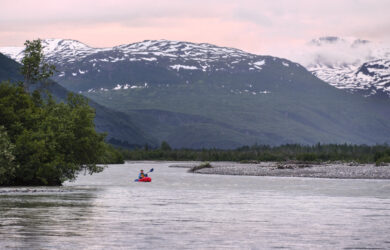
She will then travel to coastal communities in Alaska and work, experience and explore the personal narratives of citizens living in the majority Native villages of Shishmaref, Kivalina and Newtok. All three of these villages are in the process of climate change-included relocation further inland to avoid shoreline erosion and permafrost melt.
Victoria [2014] says: “Growing up the grandchild of Holocaust survivors, I was taught early on about the powers that narratives hold and the injustice that comes with excluding particular groups from those narratives based on race, religion or sexuality. In the 1930s and 1940s, my family was cropped out of Germany's national narrative and in turn erased from the pictures and news stories. They were made invisible to the international community, and for that all but my grandfather paid the ultimate price. I am both incredibly grateful and excited to be give the opportunity by National Geographic to study issues of injustice and media invisibility in the greatest challenge of our generation – climate change. Much like my grandparents, some of the most vulnerable American citizens to climate change are absent from dominant media narratives. I hope that through this project, I am able to not only work with my local partners to better understand the climate injustices and media invisibility they face, but also understand how to most effectively empower the voices of silenced communities in both popular news discourse and climate policymaking.
“My PhD research at the Scott Polar Research Institute aims to demonstrate that visual narratives and aesthetic codes construct values, identities and ideas of power about the Arctic in the international system. Specifically, it questions to what extent these visuals and consequent actions have affected the political agency of those peoples native to the Arctic in issues of governance and development of their lands. This National Geographic grant will build on this work both by augmenting my current research in Alaska and by expanding my analysis to include narratives and power structures in the Pacific Islands.
“By doing so I will challenge scholars to think beyond the traditional focus on the Global South and to also consider the marginalised citizens of developed states. Through this expedition and its outputs, I hope to circulate the stories of climate change’s unseen American victims to motivate public and politicians alike to act before it’s too late.”
Picture credit of Saipan: Wiki Commons images.