

Two Scholars have contributed to a new paper on a human-AI art experiment aimed at reimagining inclusive design futures in AI.
Generating these shared perspectives was part of our contribution to ongoing collective efforts of re-imagining plural, inclusive design futures in AI, by not ‘othering’, but embracing 'subaltern imaginations' of marginalised groups who are systematically excluded from positions of power and influence in postcolonial societies.
Abdullah Hasan Safir
Two Gates Cambridge Scholars are co-authors of a new paper on a human-AI art experiment involving the works of the Bangladeshi artist S M Sultan.
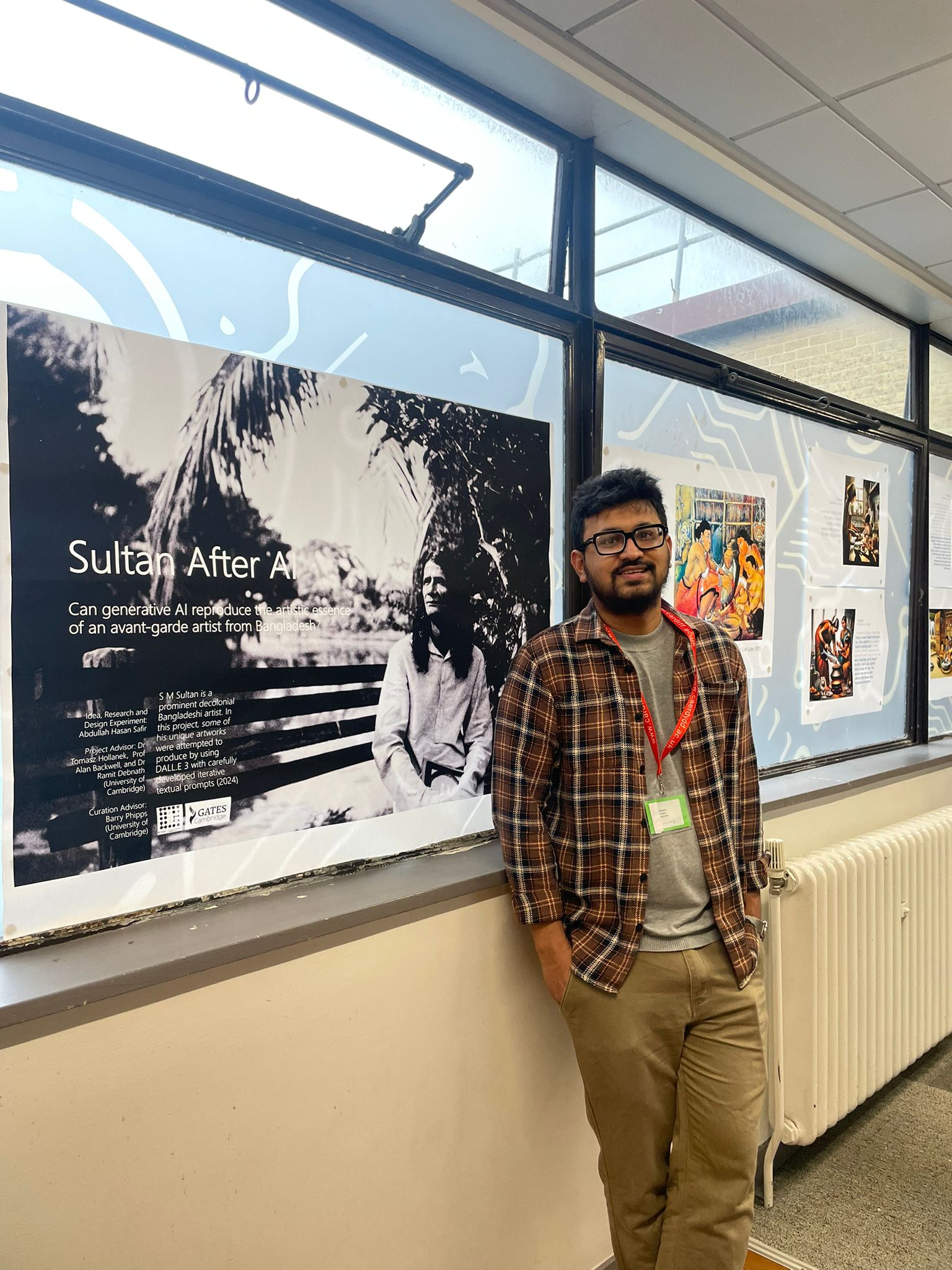 Abdullah Hasan Safir [2024] from Bangladesh, who is doing a PhD in Interdisciplinary Design, and Ramit Debnath [2018] from India, a University Assistant Professor of Mathematics and Social Design, and Deputy Director of the Centre for Human-Inspired AI at the University of Cambridge, are two of four co-authors of the paper published for the BCS [the Chartered Institute for IT] HCI [Human-Computer Interaction] conference, one of the leading fora in the UK for human computer interaction research.
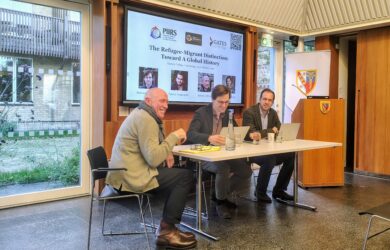
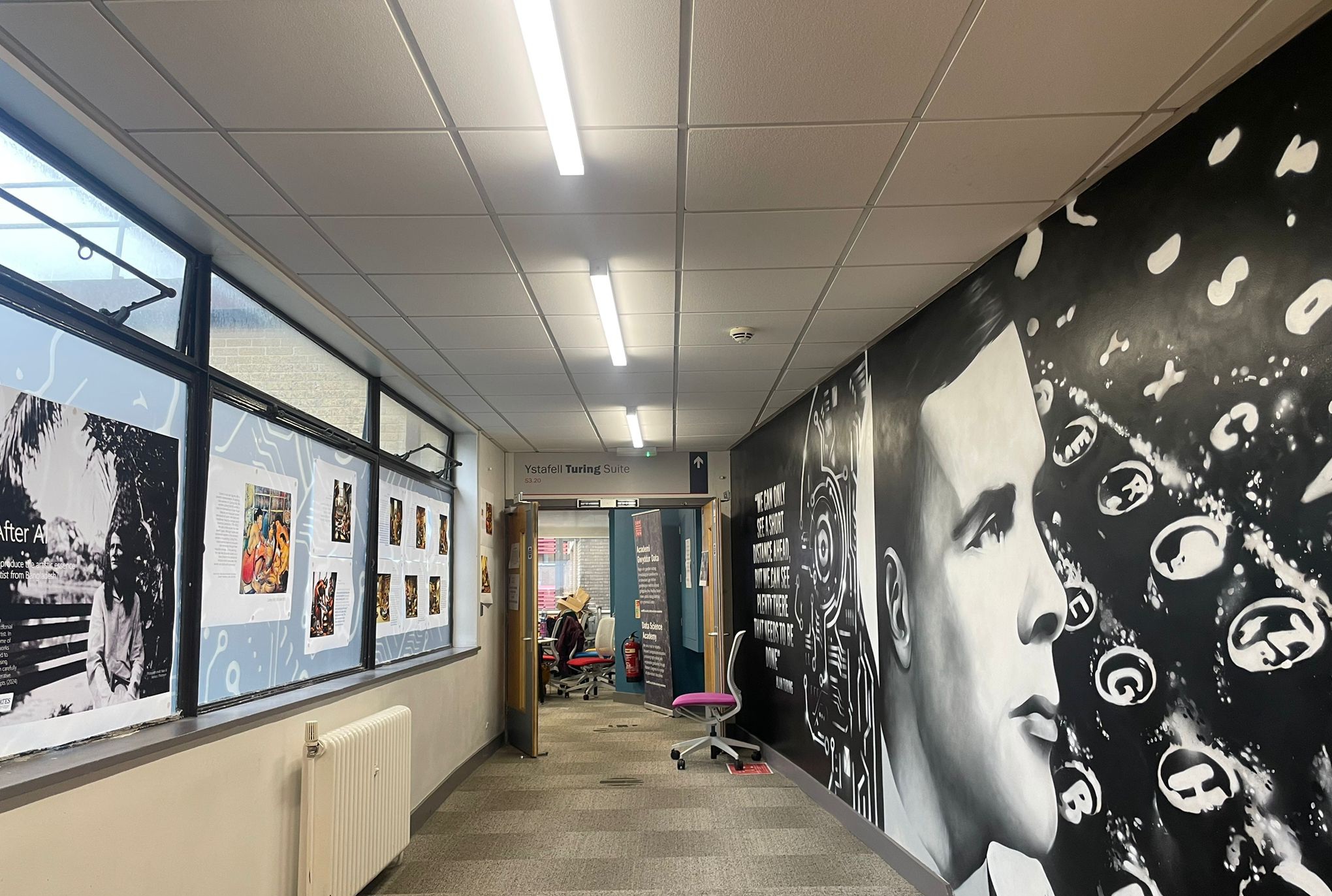
For the paper, the authors spent a month trying to reproduce select artworks of the Bangladeshi decolonial artist, S M Sultan [Sheikh Mohammed Sultan], known for his striking depictions of exaggeratedly muscular Bengali peasants engaged in the activities of their everyday lives, through systematic prompting techniques using generative AI. The collected works were shown at the Sultan After AI exhibition in Cardiff, Wales. The hybrid, interactive exhibition prompted thought-provoking conversations with scholars/ experts around how current HCI research around AI art-making practices excludes Global South perspectives.
The selected artworks were reproduced through systematic prompting techniques using a T2I AI tool. The exhibition audience are able to access a digital form of the artwork through the digital archive and share their thoughts and critical reflections as well as comment on their overall experience and suggest ways forward in decolonial design-thinking.
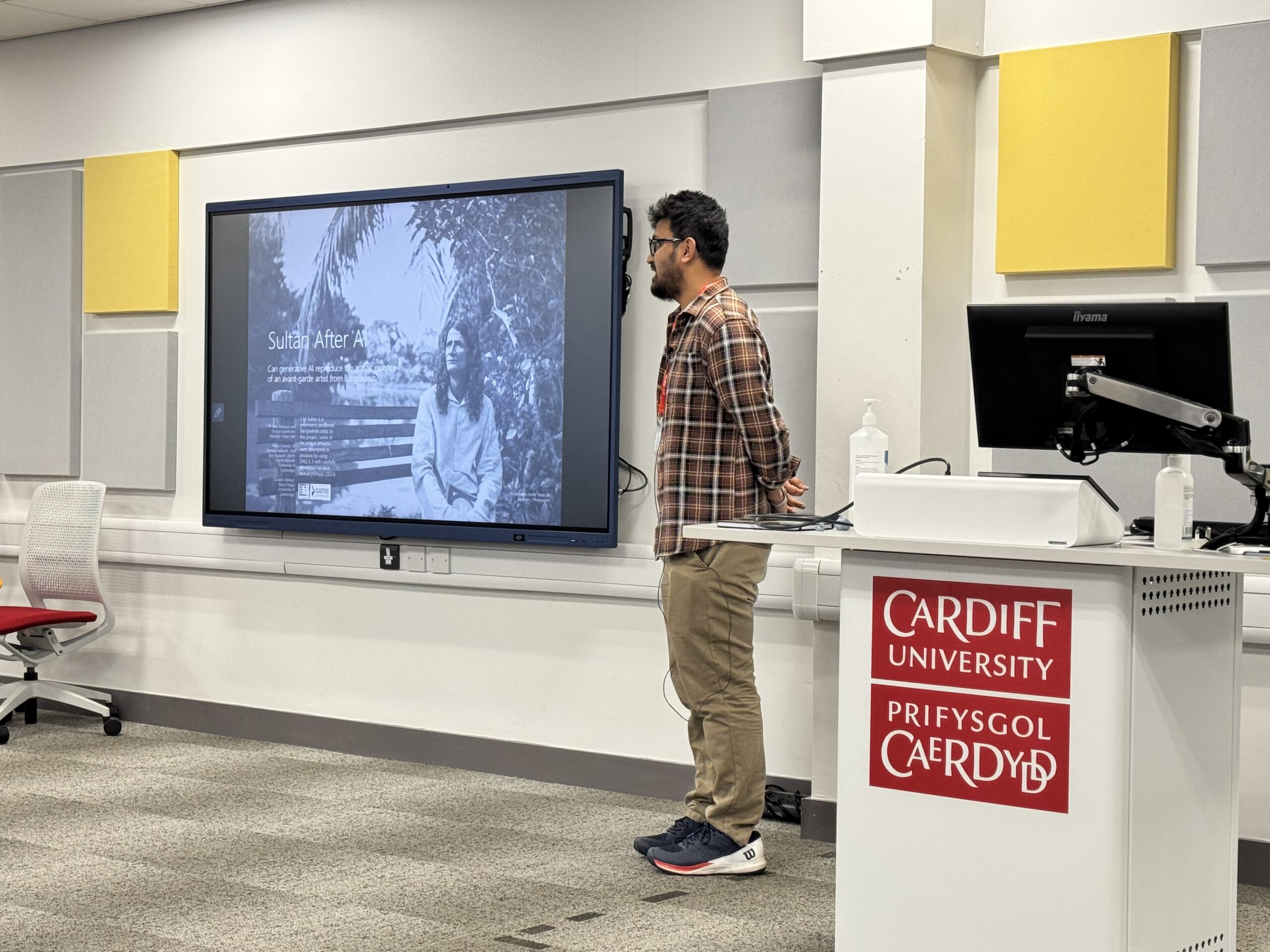 Safir says: “Generating these shared perspectives was part of our contribution to ongoing collective efforts of re-imagining plural, inclusive design futures in AI, by not ‘othering’, but embracing ‘subaltern imaginations’ of marginalised groups who are systematically excluded from positions of power and influence in postcolonial societies.”
The authors plan to eventually develop a design manifesto around AI art in order to re-imagine plural, inclusive futures in AI.
*Read the paper here.