

Professor Pradipta Biswas hosts first UN SG9 meeting in India
Gates Cambridge Scholar Pradipta Biswas has hosted a UN meeting on improving access to communications technology – the first ever held in India.
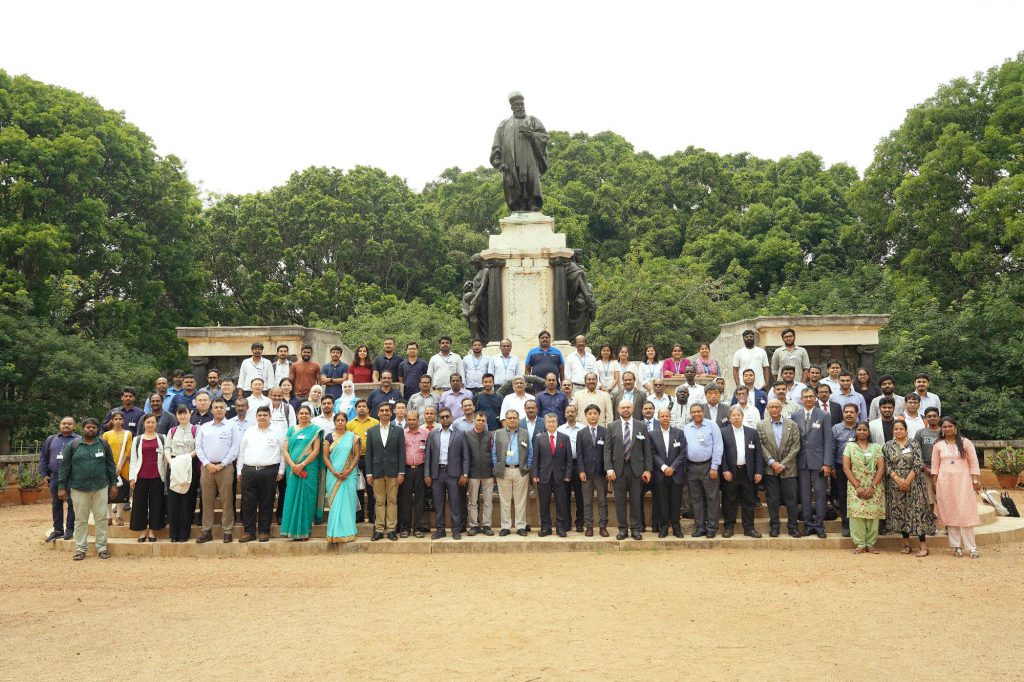
The meeting of ITU-T Study Group 9 (SG-9) on “Broadband Cable and Television/Audiovisual content transmission and integrated broadband cable networks” was held in May at the Indian Institute of Science in Bengaluru [IISc] and was organised by the Telecommunication Engineering Centre (TEC), Department of Telecommunications (DoT) and the IISc.
It was the first face to face meeting since Covid and the first time the SG9 meeting was held in India. The event was attended by delegates and representatives from Bangladesh, Brazil, China, Congo, Egypt, France, Gambia, Germany, India, Japan, Kenya, Korea, Myanmar, Nepal, Palestine, Sri Lanka, Syria, Switzerland, Tanzania, Thailand, Ukraine and other countries. In addition, representatives of the International Telecommunication Union (ITU), a UN Organisation, and many other experts attended the meeting.
ITU is the oldest UN agency, founded in 1865, to facilitate international connectivity in communications networks. ITU allocates global radio spectrum and satellite orbits, develops the technical standards that ensure networks and technologies seamlessly interconnect and aims to improve access to Information and Communications Technologies (ICTs) to underserved communities worldwide. The Study Group 9 at ITU is responsible for telecommunication systems for primary and secondary distribution of audiovisual content, including accessibility services and emerging interactive media.
Professor Pradipta Biswas [2006] is Vice-Chair of ITU-T SG9 and did his PhD at Cambridge in Computer Science.
The SG9 meeting organised sessions to discuss the 11 questions assigned by the ITU Membership at the previous World Telecommunication Standardisation Assembly. Among other issues it discussed a draft recommendation on a Common User Profile, a project led by IISc. A hybrid workshop on The Future of Television for South Asia, Arab and Africa Regions, attended by more than 200 participants from over 50 different countries, was also held, covering regulatory and policy frameworks, emerging and convergent ICT infrastructures and services, as well as user interfaces and human factors.