

Edward Chouchani recognised by the Biochemical Society for his exceptional work.
The Biochemical Society's Awards allow the excellent work of high calibre scientists at all stages of their careers to be recognised and rewarded. The 2017 Award lecture series will showcase the outstanding contributions to molecular bioscience that the winners have made during their careers.
Professor Anne Dell
A Gates Cambridge Scholar has been awarded the prestigious Early Career Research Award for Energy and Metabolism by the Biochemical Society in recognition of his exceptional work as a molecular bioscientist.
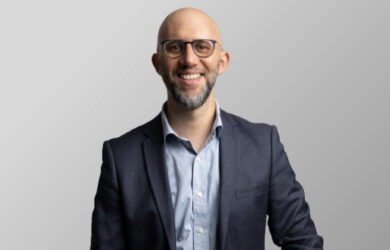
Edward Chouchani [2008], who did his PhD in Biological Science at the University of Cambridge as a Gates Cambridge Scholar, won the £1,000 prize against a very competitive field of candidates. He is among 11 eminent biochemists and exceptional early career researchers to be recognised by the Society’s 2017 Awards.
Edward will give a Medal Lecture at a Biochemical Society conference during 2017 and has also been invited to submit an article related to the Lecture to a Society-owned publication.
The Awards recognise molecular bioscientists for the excellence and profound impact their work has had and also allow exceptional work by early career researchers to be highlighted.
Professor Anne Dell, Chair of the Awards Committee, said: “The Biochemical Society’s Awards allow the excellent work of high calibre scientists at all stages of their careers to be recognised and rewarded. The 2017 Award lecture series will showcase the outstanding contributions to molecular bioscience that the winners have made during their careers.”
The Early Career Research Award for Energy and Metabolism recognises the impact of research carried out by early career scientists who have no more than six years postdoctoral research experience. The Society states: “It is expected that successful candidates will have produced international quality research outputs, and be able to demonstrate ambitions and aspirations consistent with the potential to achieve world-leading status.”
Edward’s PhD, supervised by Dr Mike Murphy, focused on unraveling mechanisms of, and targeting therapies against, the bioenergetic dysfunction that drives ischaemia-reperfusion (IR) injury in heart attacks. He developed novel in vivo biochemical and proteomic methods to provide several significant contributions to this field. Most importantly, he established the mechanistic basis for cardioprotection by nitric oxide within mitochondria and developed a long sought-after targeted therapy for treatment of acute heart attacks. In the course of this work, Edward was lead author on articles published in Nature and Nature Medicine, which identified new chemicals that could protect vital organs from long-term damage following a heart attack or stroke.
Edward is currently a postdoctoral fellow at the Bruce Spiegelman Lab at the Dana-Farber Cancer Institute at Harvard Medical School where he has extended the tools he developed in Cambridge to understand how mitochondria can determine healthy function of adipose tissue in mice. This work has uncovered new mechanisms that define the anti-obesity and anti-diabetic actions of thermogenic adipose tissue.
He said: “I am very honoured to receive this award, and grateful to my colleagues and mentors for their continuing support. I’m particularly thankful to my PhD and post-doctoral supervisors Mike Murphy and Bruce Spiegelmen for their mentorship.”

Edward Chouchani
- Alumni
- Canada
- 2008 PhD Biological Science
- King's College
During my undergraduate work I have been involved in extra-curricular independent research with Mobilab Technologies, a biotech company founded by a partner and myself. As its V-P I have been responsible in large part for the development of a bioelectric solar cell, offering a much lower cost alternative to conventional solar technologies by using robust, renewable biological materials. Within the academic sphere I have researched towards the improved characterization of the Stearoyl-CoA desaturase enzyme, responsible for regulation of fat storage and widely pursued potential drug target. At Cambridge I intend to develop and characterize targeted antioxidant small molecules to provide improved therapies for age-related dysfunction, as well as to further understand the role of oxidative stress in the aging process. I believe this research provides an excellent balance of entrepreneurial potential with a desire for better understanding of fundamental biochemical processes.