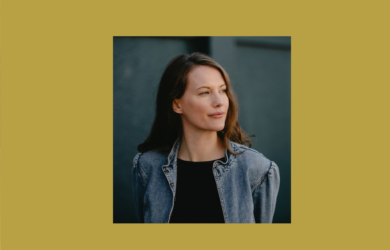


Simone Eringfeld's new book and podcast use podcasting to bring her research closer to people.
My podcast is a way to reach more people without having to bring them to Antarctica in person to experience this immensely beautiful remote place, to make it more accessible.
Simone Eringfeld
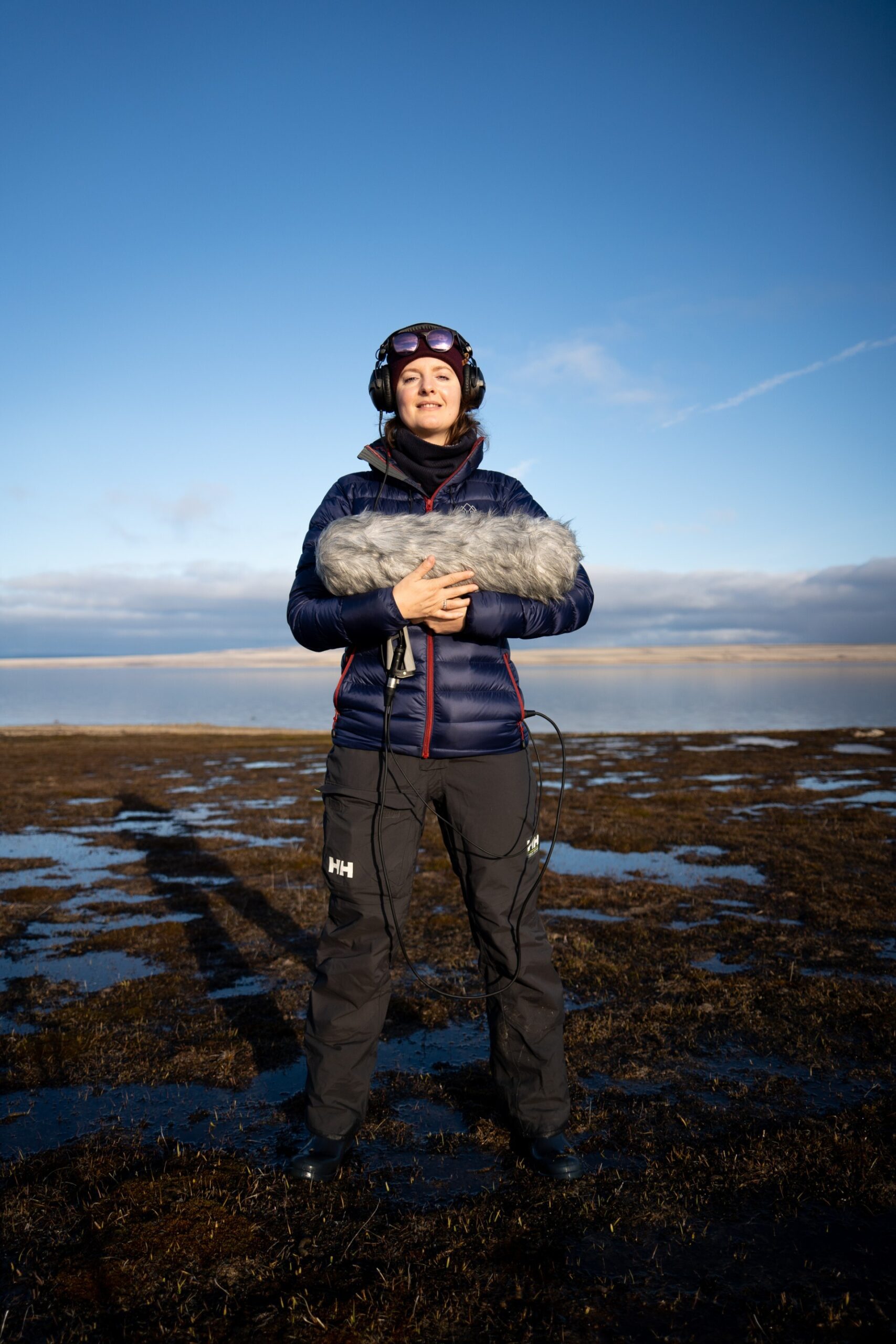
Simone Eringfeld has written a unique hands-on guide to how to use podcasting in academic research which is published this month and precedes her new podcast on the soundscape of Antarctica.
 Podcasting as a research method: A practical guide* looks at three podcast-based research methods in depth: the participatory action method; the elicitation method and ethnographic podcasting. It explores the ethics of podcasting, such as informed consent and anonymity, how to approach the editing process while retaining contextual information and what stage of research podcasting can be used. “It’s for anyone interested in creative, audio-based methods,” says Simone.
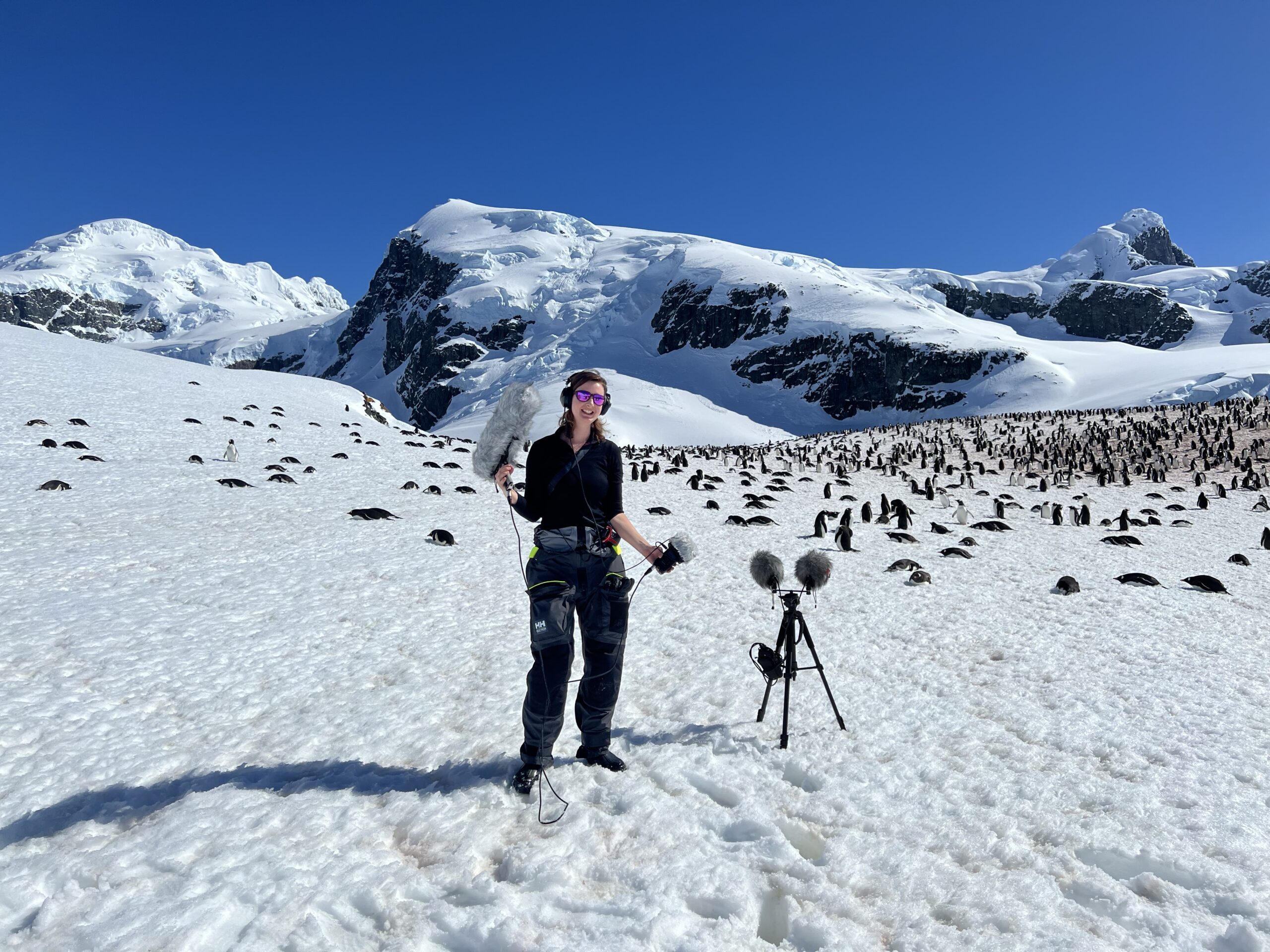
The book will be followed by a podcast series – Antarctica Calling – which will take people on a listening journey through Simone’s PhD work in Polar Studies. Her thesis focuses on how tourists experience the sonic dimensions of Antarctica – something she calls sighthearing as opposed to sightseeing. Simone says it did not make sense for a PhD based on sound to be simply a written thesis. That would mean she had to translate sound to text, which would lose a lot of the meaning and impact. It also means her research gets out to a larger audience.
“My podcast is a way to reach more people without having to bring them to Antarctica in person to experience this immensely beautiful remote place, to make it more accessible,” she states.
PhD research
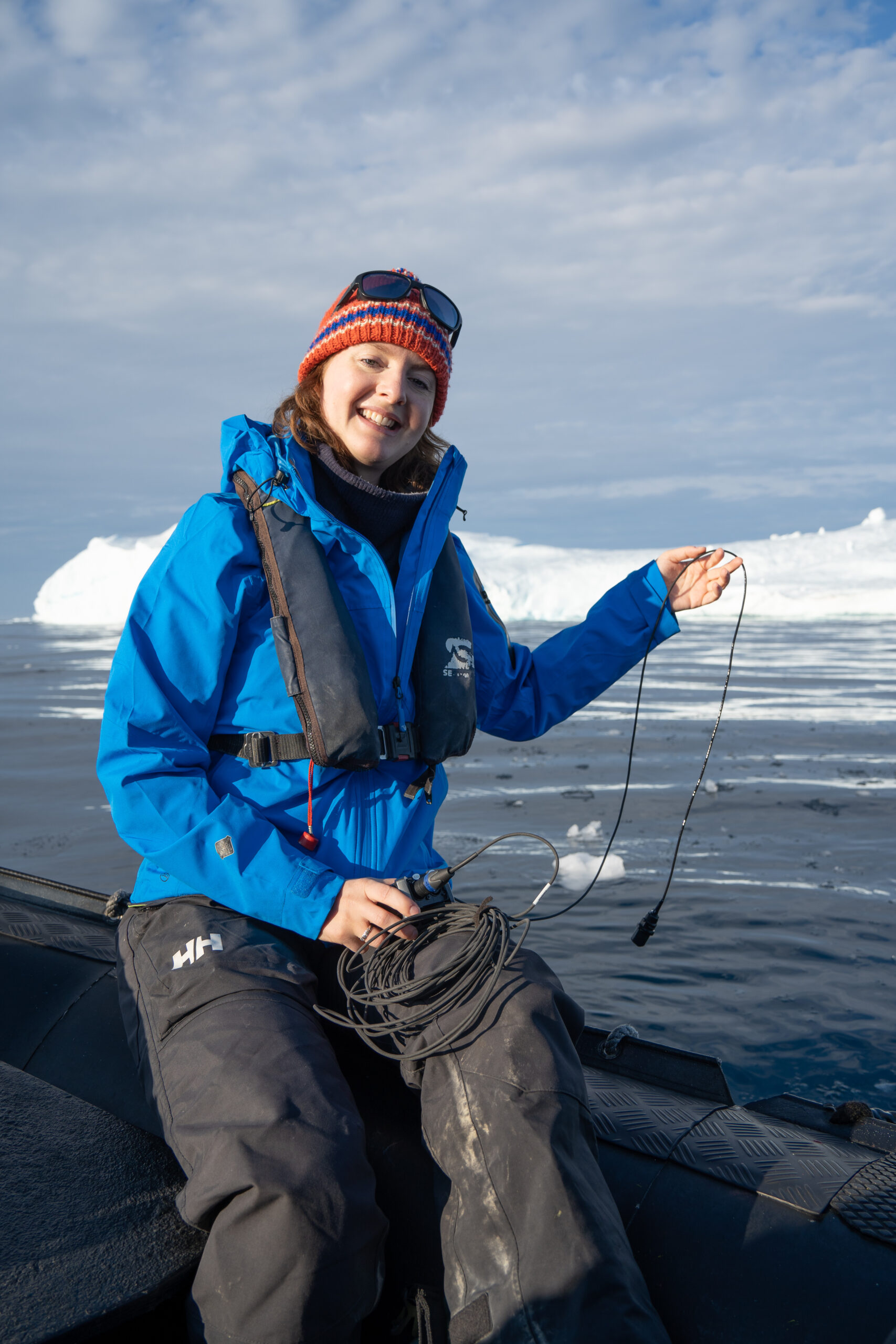
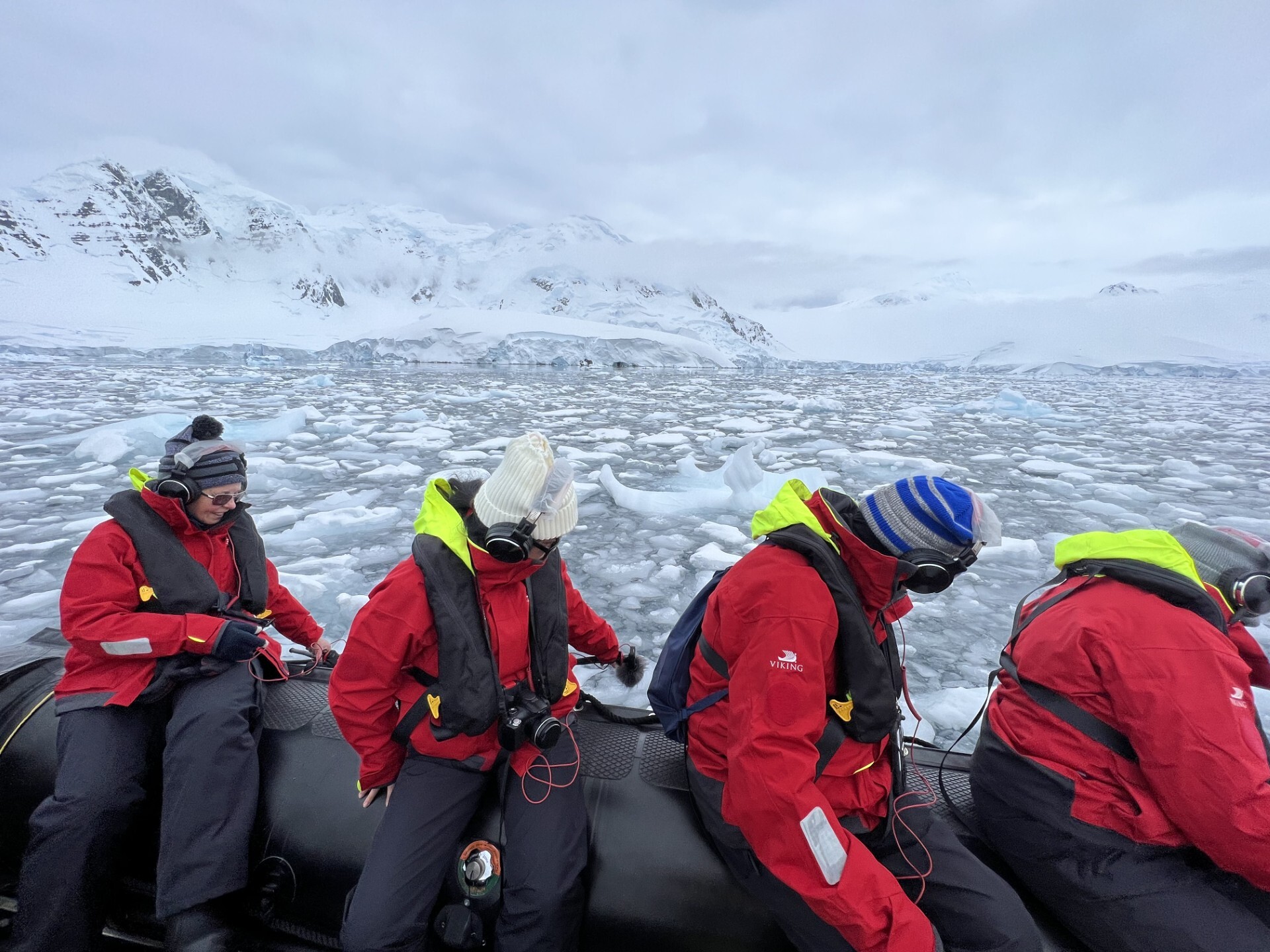
 Simone’s PhD involved recording workshops with tourists who had travelled to Antarctica on expedition ships. Simone [2022] was a guide and combined that role with data collection, taking small groups of tourists out on an inflatable boat to listen to sounds such as icebergs below the water or the different penguin species or whale sounds. “It changed how people experience the place; it made it feel more alive and more dynamic,” she says.
“Antarctica can look like not much is happening, but when you really tune in you can see aliveness everywhere. Sound allows people to experience Antarctica in a more intimate and embodied way and I am reproducing that through the podcast.”
 In addition to the soundscapes, Simone got the tourists she worked with to record their own reflections on listening to Antarctica and she has layered this on top of the sounds themselves. “It makes it a very personal listening experience and my research participants get to be centre stage rather than anonymous,” she says. “Listeners get to experience the emotion of being surrounded by a pod of whales, for instance. Text doesn’t do justice to their experience. You can hear how overwhelmed they are. How people speak about something is revealing and text cannot convey it as easily. I wanted to keep that intact.”
MPhil
Simone came to podcasting through her studies at Cambridge. For her MPhil in Education in 2020 she had originally planned to do a research project which involved fieldwork in a Ugandan refugee camp, but this was cancelled and she had to come up with a new project. She decided to look at the impact of Covid on her own educational experience at Cambridge.
 She created a podcast where she interviewed students and faculty as she couldn’t meet people face to face. “I turned to podcasting to bridge the gap,” she says. She consciously aimed to make the podcast diverse, featuring everyone from undergraduate students to heads of faculty and a college porter. The aim was also to be accessible, for instance, to avoid jargon.
She was new to podcasting and had not originally considered it as a research tool. For her it was more a way of staying in touch with people. But as she was doing her interviews it dawned on her that it was an interesting way of collecting data as well as a good way to reach more people with her research and to create an intimate space for doing so at a time of social distancing.
Her MPhil thesis ended up focusing on podcasting and the future of education post Covid. Since then Simone has been exploring other creative ways to use podcasting in research and says it has now become a core research method of hers.
As she finishes her PhD, Simone is thinking about how she can further her work on soundscapes by creating artistic installations using Antarctic sounds to bring Antarctica closer to people who do not have the opportunity to travel there. “I want to get people to understand the importance of Antarctica and when they can see and hear it they are more likely to want to protect it,” says Simone.
*Simone’s book is coming out on April 28th.