

The last Gates Cambridges Scholars' symposium covers climate change, stem cells, maternity 'insanity' and global food insecurity.
Food insecurity, climate change, maternal ‘insanity’ and the future of medicine are the topics of the last internal symposium this term.
The symposium takes place on 11 March from 7-9pm in the Gates Scholars Common Room.
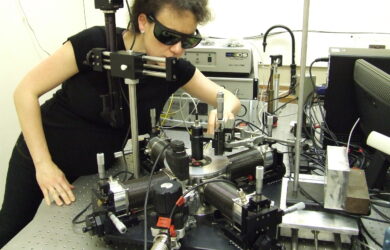
Jacquelyne Poon [2012], who is doing a PhD in Plant Sciences, will discuss food insecurity and crop protection. She says that, despite current protection practices, plant pathogens account for approximately one fifth of losses of potential yield in worldwidecrops. She will describe what causes a disease state in plants and discuss current approaches to disease management as well as the evolutionary arms race between the plant host and its pathogen(s).
Albert Arhin [2012], who is doing a PhD in Geography, will discuss climate change and safeguards for forest-dependent communities. He says deforestation and forest degradation are estimated to contribute to about 20% of global warming. He will talk about REDD+, a mechanism being mooted by the international community, under which developing countries who keep their forests standing and reduce their emissions from deforestation and degradation will be paid by developed countries. He says: “It is generally expected that REDD+ could bring significant benefits for forest-dependent people and the environment, through, for example cash transfer, the creation of employment or the protection of local environmental services. Between 2008 and 2010, nearly $9 billion was invested globally in the preparation phase of this mechanism. But where does this money go? Who receives them and who benefits? Will this mechanism benefit poor people as it claims?”
Anija Dokter [2011], who is doing a PhD in Music will talk about childbearing ‘insanity’ in the early 20th century based on Alfred Lewis Galabin’s Manual of Midwifery, published between 1886 and 1910 when maternity care was being revolutionised by the rise in ‘male midwifery’ or early obstetric medicine. The Manual is notable for its detailed explication of insanity arising during pregnancy, childbirth, the post-partum period, and/or lactation. It describes symptoms of insanity ranging from frenzy and excitement to listlessness and exhaustion, and repeatedly warns of outcomes including self-harm, suicide and infanticide.
Contemporary studies quoted in the 1910 edition of the Manual estimate that pregnancy and puerperal ‘insanity’ constituted between eight and twelve percent of all cases admitted to lunatic asylums. Galabin looks at possible social explanations and characterises pregnant women as living in profound fear of dying in childbirth. He repeatedly describes poverty, many and frequent pregnancies and continual lactation as contributing factors in the development of insanity. Dokter will argue that attitudes to childbearing insanity should be considered alongside developments such as birth control and childbirth anaesthesia in the development of modern childbirth.
Stan Wang [2011], who is doing a PhD in Surgery, will talk about stem cells and regenerative medicine. He says: “Humanity has always been fascinated with eternal life. However, now with the advent of stem cell technologies and their applications, we have an opportunity to not only extend, but also meaningfully improve the quality of life for patients around the world in the coming decades.”
He will be talking about his work with Nobel laureate Professor Sir John Gurdon to create better embryonic-like stem cells as a foundation for the future of regenerative medicine.
All Gates Cambridge Scholars and their friends are welcome to attend.