

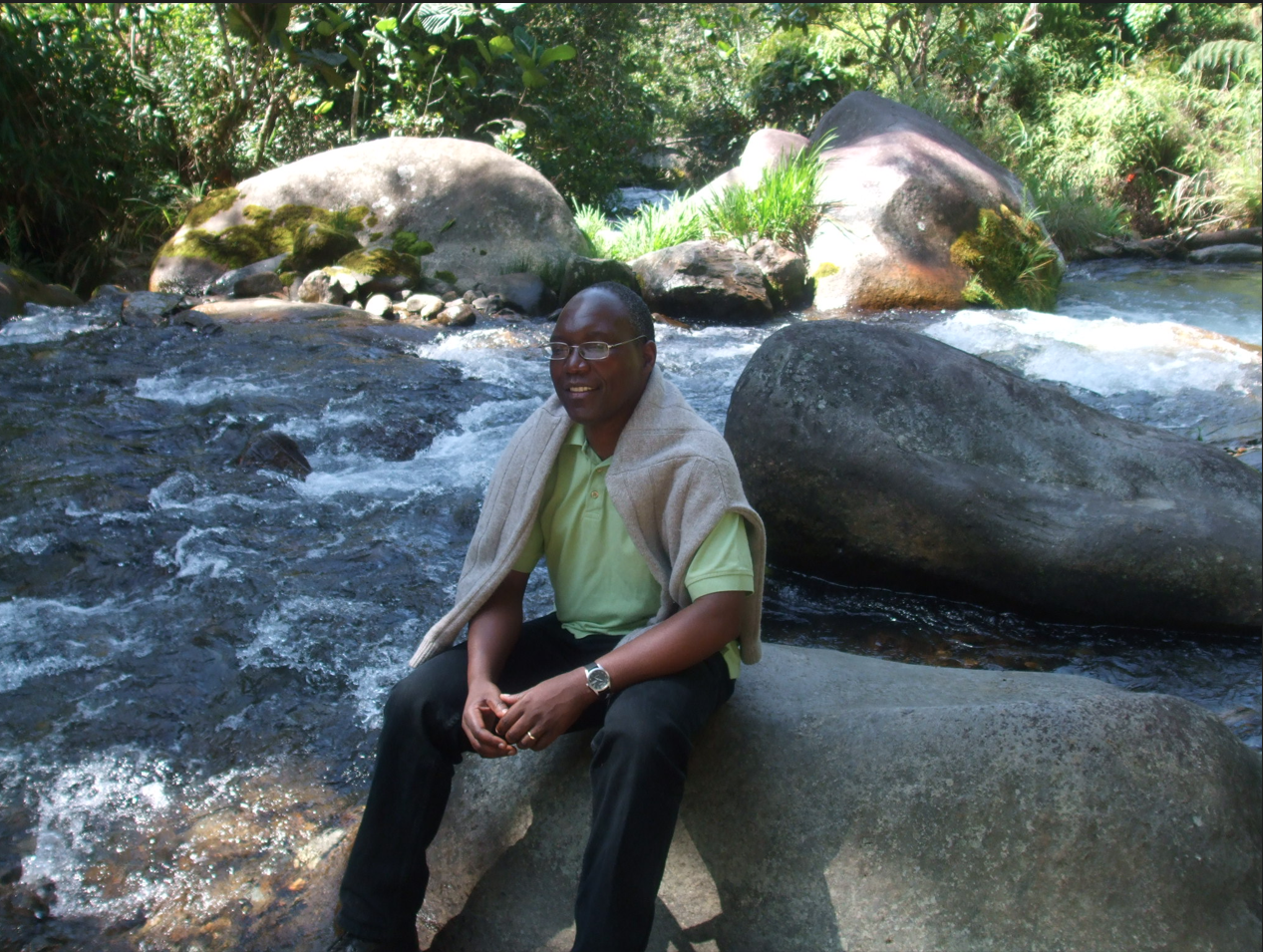
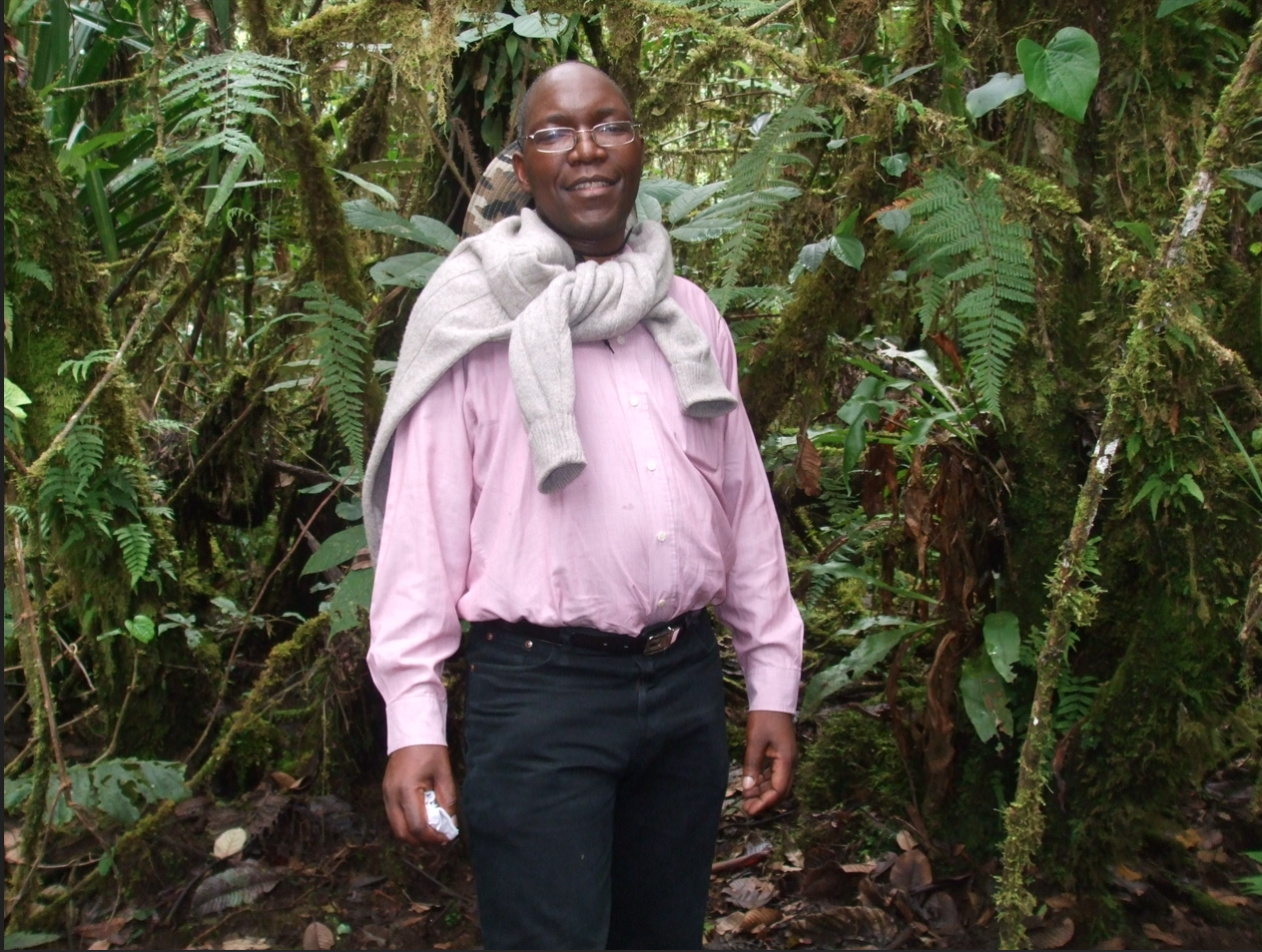
Martin Kaonga is an expert in biodiversity and carbon biogeochemistry. He is also an author of books that seek to unite the worlds of science and faith.
We know that if we over-extract natural resources, we will destroy the environment. For me, technology and knowledge are not enough - it is also about moral, ethical and spiritual issues.
Martin Kaonga
Martin Kaonga [2001] has two PhDs, one in Carbon Biogeochemistry at the University of Cambridge and the other in Christian Apologetics at NTS Indiana which explored the interactions between science and faith and their implications for science, theology and Christian practice. His first PhD has underpinned a distinguished career as an expert in biodiversity and carbon biogeochemistry. He is now seeking to bring his two worlds together through his writing, with the central theme being care for the planet and humanity.
Martin believes we have the technical abilities and knowledge to tackle ecological crises, but what is missing is moral leadership. “We know that if we over-extract natural resources, we will destroy the environment. For me, technology and knowledge are not enough – it is also about moral, ethical and spiritual issues,” he says.
Martin has great depth of knowledge and strong technical abilities, having worked in various environmental leadership roles in biodiversity and conservation over the course of his career. He has also served in academia, the corporate and NGO sectors and as a scientific and technical adviser to national governments and other organisations, including Plan Vivo, a leading certification system for high-integrity nature-based projects in climate and nature markets. In this capacity, he advised on standards and methodologies for the development and delivery of nature-based carbon emissions reduction and removal projects on land and at sea.
 His work with national governments has included serving on the Darwin Expert Committee, an expert panel advising UK ministers on funding biodiversity and climate projects in developing countries. In this role, he reviewed funding applications and provided technical recommendations, including screening proposals for biodiversity and climate-change projects.
For close to 20 years, Martin has worked across compliance and voluntary carbon markets, providing technical leadership and advisory services in the development and delivery of Agriculture, Forestry and Other Land Use (AFOLU) projects in alignment with international standards. In addition, he has worked as a consultant conducting due diligence for large-scale REDD+ and native forest restoration projects globally, including projects recently implemented in Zambia, Tanzania and Sierra Leone.
Now, alongside his consultancy work, Martin is embarking on a new path, seeking to unite science, theology and sustainability in ways that foreground respect for both the planet and humanity.
Childhood
Education has always played a big part of Martin’s life. Born in Kaseya, a remote village with fewer than 200 households in Isoka District of northern Zambia, Martin was the first in his family to attend university. His father, a primary school head teacher, emphasised the value of education from an early age and set the bar very high. Martin passed a rigorous entrance examination to secondary school, where younger students were often bullied by older students. He was forced to do chores for older students, beaten and sometimes woken during the night. The regime eased as he grew older and progressed into the senior classes, but the school remained very strict when it came to academic studies.
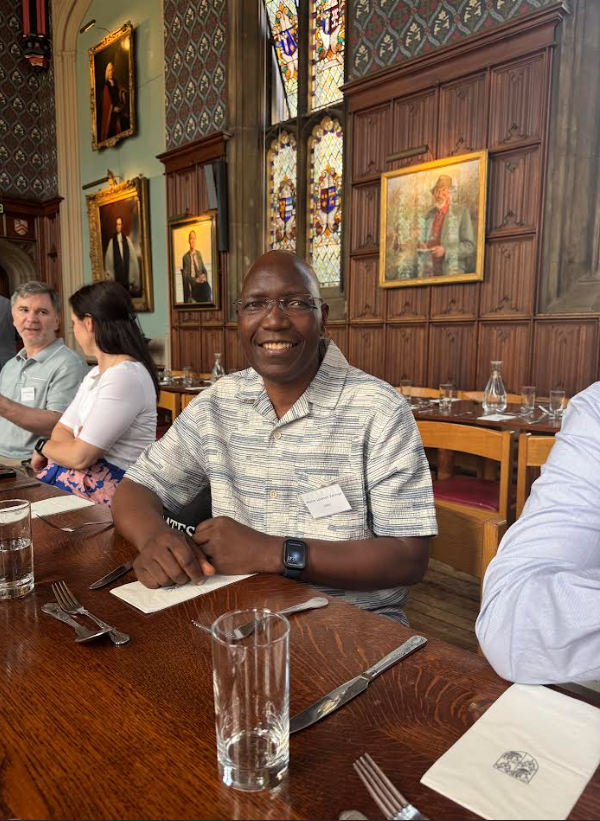 Between school and university, Martin was drafted into the Zambia National Service for military training and then undertook a college course to train as a secondary school teacher. He subsequently switched to a three-year diploma in Agriculture, majoring in Animal Science, at the Natural Resources Development College in Lusaka. He was the top student on the course and, upon completing his diploma, was offered a position as a Livestock Officer in the Veterinary Department of the Ministry of Agriculture, Food and Fisheries.
Once there, he transferred to the Department of Training and returned to his former college, where he worked as a practical instructor and poultry manager at the college farm. His academic career progressed when he won a scholarship to study for a BSc in Agriculture at the University of Malawi, specialising in Animal Breeding. After completing the programme, he undertook five months of specialised training in animal breeding in Japan on a JICA Scholarship. As part of the scholarship, he was required to return to Zambia upon completion of his training to teach.
He then applied for another scholarship from the International Centre for Research in Agroforestry (ICRAF) to do a masters in agroforestry in Ghana so that he could develop an agroforestry course at the college. During his time in Ghana he suffered a family tragedy when his sister suddenly died. He found it very difficult being so far from his family at the time.
Cambridge
Martin returned to Zambia to teach for three years and then spent a year teaching and developing the Agroforestry course at the University of Zambia before applying for an MPhil at the University of Cambridge. He chose Cambridge because one of his professors in Malawi had advised him to apply several years earlier.
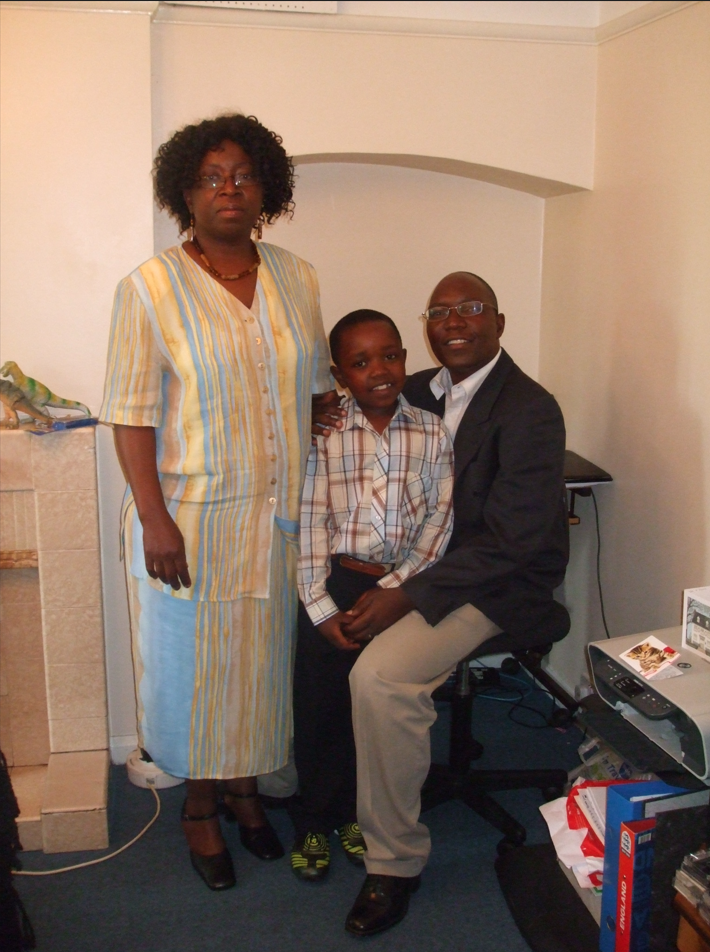
Martin, his wife and son after coming to Cambridge
He was eventually accepted to study for an MPhil in Environment and Development, supported by a Joint Japan/World Bank–Commonwealth Scholarship. Martin subsequently applied for a PhD, but because his results were released too late, he missed the application deadline. He deferred his application, and by the following year, the Gates Cambridge Scholarship had been launched, with no age limit.
Martin started his first PhD in Geography (Carbon Biogeochemistry) in 2001. His PhD cut across disciplines including plant sciences, earth sciences and biochemistry. He was able to bring his wife and three young children to live with him by his third year, having spent his second doing fieldwork in Zambia.
His PhD focused on modelling and field-based measurements of plant and soil carbon changes in agricultural, agroforestry and miombo woodlands in Zambia. “I wanted to understand how tree diversity contributes to the carbon dynamics in terrestrial ecosystems,” he says. That includes developing models for measuring carbon storage and fluxes in plants and soil carbon models to predict changes in soil carbon.
Conservation work
After finishing his PhD in 2005, Martin began working at an independent sixth form college in Cambridge during term time, preparing learning resources for students and doing one-to-one teaching. He subsequently took up the role of Conservation Projects Director at A Rocha International, an international Christian conservation organisation. He ran two major programmes: a native forest restoration programme, which reforested degraded forests in Ghana, Kenya, Peru and South Africa as a means of reducing atmospheric carbon concentrations, and a biodiversity assessment and conservation programme in Papua New Guinea, which resulted in the discovery of over 200 species that were new to science.
The climate change programme involved the design and implementation of native forest restoration projects; assessments of carbon, biodiversity and community baselines; environmental and social due diligence (ESDD); supervision of environmental and social impact assessments (ESIAs); and the design and implementation of environmental management systems (EMSs) and project implementation plans, including the validation and verification of projects. Martin led a technical team that established Climate Stewards Ltd, a company that eventually took over the management of A Rocha’s reforestation programme.
In 2009, Martin was promoted to Acting Director of Conservation Science, and in November 2010 he was appointed Director of Research and Conservation, responsible for conservation science and carbon biogeochemistry research, as well as the design and implementation of nature-based projects in 20 countries, including Ghana, France, Canada, Brazil, India and Kenya. While at A Rocha, he also worked as a scientific adviser to Climate Stewards Ltd, supporting its climate change programmes. It was during this period, in 2015, that he began his second PhD.
After leaving A Rocha in January 2016, Martin joined the Cambridge Centre for Environment as Director. He describes it as a consultancy firm focused mainly on climate change, environmental conservation and nature-based solutions, including the reforestation of degraded land and wetland restoration. He also undertook consultancy work, including reviewing and developing web content on endocrine-disrupting chemicals for the UN Environment Programme in Geneva; evaluating a forest and woodland management programme for the Food and Agriculture Organisation in Zambia; and reviewing UK Department for International Development’s gasification project in Uganda.
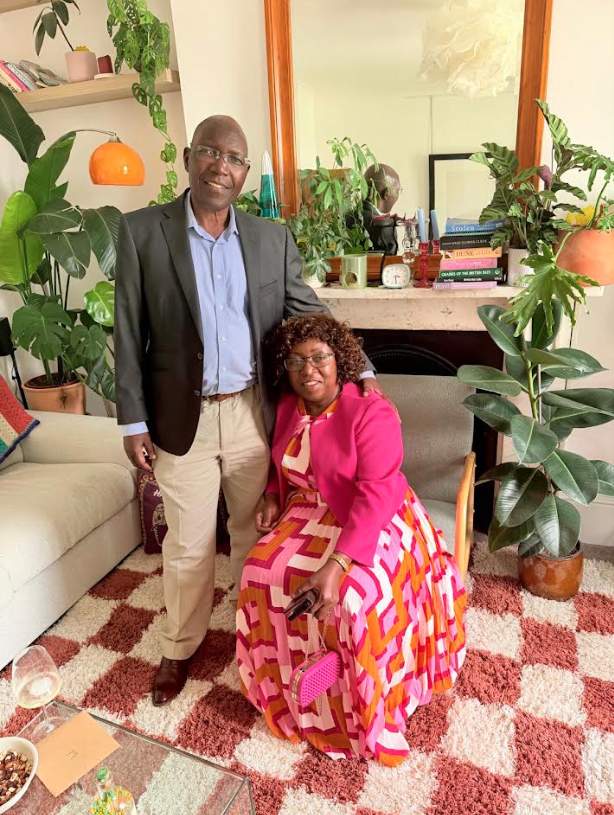
Martin and his wife
During his time at the Centre, Martin became unwell and spent nearly two years, between 2018 and 2020, in and out of hospital undergoing tests to determine the cause of his debilitating symptoms, which included persistent coughing, weight loss, drops in blood pressure and peeling skin. Doctors eventually decided to reboot his immune system, meaning that he was unable to leave his house during the COVID-19 pandemic. “It was a very difficult period,” he says, adding that he is now much better.
In early 2020, Martin took up a role as Technical Forest Carbon Specialist at Fauna & Flora International and worked on several projects, including a major carbon sequestration project funded by Norad. His role was to ensure that nature-based carbon projects accounted for carbon and emissions in compliance with international standards and regulations. He also worked on feasibility studies relating to project proposals put forward by countries such as Mozambique, ensuring that their greenhouse gas accounting was consistent with the required standards.
In 2021, he left Flora & Fauna for a role as Nature-Based Solutions Technical Manager where he led an international team at ClimateCare, an environmental and social impact company, which aimed to identify project opportunities, assess their feasibility and their alignment with climate variables, biodiversity requirements and community benefits.
After six months, Martin moved to BP as Natural Climate Solutions Technical Project Manager and Subject Matter Expert. At the time, BP was pursuing an ambitious transition strategy, including plans to reduce its oil and gas production by 40% by 2030, compared with 2019 levels, while aiming to become a net-zero company by 2050 or sooner.
During this period, BP significantly expanded its work on nature-based solutions and Martin saw the team grow substantially. However, the company’s strategic direction changed following the appointment of Murray Auchincloss as CEO and the subsequent strategic reset announced in February 2025. BP placed greater emphasis on oil and gas, with the company citing the need to improve performance, competitiveness, cash flow and returns, while restructuring its low-carbon business. This shift occurred against a changing global policy and investment environment, including the US decision under President Trump to withdraw from the Paris Agreement for a second time.
During his tenure, Martin’s role was to lead on the due diligence and management of nature-based carbon projects, as well as to support the technical aspects of research. He acted as a bridge between BP and the universities with which it worked, reviewing peer-reviewed publications and translating scientific knowledge into practice.
Writing
After leaving BP in February 2025, Martin has focused on consultancy work and writing. Since 2018, Martin – a scientist, pastor and theologian – has published four books, three of them between February 2025 and the present. His books are rooted in the interface between science, theology and sustainability. His most recent book is The Human-Modified Earth: Can We Fix It? He is currently editing another book, titled The Quiet Grace of Enough, which explores contentment in seasons of poverty and abundance, the quiet rhythms of ordinary life, and their implications for sustainability.
His books explore themes including Christian living, faith and science, creation care, biblical stewardship, sustainability and leadership. In addition to his writing, Martin speaks at churches, conferences, universities, leadership forums and professional organisations on topics including Christian discipleship, faith and science, creation care, sustainability, environmental ethics, nature-based solutions and responsible leadership.
Martin is also developing a thought-leadership programme. He observes that books bringing together science, theology and sustainability in relation to ecological crises are relatively scarce, and he is therefore developing courses and training in this emerging field. In the past two months, Pentecost University in Ghana has invited him to develop a curriculum in science, theology and sustainability.
Martin says his professional identity now spans three areas: some know him as a carbon biogeochemist; others are interested in his theological thinking on creation care; while a third group engages with his work at the interface between religion and science.
Gates Cambridge
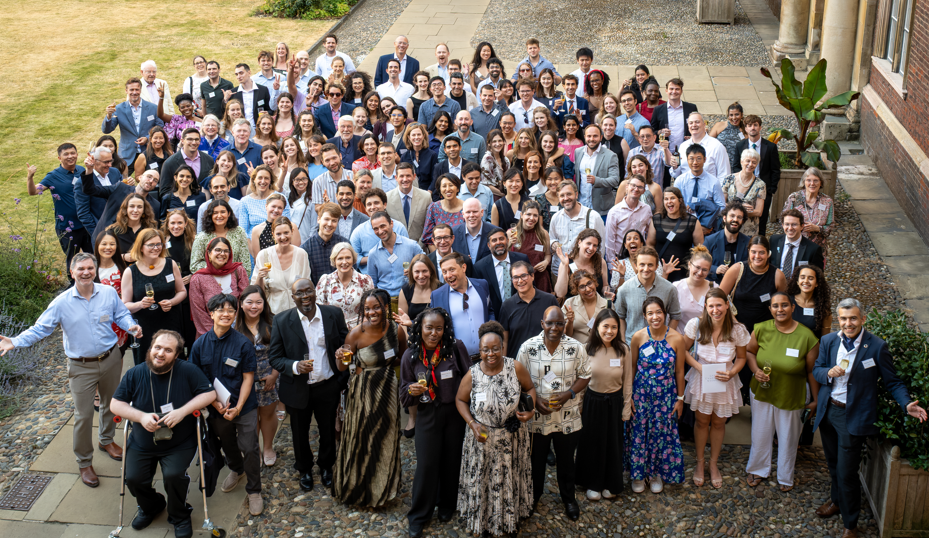
Martin [centre right, front row] at the 2026 Gates Weekend celebrations
He firmly believes in the importance of international scientific collaboration in protecting the planet and says that science and politics should be kept separate when it comes to climate change. “If we want to mitigate the effects of climate change, we need to respect the key techniques science is telling us we need to implement,” he says.