

Shubhayu Bhattacharyay is lead author of a new study which aims to improve outcomes for patients who have suffered traumatic brain injury
We believe our results help validate a new, practical method to convert vast patient records into an interpretable time series with machine learning.
Shubhayu Bhattacharyay
Researchers, led by a Gates Cambridge Scholar, have integrated all medical data collected from traumatic brain injury (TBI) patients to calculate, for the first time, the personalised contribution of each clinical event to long-term recovery. This international effort marks a step towards patient-centred treatment in the intensive care unit (ICU).
Shubhayu Bhattacharyay [2020] is the lead author of the study, “Mining the contribution of intensive care clinical course to outcome after traumatic brain injury”, published on Monday in Nature’s npj Digital Medicine. The study was supervised by Dr Ari Ercole and Professor David Menon in the University Division of Anaesthesia at Cambridge and is part of the Collaborative European NeuroTrauma Effectiveness Research in TBI (CENTER-TBI) project.
Globally, TBI is the most frequently occurring neurological disorder and is a leading cause of death and disability. Whilst TBI is increasingly appreciated as a progressive condition rather than a single event, there is little evidence supporting the efficacy of existing treatments in individual patients because clinical methods used to characterise TBI patients do not sufficiently capture their pathophysiological diversity.
In the study, the researchers aimed to quantify the existing limits of individually characterising TBI patients’ progress over time by dynamically integrating all information collected in pre-ICU and ICU medical records. As part of CENTER-TBI, they worked on the most comprehensive dataset of TBI patient records currently available from a prospective cohort of critically ill patients across 65 centres in 19 countries. They developed a computational modelling strategy to map all pre-ICU and ICU data to a dynamic trajectory of bi-hourly, ordinal prognoses over the course of each patient’s stay in the ICU. Notably, the modelling strategy integrates a large set of heterogeneous data with minimal pre-processing and no constraints on the quantity or type of information per patient.
Their main finding is that all the data currently collected before and during ICU stay erases about half of the uncertainty about a patient’s functional recovery after TBI. Amongst patients in high-resource ICUs, initial injury severity has a greater effect than ICU treatments on outcome. Factors they suggest which may explain the remaining uncertainty in outcome include genetic variations, high-resolution data, and differences in rehabilitative care.
The study is also the first to simultaneously consider all information in medical records of TBI patients over time. Shubhayu, who is completing a PhD in Clinical Neurosciences, says: “Medical data is notoriously messy, with missing data, disparate modalities (for example, CT scans vs bedside signals) and time-varying information. All of this data may be important for understanding the full context of a patient, but bringing it together is not straightforward. We believe our results help validate a new, practical method to convert vast patient records into an interpretable time series with machine learning. This approach can extend to other data-intensive areas of medicine to derive hypothesis-generating associations, quantify remaining uncertainty in outcomes and create a more representative picture of each patient when selecting treatments.”
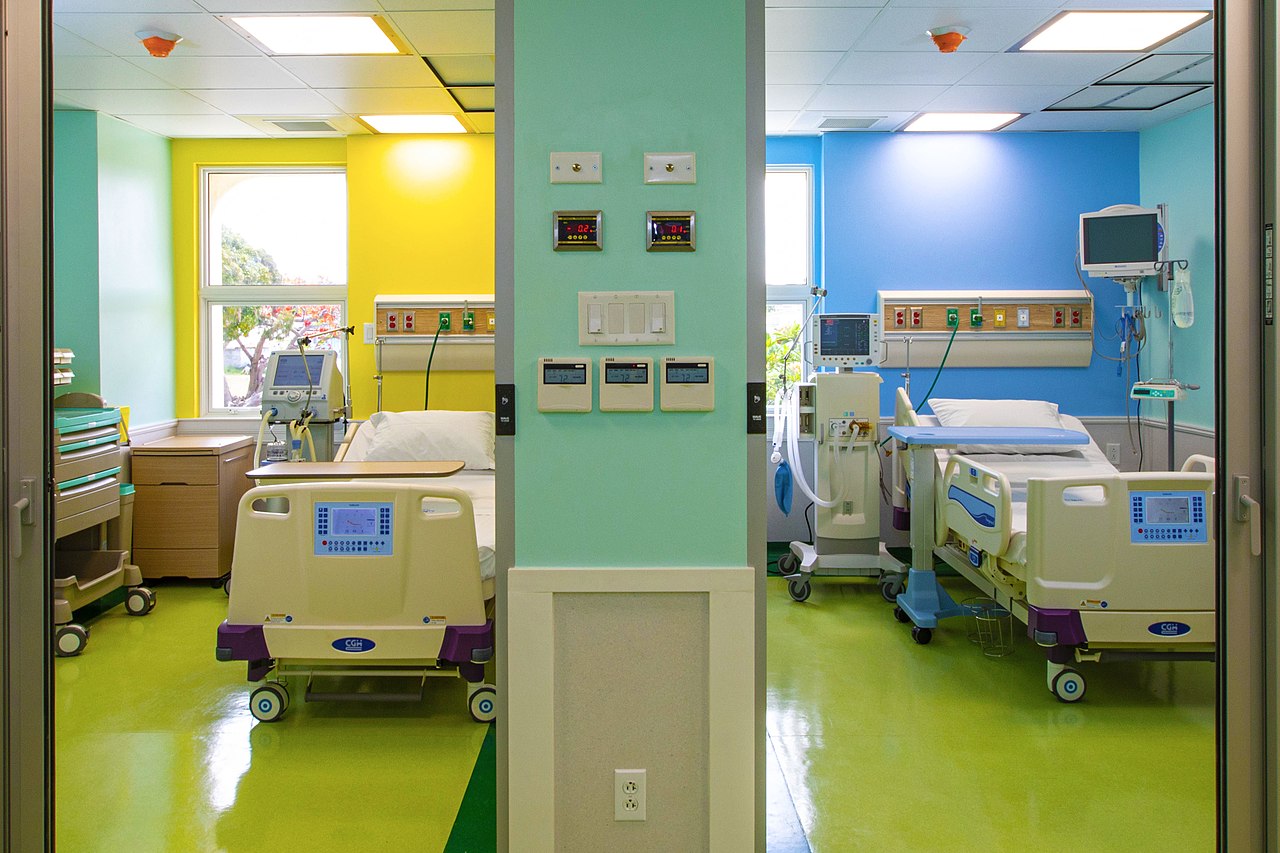
*Photo credit: Bayview Hospital’s Intensive Care Unit Room by BBD Editor courtesy of Wikimedia commons.