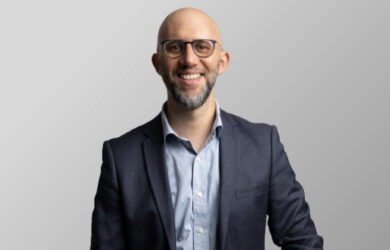


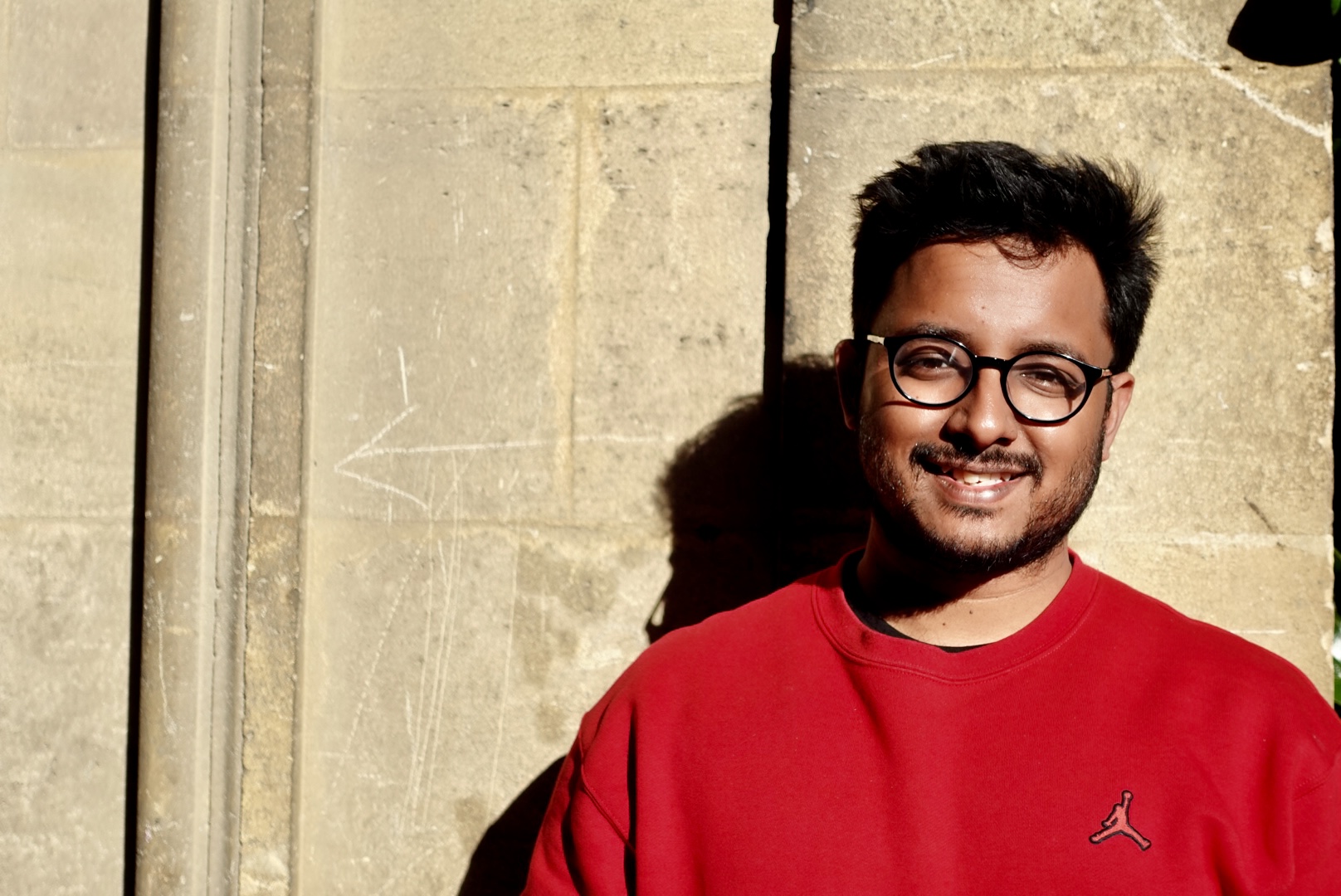
Ramit Debnath has won an inaugural Cambridge Zero Fellowship to further his research into misinformation about climate change
In my ongoing research, I am evaluating whether public engagement on Twitter about climate action, over time, impacted social and environmental justice.
Ramit Debnath
Gates Cambridge Scholar Ramit Debnath has been awarded an inaugural Cambridge Zero Fellowship to improve public understanding of climate change.
Ramit [2018], a computational social scientist who did his PhD at the Univeristy of Cambridge, is currently a sustainability fellow at Churchill College and a visiting faculty associate in Computational Social Science at the California Institute of Technology. He also holds positions as Laudes Foundation Research Associate within multiple research units at the University of Cambridge: the Energy Policy Research Group (Judge Business School), Centre for Natural Materials Innovation (Architecture), Centre for Climate Repair (Engineering) and Bennett Institute of Public Policy (POLIS). He is also one of the 2022 Alan Turing Postdoctoral Enrichment Award recipients from the Alan Turing Institute.
With the help of this Cambridge Zero fellowship, Ramit aims to uncover the institutional structure of climate change misinformation and the role of social media platforms in such agenda-setting. The broader goal is to improve the public understanding of climate change by building a defence against rampant misinformation campaigns at an organisational scale. To do this, Ramit will leverage his existing collaborations to develop novel computational social science methodologies using machine learning and AI.
As a Cambridge Zero Fellow, Ramit envisages developing and delivering a one-of-a-kind teaching course on Climate Action for the newly launched Design Tripos course which aims to bridge the gap between arts, humanities and engineering. This new course will introduce Cambridge undergraduate students to the current challenges of climate change and the role of human-centric design in solving it.
Ramit has previously worked with Cambridge Zero on a flagship project for the UN Climate Change Conference COP26 called the Futures We Want. This work motivated him immensely to engage with citizens and utilise citizen science to collectively develop emissions reduction pathways for enabling a just net-zero transition. He firmly believes that social media big data can provide valuable insight into how people perceive climate action towards reducing carbon emissions, and we can use these new digital data streams to place people at the heart of the net-zero transition.
Ramit says: “In my ongoing research, I am evaluating whether public engagement on Twitter about climate action, over time (2009 – 2021), impacted social and environmental justice. This is a critical policy question as it can demonstrate the effectiveness of such platforms in leveraging the collective wisdom of people towards a common goal of achieving a just net-zero transition.”
His research has already shown the importance of understanding better the structural issues around the spread of misinformation, the bias of social media debate due to user demographics and the need for greater transparency.
His analysis, using over 1.5 million tweets, shows that the flow of climate misinformation on Twitter has a triangulated form that passes across different stakeholders. For example, he found that the fossil fuel industry drives the climate narrative through greenwashing which influences intergovernmental and non-governmental organisations to react to topics on coal pollution, fossil fuel divestment and environmental justice. However, he says, this reaction further influences the fossil industry to reiterate their greenwashing behaviour to obfuscate consumers, while moving away from climate action.
More information can be found on Ramit’s website here.