

A new website will enable women to tell their own stories about their lives and to inspire others.
"We were both shocked by the negativity of the stories in the media about women. We want to inspire women to feel they can overcome those challenges."
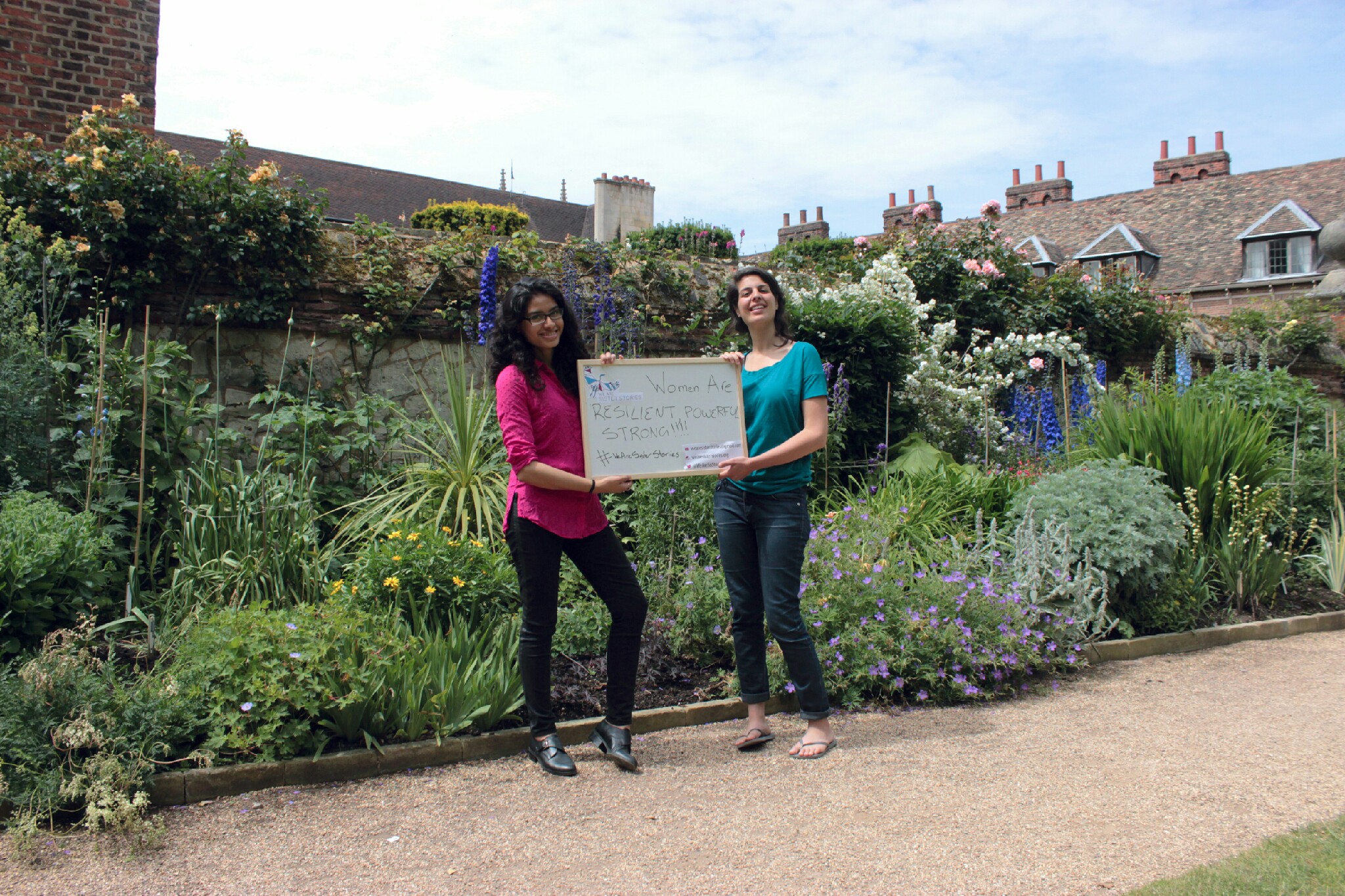
Sheina Lew-Levy and Stephanie Lopez
The media is full of negative stories about the issues facing women, but a new website plans to give women from around the globe the space to tell their own stories and inspire others to overcome those challenges.
We Are Sister Stories launched on 2nd July and is the brainchild of two Gates Cambridge Scholars.
It is the result of a recent debate around a photo essay depicting the various struggles of girl children from around the world, which was circulated on Facebook. The debate centred on the realisation that much of the imagery and narratives surrounding media stories about girls focus on oppression and subjugation as perceived by journalists and photographers. Few of the stories come from the girls and women themselves.
The site was set up by Sheina Lew-Levy and Stephanie Lopez. They say: "Although we believe it is important for the media to address the challenges faced by girls and women everywhere, we also believe that it is equally important to shine a light on the victories – the stories of strength and overcoming – and to celebrate the tenacity of the female spirit."
Sheina and Stephanie want to eventually publish a book of the stories and for every book they sell they would like to send one copy to a disadvantaged community to counter the sense of powerlessness that comes from the media's overemphasis of negative stories.
Sheina, from Canada, has just finished an MPhil in Human Evolutionary Studies and is about to start a PhD in Psychology, focusing on how hunter-gatherer children learned the skills needed to survive in their environment in a bid to better understand the evolutionary roots of learning.
Stephanie, who hails from a Salvadoran family in the US, is finishing an MPhil in Latin American Studies on the relationship between Cold War interventionism and contemporary violence and state incapacity in Central America's northern triangle. Both say gender is an important part of their studies.
We Are Sister Stories contains multi media and artwork from women from around the globe. They include a mother of four who left her husband after years of ignoring her own aspirations and became a songwriter and dancer, and a woman who writes about how she overcame a history of sexual violence to become a midwife.
She writes: "The darkness beckons but I rise to the light – rise with bellies swelling before the clench of uterine contraction; rise to smash through the glass ceilings and steel doors of medical institutions erected to keep women’s bodies and choices under control; rise before the sun to the sound of a beeping pager ringing out a baby’s announcement of his or her primal decision to enter the world. Seeing my traumas in a new light means realising (though I have always known) that they are what led me to my passion for women’s empowerment and reproductive rights."
The We Are Sister Stories site has been supported by the Cambridge Hub, a network that connects students working on different causes, which helped Sheina and Stephanie get a mentor through the Accelerate Programme at the University's Judge Business School.
Stephanie and Sheina say: "We were both shocked by the negativity of the stories in the media about women. We were both raised by bad-ass mothers who focused on problem solving rather than in the challenges faced by women. We want to inspire women to feel they can overcome those challenges. There is a lot of sharing – in fact oversharing – of personal news and photos on social media, but it is fairly superficial and does not help women overcome the everyday challenges they face. That's what we want to do."
The two plan a viral campaign to draw attention to the stories on their site and the importance of women sharing their real-life stories.