


Karuna Ganesh
- Alumni
- India
- 2004 MBBCh Clinical Studies
- Fitzwilliam College
Karuna Ganesh
- Alumni
- India
- 2004 MBBCh Clinical Studies
- Fitzwilliam College
I am a physician-scientist focused on investigating the mechanisms by which cancers cells metastasize, or spread, from the part of the body where they originate to distant organs. As a medical oncologist, I also treat patients with gastrointestinal cancers. By combining insights from my clinical and laboratory work, my ultimate goal is to develop more effective treatments for patients with advanced cancers.
Alejandro Ganimian
- Alumni
- Argentina
- 2006 MPhil Education
- Homerton College
Alejandro Ganimian
- Alumni
- Argentina
- 2006 MPhil Education
- Homerton College
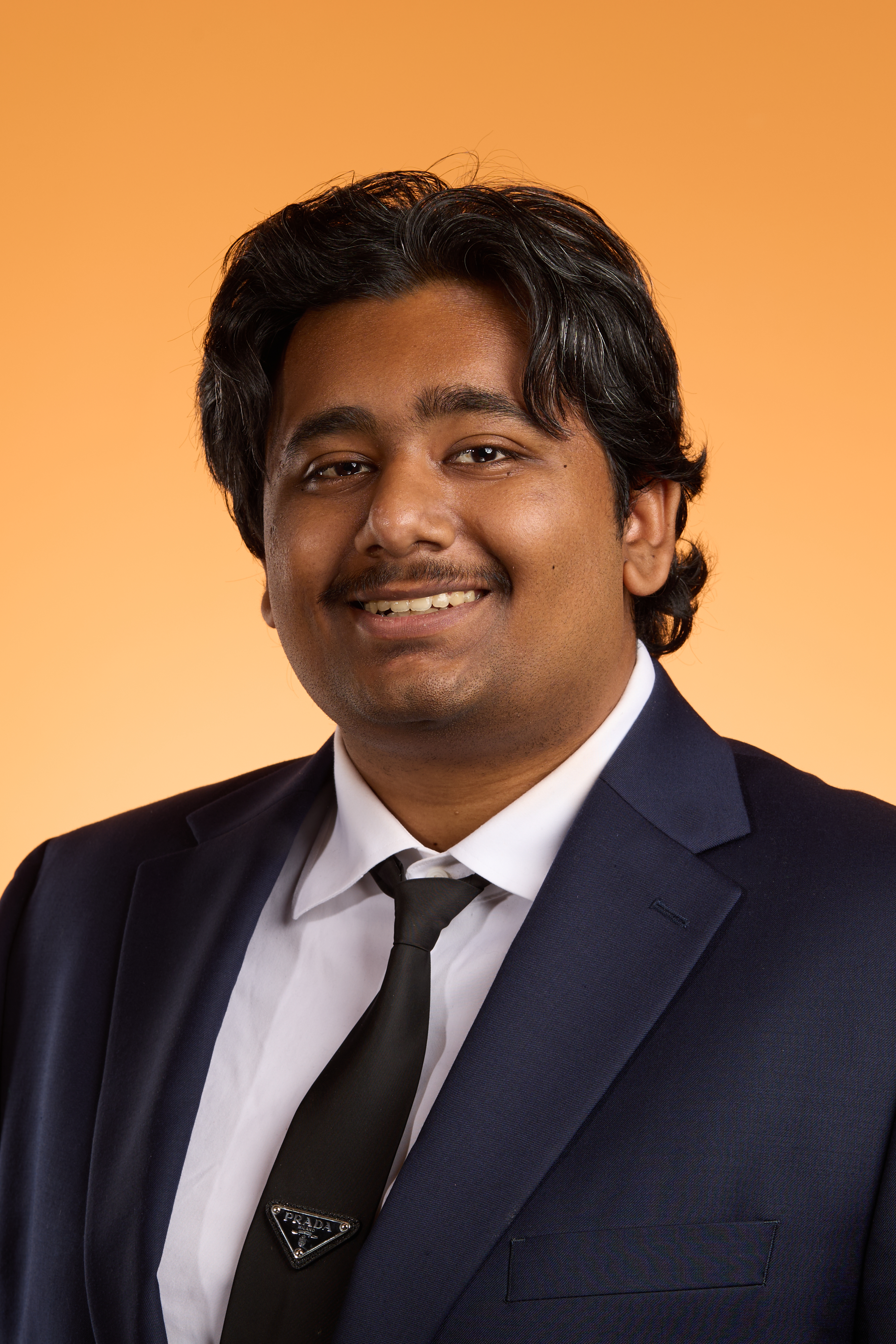
Pranav Ganta
- Alumni
- United States
- 2025 MPhil Global Risk and Resilience
- Wolfson College
Pranav Ganta
- Alumni
- United States
- 2025 MPhil Global Risk and Resilience
- Wolfson College
Originally from Texas, I earned a Bachelor’s in neuroscience and a concurrent Master’s in chemistry at Harvard, where I adopted a “cell to society” approach, combining medicine, law, and policy as instruments for advocacy across different scales of change. At Mass General Hospital and Harvard Medical School, I researched the development of a novel oncolytic virus to treat glioblastoma, an aggressive brain cancer. I have also conducted policy research on AI-equipped medical devices, brain-machine interfaces, and healthcare access for refugees, presenting findings to key government and private sector stakeholders. Pursuing an MPhil in Global Risk and Resilience at Cambridge, I aim to leverage my background in science and policy to develop frameworks for governing and de-risking emerging technologies at the intersection of the digital world and life sciences— a field called cyberbiosecurity. Ultimately, I aspire to advocate for patients on a broader scale, ensuring advances in biotechnology are safeguarded through responsible governance and resilient health systems. I am honored and excited to join the Gates Cambridge community.
Previous Education
Harvard University Neuroscience
Hua Gao
- Alumni
- China
- 2002 PhD Chemical Engineering
- Pembroke College
Hua Gao
- Alumni
- China
- 2002 PhD Chemical Engineering
- Pembroke College
Quinton Gardiner
- Scholar
- Australia
- 2023 PhD Classics
- Corpus Christi College
Quinton Gardiner
- Scholar
- Australia
- 2023 PhD Classics
- Corpus Christi College
Plato and Aristotle agreed that we cannot begin to reach for the fruits of philosophy—scientific knowledge, wisdom, self-understanding—without the feeling of wonder. When motivated by power, fame or wealth, truth-seeking inquiry will likely amount to little more than clever sophistry. Wonder, they thought, is the one and only starting point of philosophy.
My PhD thesis investigates how Plato and Aristotle understand wonder and its role in philosophical life. What provokes wonder? Does it persist in the proper culmination or realisation of philosophy? And in what circumstances can the feeling be deceptive or even dangerous?
This research builds on my interest in Pierre Hadot’s idea of ancient philosophy as a way of life and expands on my master’s thesis on wonder in Plato’s Theaetetus. As a tutor and research assistant of many years at my home university in Tasmania, I am also interested in how aspects of my project can be used to advocate for the humanities, defend the virtues of basic research, and inspire learning in the classroom, lecture theatre, and beyond.
Previous Education
Ludwig-Maximilians-Universitat Munchen Ancient Philosophy 2019
University of Tasmania [No major] 2015
Maria Isabella Gariboldi
- Alumni
- Italy
- 2014 PhD Materials Science and Metallurgy
- Trinity College
Maria Isabella Gariboldi
- Alumni
- Italy
- 2014 PhD Materials Science and Metallurgy
- Trinity College
I was born in the Alps in Italy and grew up in a small town close to Milan. I received my bachelors degree from the Massachusetts Institute of Technology in Biological Engineering with a minor in Management. I have worked in several labs in institutions including Imperial College, École Polytechnique, the Koch Institute for Integrative Cancer Research and the MIT Media Lab. I am excited to start my PhD at the Cambridge Center for Medical Materials. I am particularly interested in implantable technologies and the development of biomaterials for use in regenerative medicine. Through my travels and extra-curricular activities, I have also grown passionate about healthcare delivery, particularly in developing countries. In the long term, I want to work towards developing low cost medical technologies to be used in resource-limited settings.
Catherine Gascoigne
- Alumni
- Australia
- 2013 PhD Law
- Gonville and Caius College
Catherine Gascoigne
- Alumni
- Australia
- 2013 PhD Law
- Gonville and Caius College
Catherine is a Macquarie Research Fellow at Macquarie University, Sydney. Her book, 'Causation in the Law of the World Trade Organization: An Econometric Approach' (Cambridge University Press, 2023) was published in the Cambridge International Trade and Economic Law Series in August 2023. She is currently involved in a research project concerned with international investment law.
Amen Gashaw
- Scholar
- United States
- 2026 PhD Divinity
- Jesus College
Amen Gashaw
- Scholar
- United States
- 2026 PhD Divinity
- Jesus College
Growing up just outside and serving in one of the American Bible Belt's principal refugee resettlement hubs, I saw firsthand how religious belief shapes and sometimes distorts political practice, both on immigration and in general. This led to research in political economy and later theology on the interplay of religion, politics, and humanitarian topics, with a current emphasis on migration. My doctoral work at the intersection of theology, social and political theory, and migration studies aims to address systemic determinants of irregular migration and hostile migrant reception (e.g. ethnic scapegoating) by developing an account of systemic agency, accountability, and reform using the Christian doctrine of sin and its peers: grace, justification, and sanctification. As a part of the Gates Cambridge community, I hope to deploy this framework as a guide for dialogue, persuasion, and coalition-building around immigration policy as well as a wider range of issues facing multicultural congregations and democracies in a simultaneously globalizing and retrenching world.
Previous Education
University of Cambridge Theology and Religion 2026
Harvard University Government 2024
Harvard University Molecular & Cellular Biology 2024

Jan Gaspers
- Alumni
- Germany
- 2008 PhD International Studies
- Pembroke College
Jan Gaspers
- Alumni
- Germany
- 2008 PhD International Studies
- Pembroke College
My PhD thesis examines the socialising effects of the European Union (EU) foreign policy regime on the behaviour and identities of EU member state diplomats within the North Atlantic Treaty Organisation (NATO) and the Organisation for Security and Co-operation in Europe (OSCE). I also continue to conduct research and have published various pieces on different aspects of EU-NATO cooperation, the OSCE Corfu Process, the European External Action Service and the the evolution of the EU's Common Security and Defence Policy. In the past, I have worked inter alia with the OSCE Section of the Delegation of the European Union to the International Organisations in Vienna, the European Union Institute for Security Studies, the OSCE and the European Centre for Development Policy Management.
Erica Gaston
- Alumni
- United States
- 2017 PhD Politics and International Studies
- Homerton College
Erica Gaston
- Alumni
- United States
- 2017 PhD Politics and International Studies
- Homerton College
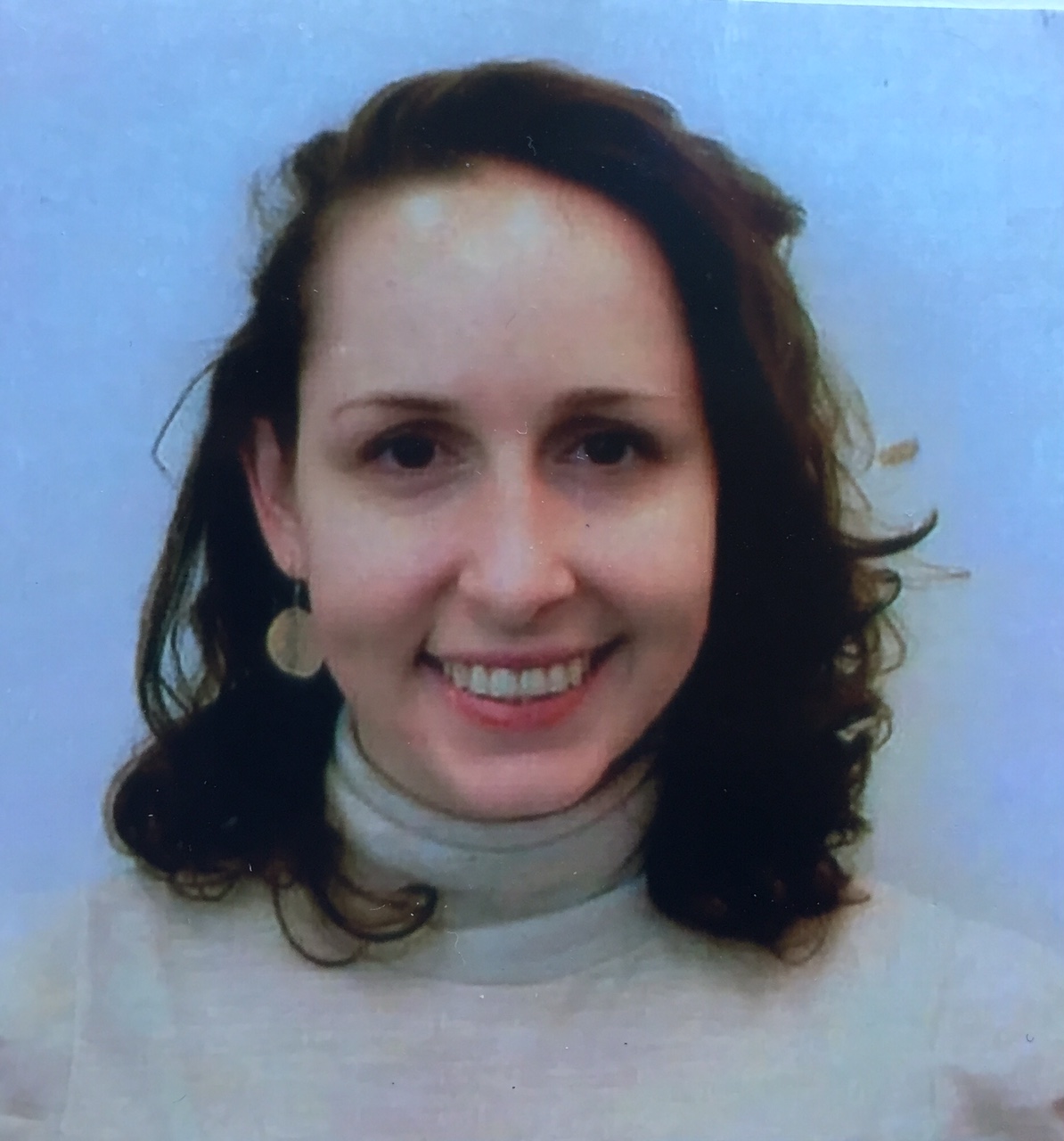
While studying at Stanford University and Harvard Law School, I focused on international and national security issues and the implications of security strategies for human rights. After graduation, I set out to put my studies into practice, living or working extensively in Afghanistan, Yemen, Pakistan, Egypt, and other countries. I have seen many examples where international politics gets it right, and whether testifying before the U.S. Senate or NATO about accountability and civilian redress, or working with local partners on conflict resolution and local security solutions, I’ve had the opportunity to be a part of positive change. But I have also seen the cracks and seams in the system, as I sat with Afghan families abused by local militias, or saw the Arab Spring process in Yemen collapse into renewed conflict. Western policymakers face a dilemma in such situations: leaving a security void in fractured spaces brings heavy risks, both for local civilians and the international community; but often the only actors to fill that void immediately are problematic. My research examines a critical aspect of this problem, exploring whether the control mechanisms that external actors establish when working with local or hybrid security forces can successfully mitigate the risks and costs of doing so. Whether or not such mechanisms work has significant implications for local civilians in an increasing number of areas, and for international security strategy as a whole.
Previous Education
Stanford University
Harvard Law School
Kara Gaston
- Alumni
- United States
- 2006 MPhil Medieval and Renaissance Literature
- Girton College
Kara Gaston
- Alumni
- United States
- 2006 MPhil Medieval and Renaissance Literature
- Girton College
My study at Cambridge centers on Chaucer and several of his Italian and Latin sources. I am planning to write on Chaucer's translation of Boethius' Consolcation of Philosophy and perhaps explore the use of Boethian poetry in the Troilus and Criseyde.
Emma Gattey
- Alumni
- New Zealand, Canada
- 2020 PhD History
- Trinity College
Emma Gattey
- Alumni
- New Zealand, Canada
- 2020 PhD History
- Trinity College
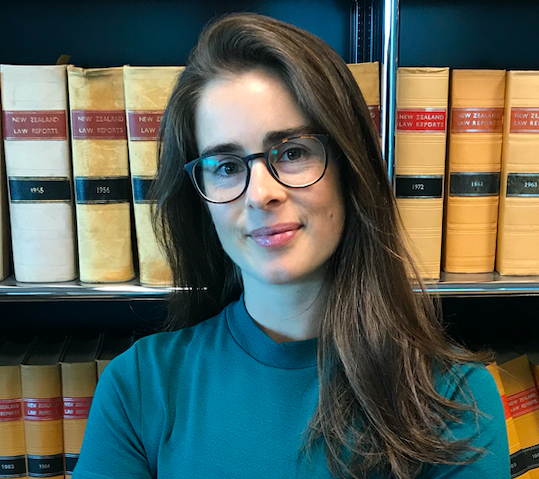
I am a graduate student of history from Aotearoa with a background in legal practice and passion for literary criticism. I studied law and history at the University of Otago before clerking at the High Court of New Zealand and practising as a barrister. In 2019, I returned to my first love: history. As an Ertegun Scholar at the University of Oxford, I completed an MSt in Global and Imperial History, focusing on forgotten 'insider' (or indigenous) and revisionist anthropology. At Cambridge, my PhD research focuses on the intersectional anticolonial protest and revisionist history of Māori women activist-intellectuals in the late 20th century. My work has a significant focus on the transnational connections and collaborations behind this scholarship and activism, and especially on Mana Wahine theory—what some people render as Māori feminism. Weaving Oceania into a global intellectual history of worldmaking after empire, this research explores how Māori women transformed emancipatory ideologies and practices to resist and alter colonial power in New Zealand and further afield.I have contributed to leading texts on feminist legal theory and the history of eugenics, and have written about the collective memory of empire and global histories of the Anthropocene. I regularly review books for literary journals. I am committed to forging a social, supportive, and intellectually stimulating community, and hope that my academic work and career will help to inform and develop public opinion.
Previous Education
University of Oxford Global and Imperial History 2020
University of Otago History 2015
University of Otago Law 2014
Lila Gaudêncio
- Alumni
- Brazil, Uruguay
- 2021 PhD Latin American Studies
- Trinity Hall
Lila Gaudêncio
- Alumni
- Brazil, Uruguay
- 2021 PhD Latin American Studies
- Trinity Hall
As an undergraduate studying Visual Arts at the Federal University of Minas Gerais, I developed an interest in the relationship between politics and aesthetics, and how it visually manifests in symbolic places of power such as money. I started researching "oficial" banknotes, when I came across community currencies and became immediately fascinated by them – resulting in my masters dissertation. Brazil has over 100 different community banks, and is a unique case study in the subject, as social money has been a public policy for the development of low-income territories since 2003. Due to COVID-19, the capacity and potential of these local self-managed organizations have shown to be efficient in protecting communities through a cycle of solidarity that strengthens them – and their economy – as a whole. Therefore, for my PhD in Latin American Studies at Cambridge, I intend to expand my previous work, further understanding how these currencies impact their communities by shifting ideas of value, power, democracy and citizenship. More so, I aim to identify what methodologies ensure long-term success, in order to help expand this plural, horizontal and collaborative network that has formed in favor of a more just economic system.
Previous Education
Federal University of Minas Gerais Mphil, Art 2018
Federal University of Minas Gerais BA, Visual Arts 2012
Pontifical Catholic University of Minas Gerais BA, Journalism 2008
Phillip Geheb
- Alumni
- United States
- 2005 MPhil Modern Society & Global Transitions
- St John's College
Phillip Geheb
- Alumni
- United States
- 2005 MPhil Modern Society & Global Transitions
- St John's College
My name is Phill and I am from the US. I have spent the last two years as a Teach for America corp member in North Philadelphia. I have recently become married to my lovely wife Sarah. Plan on studying educational sociology and the economy's effect on schools and educational systems.

Ryan Geiser
- Alumni
- United States
- 2018 PhD Chemistry
- St John's College
Ryan Geiser
- Alumni
- United States
- 2018 PhD Chemistry
- St John's College
My research strives to unravel the complexities inherent in the pathogenesis of neurodegenerative diseases. With a passion for medical science, I moved south from Ohio to study biomedical engineering at the University of South Carolina, where I became increasingly intrigued by the human body as I worked on projects to provide elegant solutions to complex health problems. With a particular interest in Alzheimer’s disease, I utilized an array of biophysical techniques to investigate compounds found in diets around the world and their potential to suppress protein aggregation in the brain. My fascination with the extent to which small molecules influence disease led me to the Centers for Disease Control and Prevention, where I instigated the beginnings of a project aiming to detect chemical exposures in the workplace and improve safety therein. Returning to research in the molecular processes underlying protein misfolding disorders, I joined the Centre for Misfolding Diseases as a Whitaker International Program Fellow to work under the supervision of Professor Chris Dobson. I now continue to apply my chemical, biological, and computational background to further investigate the folding and misfolding of proteins associated with Alzheimer’s disease and related disorders. Outside of the lab, I enjoy introducing young students to the world of science through varied teaching and community outreach programs, as well as pursuing my interest in studying financial structures and markets.
Previous Education
University of South Carolina
University of Cambridge
Links
Michael Geisinger
- Alumni
- United States
- 2024 MPhil Anglo-Saxon, Norse & Celtic
- King's College
Michael Geisinger
- Alumni
- United States
- 2024 MPhil Anglo-Saxon, Norse & Celtic
- King's College
Studying history at Brown University allowed me to see how the stories we tell about our past shape every aspect of how we understand ourselves in the present. Of particular interest to me are narratives on gender and emotion. I have found that scholars of the medieval Norse tend to sort their emotional performances, particularly those related to grief and anger, along gendered lines. This creates a binary narrative, not much different from our current perceptions of “proper” emotional performances, in which men are permitted to aggressively express their anger, but not grieve loss, while women are allowed freedom to grieve openly, but not to express their anger. As a student in the Anglo-Saxon, Norse, and Celtic Studies department, I want to challenge our narratives of gendered emotional performance in the medieval Norse world by researching displays of emotion which diverge from the gender binary imposed by current scholarship. I believe that revising the narratives historians construct around the emotional expression of Norse people will help us redefine ourselves as a society in which anyone can grieve and get angry without worrying about being censured or shamed due to their gender.
Previous Education
Brown University History 2024
Christopher Geissler
- Alumni
- United States
- 2008 PhD German
- Jesus College
Christopher Geissler
- Alumni
- United States
- 2008 PhD German
- Jesus College
After completing my BA in Middle East and Asian Languages & Cultures at Columbia University in 2000, I took up a year-long Bosch Fellowship at the University of Leipzig, Germany, where I taught in both the departments of English and Applied Linguistics as well as advised students in the international office. I returned to New York and worked for five years at Columbia in project management and financial administration in the health services division before commencing postgraduate studies at Cambridge. I finished my PhD in German in 2012 and held two postdoctoral positions in Germany (Leibniz-Institute for European History) and in Canada (University of Calgary).I am currently the director of program and research support at Hearing Health Foundation, the largest private funder of hearing and balance research in the US. I continue to work as a translator from the German.
Previous Education
University of Cambridge MPhil, Modern & Medieval Languages 2007
Columbia University BA, Middle East & Asian Languages & Cultures 2000
Axel Gelfert
- Alumni
- Germany
- 2001 PhD History & Philosophy of Science
- Wolfson College
Axel Gelfert
- Alumni
- Germany
- 2001 PhD History & Philosophy of Science
- Wolfson College
Axel Gelfert is a Professor of Theoretical Philosophy at the Technical University of Berlin, where he works at the intersection of social epistemology and philosophy of science and technology. He completed his PhD in History and Philosophy of Science at Cambridge in 2005/06. He is the author of two monographs, A Critical Introduction to Testimony (Bloomsbury 2014) and How to Do Science With Models (Springer 2016), and a large number of research papers (e.g., "Fake News: A Definition", 2018). Prior to coming to Berlin, he spent more than a decade teaching at the National University of Singapore.
Links
https://www.philosophie.tu-berlin.de/menue/fachgebiete/theoretische_philosophie/prof_dr_axel_gelfert
