


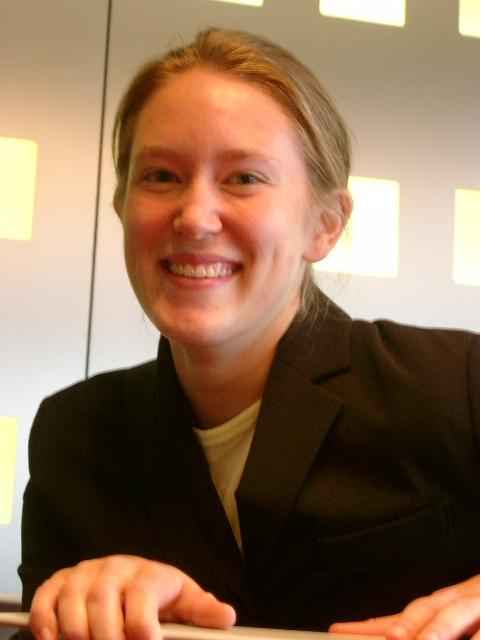
Katherine Folz
- Alumni
- United States
- 2004 MPhil Chemistry
- St John's College
Katherine Folz
- Alumni
- United States
- 2004 MPhil Chemistry
- St John's College
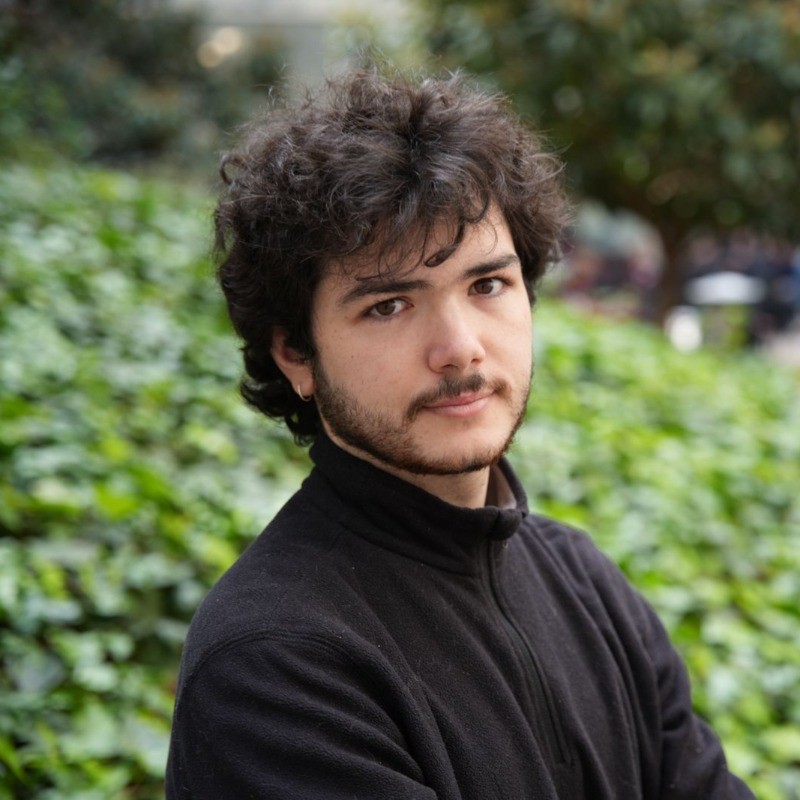
Mateu Font i Mugnaini
- Scholar
- Spain
- 2026 PhD French
- Churchill College
Mateu Font i Mugnaini
- Scholar
- Spain
- 2026 PhD French
- Churchill College
I grew up in Catalonia, a region historically known for its bustling political activity. The multiple, competing ways of understanding society that surrounded me sparked my interest in how the collective identities through which we engage with politics shape what we can feel, care about, demand, and imagine politically, making certain struggles visible while leaving others unattended. I explored interdisciplinary approaches to this topic through my PPE BA, MA in philosophy, and research with ERC FOODCIRCUITS, examining how the distinct ways in which political subjects and our sense of belonging are constructed can either reinforce or contest injustice—as in my MA thesis on the French Yellow Vests movement. At Cambridge, I will examine how three contemporary French writers stage political subjects in different ways, shaping their portrayal of French society and their characters’ views and interests in modes that can naturalise exclusion, foster disaffection, or open new horizons for collective change. Situating literature as a laboratory of political representation, my project extends analysis beyond existing identities, seeking a creative intervention in political theory at a moment when imagining alternatives has become urgent.
Previous Education
Universitat de Barcelona Philosophy 2023
Universitat Pompeu Fabra Philosophy, Politics and Econ. 2021
Julia Forman
- Alumni
- United States
- 2003 PhD Chemistry
- Magdalene College
Julia Forman
- Alumni
- United States
- 2003 PhD Chemistry
- Magdalene College
Since my PhD, studying the biophysical properties of proteins involved in genetic disease, I've moved to a few different research areas, all linked to health. I shifted first to bioinformatics, then to public health and clinical trials. Geographically, I moved from Cambridge to Paris, for a three year fellowship at the Pasteur Institute, and then back to Cambridge (UK) where I live now.
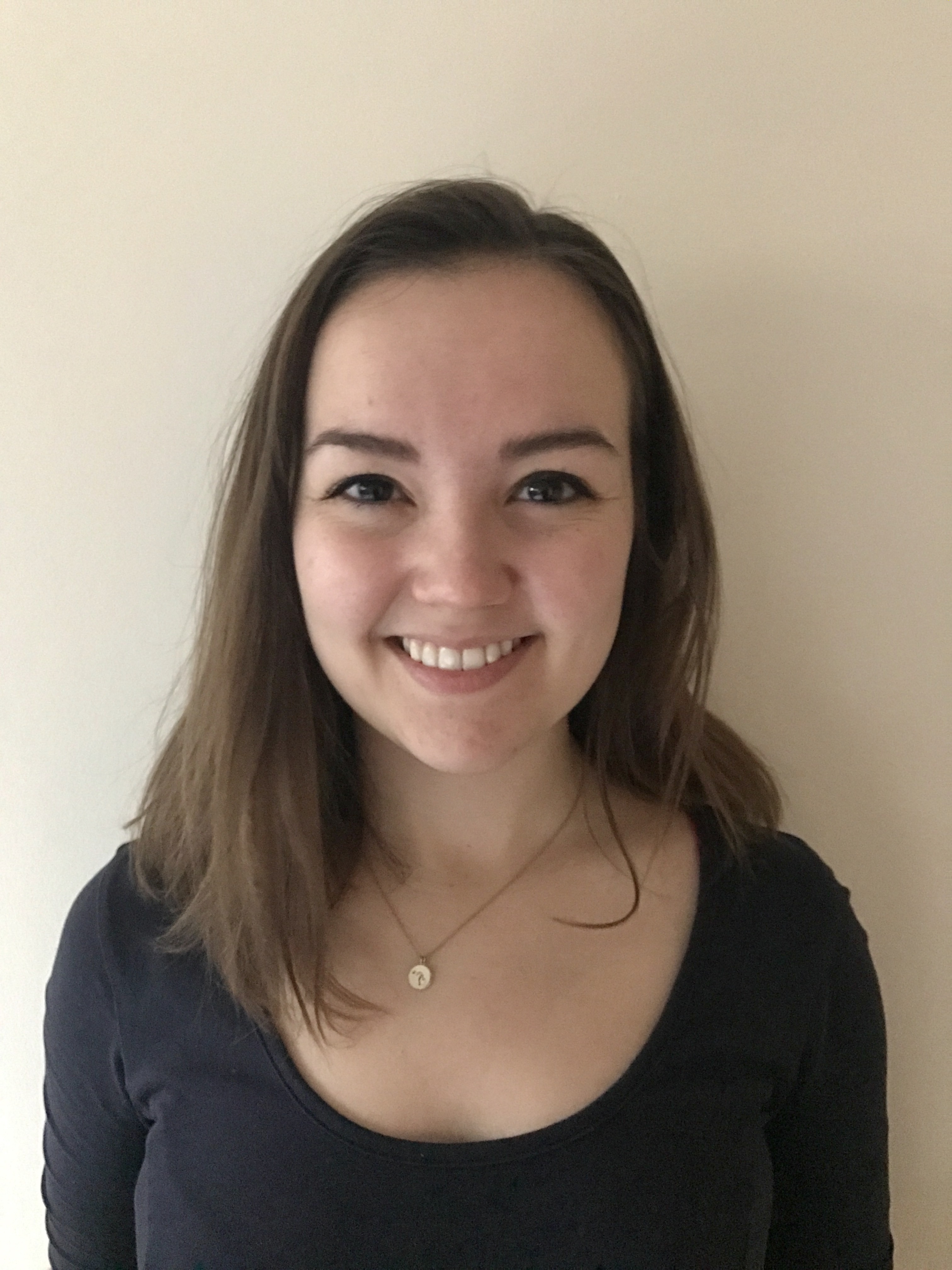
Anna Forringer-Beal
- Alumni
- United States
- 2017 MPhil Multi-Disciplinary Gender Studies
2019 PhD Multi-disciplinary Gender Studies - Darwin College
Anna Forringer-Beal
- Alumni
- United States
- 2017 MPhil Multi-Disciplinary Gender Studies
2019 PhD Multi-disciplinary Gender Studies - Darwin College
After seeing firsthand how the law impacted the daily lives of women through the Undocumented Migration Project or on the National Human Trafficking Hotline, I felt compelled to study the construction of laws and the cultural attitudes which influence them. Through an MPhil in Gender Studies at Cambridge, I was able to explore how stereotypes about immigrants and sex workers impacted data gathering, victim assistance, and ultimately limited the scope of the UK Modern Slavery Act of 2015. I am humbled to be returning to the Gates Scholar’s Community to expand this project through a PhD in Gender Studies. By constructing a genealogy of anti-trafficking law stretching back to the White Slave Panics of the late 1800’s, I aim to show that anti-trafficking laws are currently constrained by xenophobic thought. It is my hope that this work will refocus anti-trafficking policy to human rights and survivor support as the most effective tools in combating trafficking. When not writing about human trafficking, I can be found baking, boxing, or fastidiously reorganizing my to-do lists.
Previous Education
University of Cambridge MPhil Gender Studies 2018
University of Michigan Bachelor of Arts Anthropology 2016

Hamish Forsyth
- Alumni
- New Zealand
- 2007 MBA Management Studies
- Pembroke College
Hamish Forsyth
- Alumni
- New Zealand
- 2007 MBA Management Studies
- Pembroke College
The focus of my MBA is international entrepreneurship, as well as its socially transformative role. Previously, I studied philosophy and law, and worked as a clerk to an appellate Justice, then as a diplomat and trade negotiator. I have very broad interests, so I'm looking forward to learning from the diverse range of talented, excited, people I will meet at Cambridge. I hope to collaborate with others to identify new opportunities at a university famed for its innovation in a wide variety of fields, including in applied sciences.
Vinicius Alexandre Fortes De Barros
- Scholar
- Brazil
- 2024 PhD Law
- Gonville and Caius College
Vinicius Alexandre Fortes De Barros
- Scholar
- Brazil
- 2024 PhD Law
- Gonville and Caius College
I come from Cuiabá, a city right in the middle of South America. Unfortunately, my home state, Mato Grosso, is one of the most homophobic states in Brazil, which is why I always present myself as one of the few openly gay Federal Prosecutors in Brazil. Representation matters! Academically, in 2010, I was one of the first students from the Federal University of Mato Grosso, Brazil, to attend the Hague Academy of International Law. I have a Master of International Law from the University of Cambridge and was awarded a Jennings Award from Wolfson College for my performance at the LLM. Also, I was awarded a Golden Award at Cambridge for my activities at the Cambridge Pro Bono Project. Professionally, in 2015, I was the youngest Judge at the Mato Grosso State Court. In 2016, I became a Federal Prosecutor and have been working with human rights and criminal law. During the LLM, I was deeply interested in international humanitarian law. Therefore, because I am part of the LGBTQIA+ community and wanted to investigate how armed conflicts affect vulnerable groups, for my PhD, I plan on researching how international humanitarian law can protect LGBTQIA+ persons (combatants and non-combatants) during and after wars.
Previous Education
University of Cambridge Master of Laws 2022
Fundação Escola do Ministerio Law 2012
Links
Molly Fox
- Alumni
- United States
- 2008 PhD Biological Anthropology
- Gonville and Caius College
Molly Fox
- Alumni
- United States
- 2008 PhD Biological Anthropology
- Gonville and Caius College
I am a biological anthropologist interested in the evolutionary context of chronic disease and the biosocial relationships between grandmothers, mothers, and children.
Krzysztof Franaszek
- Alumni
- Poland
- 2014 PhD Pathology
- Churchill College
Krzysztof Franaszek
- Alumni
- Poland
- 2014 PhD Pathology
- Churchill College
Currently working towards a PhD in Pathology.
Clare Francis
- Scholar
- Australia
- 2026 PhD Politics and International Studies
- Trinity College
Clare Francis
- Scholar
- Australia
- 2026 PhD Politics and International Studies
- Trinity College
I want to understand how we can reimagine global governance to achieve better outcomes for women and girls. While working at the United Nations, I have supported the UN’s efforts to prevent sexual exploitation and abuse committed by its own personnel. I have seen that addressing the root causes of exploitation requires reimagining existing policy frameworks in partnership with the women and girls who are directly affected. Having completed my BA (Hons) and MPhil at Cambridge and my MA at New York University, my doctoral research examines how different actors, particularly local women’s organisations, translate the values of the Women, Peace and Security agenda. In doing so, I intend to explore how women activists are imagining a global feminist peace, in dialogue with longer histories of feminist thinking about violence, war and peace. I have worked for the Australian Department of Foreign Affairs and Trade, the Queensland Minister for Women and for the Prevention of Domestic and Family Violence, the Kaldor Centre for International Refugee Law, and the Grattan Institute.
Previous Education
New York University Global Journalism 2025
University of Cambridge Politics 2023
Paul Franklyn
- Alumni
- South Africa
- 2004 PhD Chemistry
- Darwin College
Paul Franklyn
- Alumni
- South Africa
- 2004 PhD Chemistry
- Darwin College
I have always been driven by scientific curiosity. Cambridge has the resources to allow me to carry out science for the sake of science with no direct industrial application. My focus is the crystal structure of nanoparticles and in determining and explaining the mechanism by which crystalline nanoparticles form. I'm using the opportunity of being based in the UK to gain international experience and to meet experts before returning to South Africa to work in a university there on nanoscience.

K.L. Franko
- Alumni
- United States
- 2002 PhD Physiology - Maternal and Child Health
- Wolfson College
K.L. Franko
- Alumni
- United States
- 2002 PhD Physiology - Maternal and Child Health
- Wolfson College
Previous Education
Cornell University BS (HONS) Biological Sciences
Links
Dustin Frazier
- Alumni
- United States
- 2005 PhD Anglo Saxon
- Darwin College
Dustin Frazier
- Alumni
- United States
- 2005 PhD Anglo Saxon
- Darwin College
For me, one of the most interesting and exciting things in life is learning how different people view themselves. Within my field, I will study the interrelationship of knowledge, learning and cultural identity; also, the role of individuals in shaping personal and collective self-awareness. From there, I hope to extend my study forward into the ways that innovations in knowledge transmission and application continue to shape ever-changing concepts of individual and group identity.
Allyson Freedy
- Alumni
- United States
- 2014 MPhil Chemistry
- Jesus College
Allyson Freedy
- Alumni
- United States
- 2014 MPhil Chemistry
- Jesus College
Growing up in Clearwater Florida, I graduated from Harvard College in May 2014 with a degree in Chemistry. Throughout my time as an undergraduate, I was amazed by the power of organic chemistry to influence medicine. I focused my senior thesis on the activity of covalent modifiers, molecules whose unique chemical reactivity affords them a desirable biological effect. At Cambridge, I pursued an MPhil in Chemistry under the supervision of Gonçalo Bernardes, a Research Associate at Peterhouse College. My research at Cambridge focused on the chemistry used to modify proteins and develop targeted therapies, like antibody-drug conjugates, for the treatment of a variety of cancers. I am currently pursuing an M.D. Ph.D. at Harvard Medical School and the Massachusetts Institute of Technology, continuing my exploration of the intersection of chemistry and medicine. I hope to one day unite these disciplines to both help develop innovative therapeutics and uncover new insights regarding disease biology.
Erika Freeman
- Alumni
- Canada
- 2018 PhD Plant Sciences
- Lucy Cavendish College
Erika Freeman
- Alumni
- Canada
- 2018 PhD Plant Sciences
- Lucy Cavendish College
Through inefficient and inequitable resource use, society has pushed natural systems beyond their planetary boundaries, such that our own well-being is being undermined. This idea roused my curiosity during my BSc in Environmental Sciences, and the need for a better understanding of the complex relationship between environmental and human health has motivated much of my academic career. While completing my MSc in Geography at Western University, Canada, I traveled to Uganda as part of a Global Health Systems program. This experience was perspective-building; reinforcing the idea that the most under-privileged and impoverished in our global village are the most vulnerable to harm associated with environmental degradation. In Uganda, I worked with communities to address environmental and social issues and facilitated a partnership with a local women’s handcraft group forming a Not-for-Profit organization that aims to support the entrepreneurship of women through the sale of the group’s handwork. My PhD in Plant Sciences will further develop the understanding of the risks human activity poses to ecosystem stability by exploring the link between forestry management practices and the protection of aquatic ecosystems. The broader aim is to ensure that resources are being managed efficiently so that human well-being is not compromised. I am honoured to join the Gates Cambridge Community, a community not only interested in intellectual progress, but in the betterment of humanity.
Previous Education
University of Western Ontario
Luise Frenkel
- Alumni
- Brazil
- 2007 PhD Divinity
- Lucy Cavendish College
Luise Frenkel
- Alumni
- Brazil
- 2007 PhD Divinity
- Lucy Cavendish College
Since 2013, Assistant Professor in Classical Greek at DLCV-FFLCH/Universidade de São Paulo, Brazil. As a Gates scholar, she received a Ph.D. in Divinity from the University of Cambridge in 2012. She also holds a Ph.D. in Applied Mathematics from the Institute of Mathematics and Statistics, USP, Brazil (2007). She has been awarded visiting fellowship from DFG research projects in Erfurt, Tübingen and Frankfurt, and also received pos-doc support from the British School at Rome, the Fondation Hardt and FAPESP. After being a Visiting Scholar at St Edmund’s College for almost ten years, she was awarded Visiting Fellowships for the last two years from Lucy Cavendish and for two years Visiting Fellow at Lucy Cavendish. Her research focuses on the Roman East in Late Antiquity, and on the transmission of Greek, Syriac, Ge'ez and Latin sources. Her current projects concern Christological polemical works, synodical and senatorial proceedings, acclamations and the construction of imperial authority. Other research interests are imperial and Byzantine hexametric poetry and education, and the medieval reception of classical and late-antique philosophy and theology in Greek, Syriac, Arab and Latin.
Markey Freudenburg-Puricelli
- Alumni
- United States
- 2025 MPhil Environmental Policy
- Murray Edwards College (New Hall)
Markey Freudenburg-Puricelli
- Alumni
- United States
- 2025 MPhil Environmental Policy
- Murray Edwards College (New Hall)
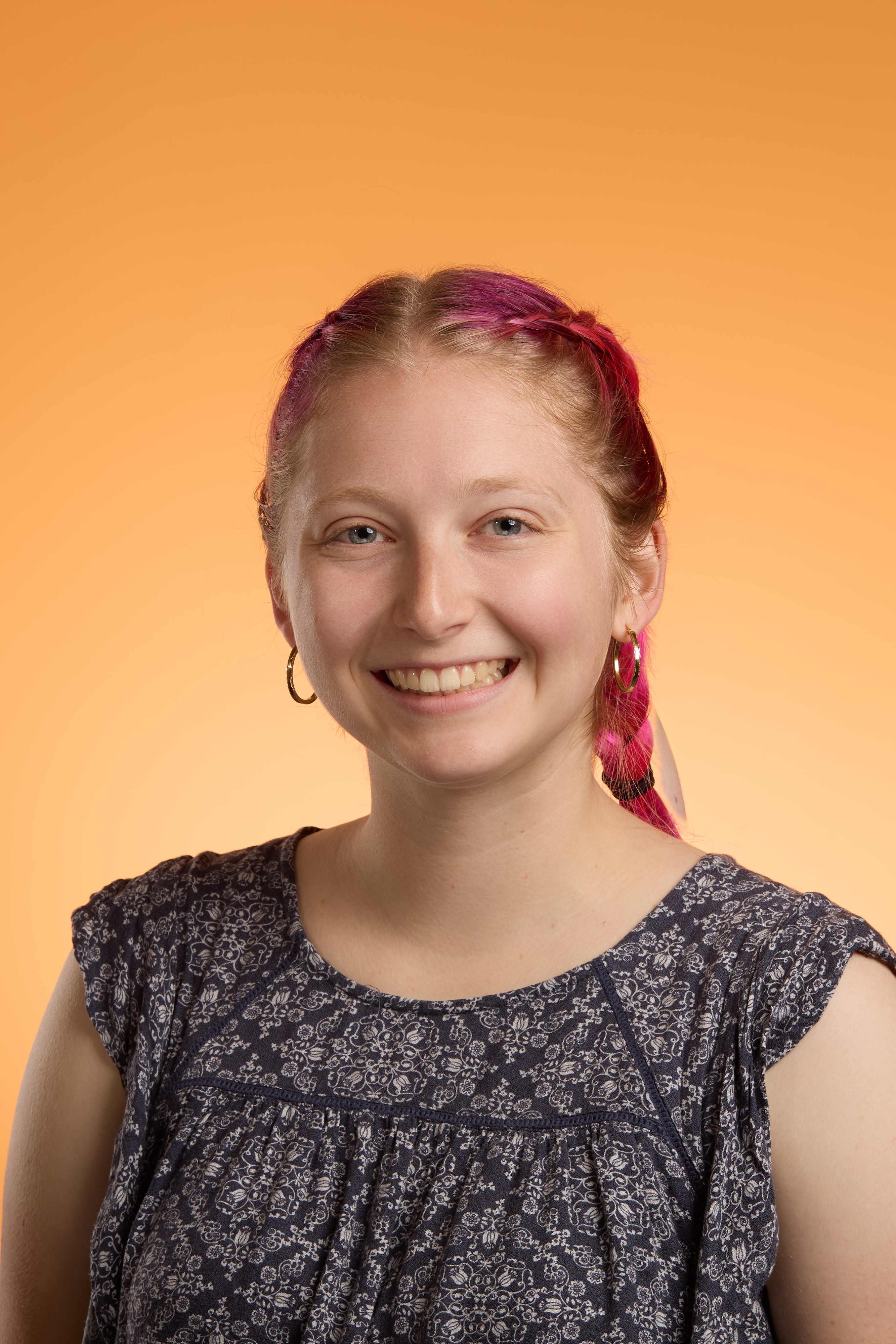
As an MIT undergraduate in geoscience, I have travelled to different corners of the world to conduct geologic fieldwork. These experiences have made plain to me the need for policies that protect those most vulnerable to environmental change. I remember, for instance, the lingering damage from a devastating El Niño that brought unprecedented flooding to my Peruvian host town. I recall the vulnerability of small Andean villages nestled in the shadows of active volcanoes. Resolving the consequences of environmental catastrophe is no longer a question of science, but a question of society. We don’t lack scientific skills— we lack people skills. This is the gap I want to fill in my academic work and future career: I want to leverage the relationship between science and policy to make a visible, discernible impact on the Earth, particularly considering the urgency of our modern climate crisis. At Cambridge, I seek an education in the economic and political dimensions of environmental regulation, one which will equip me with the tools to harness the promise of scientific advancement. With the necessary political, legal, and economic context, I will escort trusted Earth science out of the realm of the laboratory and into the real world.
Previous Education
University of Colorado Boulder PhD student in Geology 2026
Massachusetts Institute of Technology B.S. in Earth, Atmospheric, and Planetary Science 2021
Lukas Freund
- Alumni
- Germany
- 2018 PhD Economics
- Corpus Christi College
Lukas Freund
- Alumni
- Germany
- 2018 PhD Economics
- Corpus Christi College
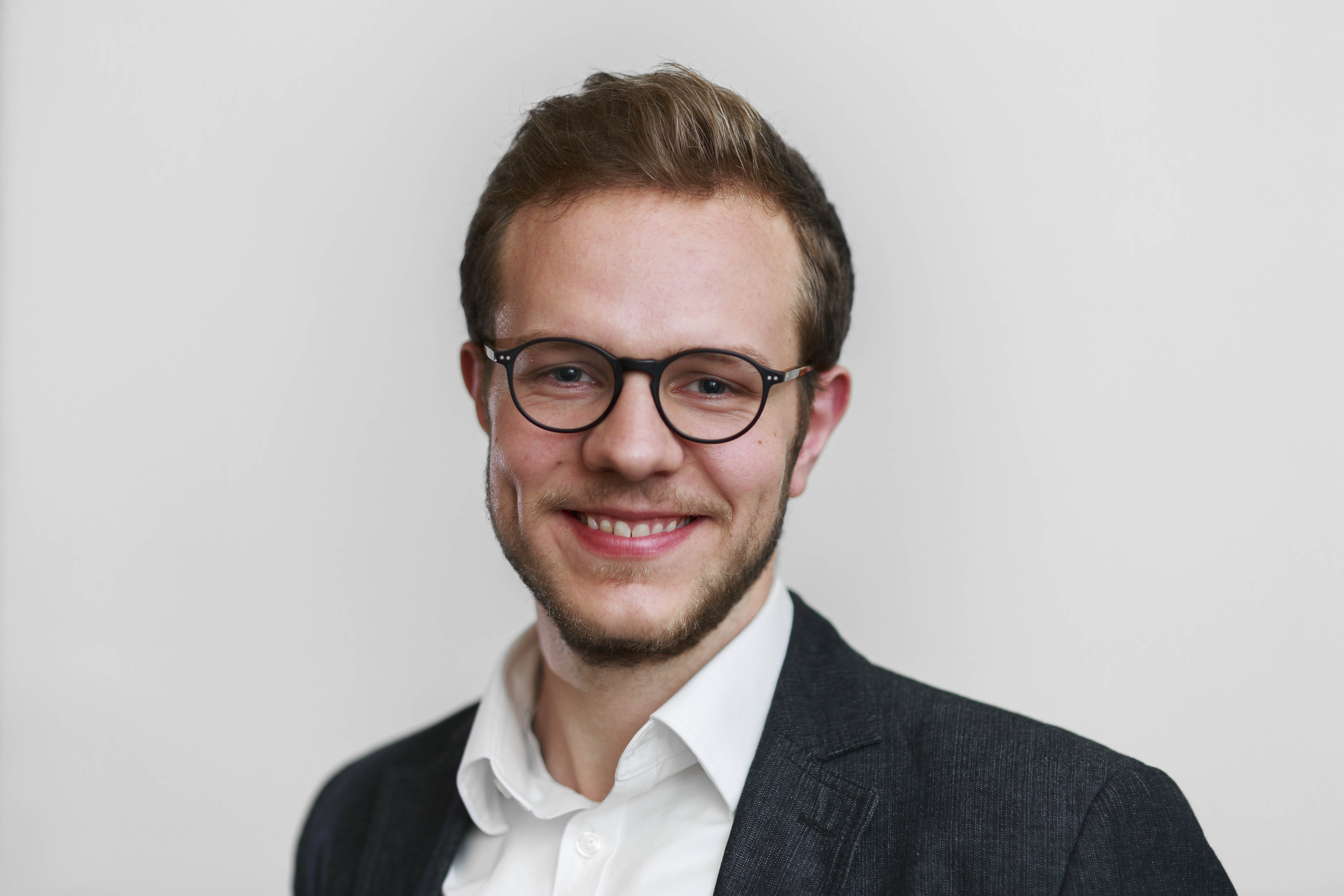
I have long been fascinated with the question of how societies achieve economic progress and how they determine the distribution of their resources. Volunteering for a year in Thailand after high school underscored to me how economic, political, and social inequalities are closely intertwined. I was able to delve into these topics as an undergraduate reading Philosophy, Politics and Economics at the University of Oxford. I found economics to be a fascinating and useful perspective, because it enables us to interrogate socially important questions in a systematic and tractable way, and pursued these methods further in my Master's degree. As a PhD student, my objective is to research the Macroeconomics of Inequality: I want to analyse, firstly, what the distributive effects of fiscal and monetary policies are and whether we can employ them to help ensure a more equal distribution of resources without sacrificing growth. Secondly, I wish to investigate the extent to which changes in economic inequality over the past few decades shape recent phenomena such as slowing global growth. Through this research, I hope to contribute to the development of a macroeconomic perspective on the relationship between equality and efficiency. I am incredibly grateful for this opportunity to research questions that to me seem profoundly important in times of high inequality and concerns about future prosperity, and I am thrilled to become part of the Gates Cambridge community!
Previous Education
University of Oxford
Links
https://www.lukasfreund.com
https://www.linkedin.com/in/lukasfreund
Raphael Freund
- Scholar
- United States, Germany
- 2026 PhD Criminology
- Churchill College
Raphael Freund
- Scholar
- United States, Germany
- 2026 PhD Criminology
- Churchill College
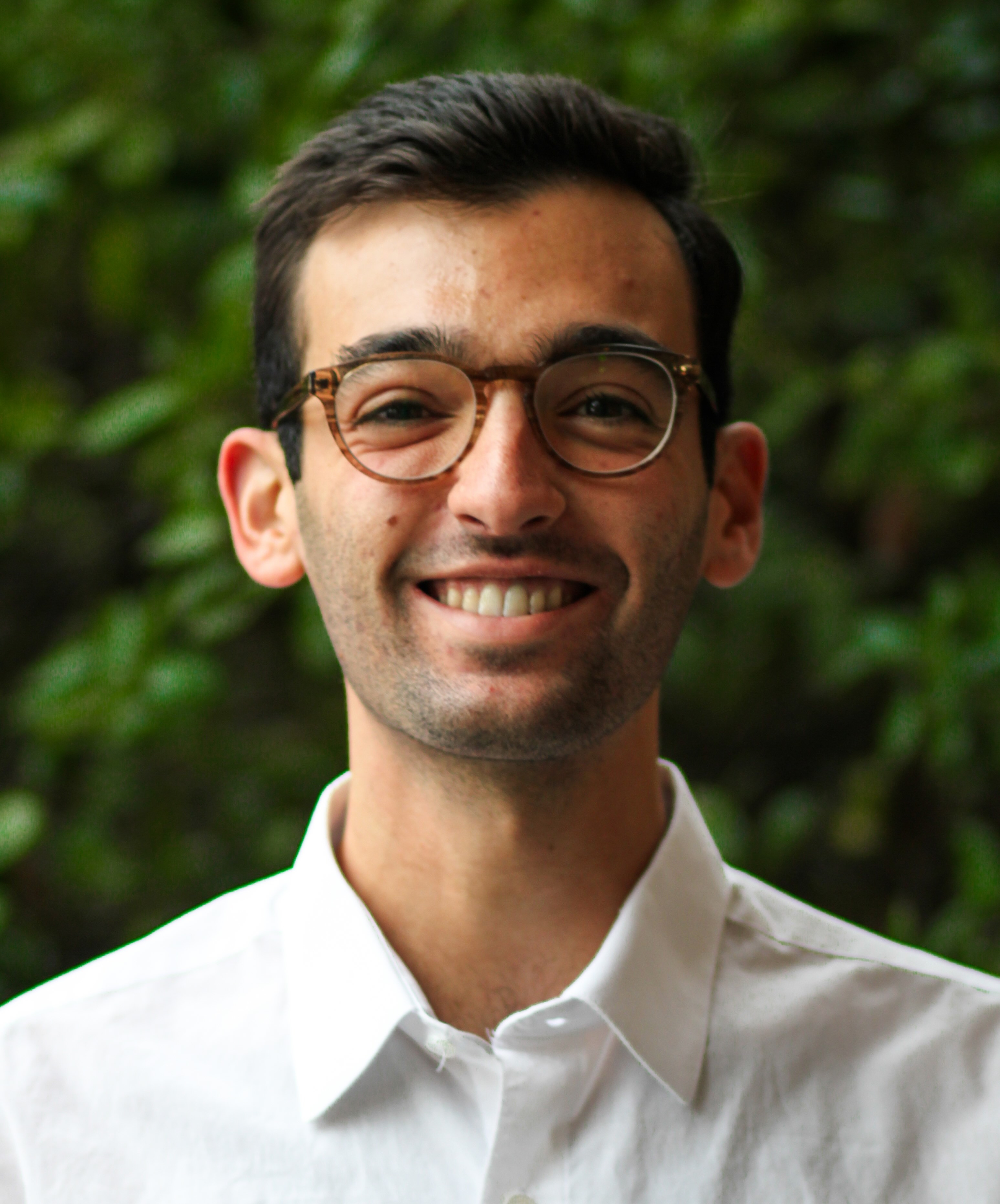
Following my graduation from Georgetown, I have worked as a Fulbright English teaching assistant in Berlin, earned an MSc in Criminology from Oxford, and served as Program Coordinator for the Prison Education Project at Washington University in St. Louis. The two pillars of my professional life are education and criminal justice research. My core academic interest is the changing role of judicial discretion at sentencing. The recent proliferation of sentencing grids, narrative guidelines, and risk-assessment algorithms has made sentences more predictable and consistent, but this shift has also diminished judges’ abilities to engage with the individual characteristics of the people being sentenced. My studies and work experience have shown me that rigid approaches to sentencing can leave people doubting procedural and outcome fairness. Adopting the view that sentencing is morally complex and not always amenable to rote procedure, I will study the progression away from human judicial discretion and seek a framework to identify when it has gone too far. In the end, my research will prove useful to policymakers and practitioners attempting to craft sentencing systems in their own jurisdictions.
Previous Education
University of Oxford Criminology 2025
Georgetown University Psychology 2023
